Advertisement
Havi says Uganda’s freedoms have declined under Museveni compared to Idi Amin’s era
Tuesday 28th October, 2025 10:30 AM|

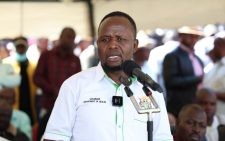
Former Law Society of Kenya (LSK) President Nelson Havi has drawn parallels between the leadership of former Ugandan President Idi Amin Dada and that of the current President Yoweri Museveni, arguing that Museveni’s regime is far worse in its handling of democracy and human rights.
Speaking during a radio interview on Tuesday, October 28, 2025, Havi compared Uganda’s current political environment to that of Amin’s brutal era, noting that despite Museveni’s attempts to project a civilian image, his governance has become increasingly repressive and intolerant of dissent.
“It’s no different from the environment that prevailed during the reign of dictator Idi Amin, however much civilian cloth you are wearing. Museveni may want to portray himself as better off than Idi Amin,” Havi noted.
Havi highlighted Uganda’s history of judicial intimidation and political suppression, recalling incidents where members of the judiciary and opposition figures were targeted for challenging state authority.
You Might Also Like


He noted that while Amin’s dictatorship was openly militarised, Museveni’s regime has mastered the art of masking authoritarian control under the guise of democracy, using state machinery to silence critics and suppress opposition.
He expressed deep concern over the apparent helplessness of regional governments, particularly Kenya’s, in responding to the growing pattern of political repression in neighbouring Uganda.
According to Havi, the ease with which activists and citizens are detained or disappear across borders threatens the ideals of the East African Community and erodes the sense of unity and safety that once characterised regional cooperation.
Dictatorship in East Africa
Havi also warned of what he described as an “emerging trinity of dictatorship” within the East African region, linking Uganda, Tanzania, and Kenya as countries where political intolerance and shrinking democratic space are becoming normalised.
“There appears to be a trinity of dictatorship that is emerging in the East African region between Uganda, Tanzania and Kenya. There was a time when you could run to Uganda for refuge.” Havi added.
He recalled a time when Uganda served as a refuge for those fleeing political persecution in Kenya, citing historical examples of Kenyan politicians who once found safety there, contrasting that with today’s reality, where Uganda itself has become unsafe for dissidents.
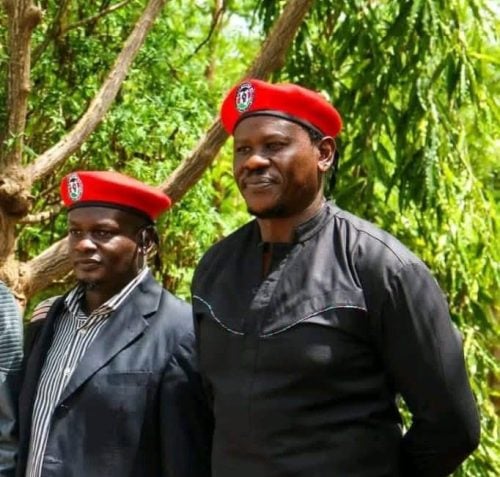
His remarks come amid growing concerns over the disappearance of Kenyan activists Bob Njagi and Nicholas Oyoo, who were abducted in Uganda while campaigning for opposition leader Bobi Wine.
Author
Latest News







Advertisement
More on News