Advertisement
Govt warns against political violence ahead of 2027
Sunday 01st March, 2026 11:17 PM|

The government has issued a warning to politicians and Kenyans against violence, even as 2027 campaign season escalates.
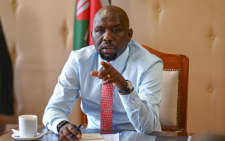
In a statement on Sunday, March 1, 2026, Principal Secretary for Internal Security and National Administration Dr Raymond Omollo reiterated the government’s firm commitment to upholding peace, protecting democratic freedoms, and ensuring that all Kenyans can express themselves without fear or intimidation.
Omollo emphasized that the current administration will not tolerate violence, hooliganism, or any form of unlawful conduct in the country’s political and social spaces.
Omollo say that every Kenyan has the constitutional right to express their views freely, but this must be exercised within the framework of the law. He noted that while political actors and citizens are free to engage in public discourse, any cases involving violence, intimidation, or unlawful mobilisation must be addressed through proper legal and investigative processes.
You Might Also Like


“This administration reaffirms its position that hooliganism and disorder will not be tolerated under any circumstances, and security agencies remain vigilant in ensuring accountability and maintaining public order,” he said.
The Principal Secretary also highlighted ongoing efforts by National Government Administration Officers to strengthen community safety and address emerging social challenges. In Nyeri County, security teams have intensified operations against illicit alcohol and called for closer collaboration between national government officials, chiefs, assistant chiefs, village elders, and elected leaders to protect lives and preserve social cohesion.
One killed
This comes after a man was lynched by the mob in Vihiga County during a Linda Mwananchi rally led by ODM secretary general Edwin Sifuna.
The incident occurred on Saturday, February 21, 2026, in Mbale Town, where members of the public had gathered ahead of the political rally.
Following the incident, the Directorate of Criminal Investigations (DCI) announced that it had launched investigations into the killing.
In a statement, the DCI said the victim, identified as George Olande Otobe, also known as Omundu, died after being attacked by members of the public following an altercation at around noon.
“While the Constitution of Kenya guarantees every person the right, peaceably and unarmed, to assemble, to demonstrate, to picket, and to present petitions to public authorities under Article 37, this right is explicitly conditioned on participants remaining peaceful and unarmed. The DCI reiterates that although citizens have the right of assembly, they can only exercise it peaceably and unarmed, as clearly provided in the Constitution,” DCI stated.
Preliminary investigations indicate that Otobe allegedly stabbed Hussein Hassan in the head during a confrontation, prompting bystanders to retaliate. The mob assault resulted in Otobe’s death. A knife was recovered from the scene.
Politicians fanning violence
According to an internal report prepared for the Ministry of Interior in January 2026, political violence in Kenya is largely organised and enabled by political actors rather than being spontaneous.
The report states that historical and intelligence assessments indicate political elites deliberately mobilise supporters, including youth groups, to intimidate opponents, disrupt activities and assert control during politically sensitive periods.
It notes that past election cycles, including those of 2007–2008 and 2017, show clear links between political operatives and organised violent activity.
According to the report, groups primarily targeted for mobilisation include unemployed or underemployed youth, boda boda riders and casual labourers.
Recruitment is said to occur through informal networks that operate between mobilisation and militancy. During political events, these groups are often deployed to fill rallies, dominate public spaces, intimidate opponents or disrupt opposition activities.
Author
Francis Muli
Francis Muli is an editor and passionate digital journalist with extensive experience in crafting compelling stories across various platforms. His major focus is in business, politics and current affairs. He has a keen eye for detail and a commitment to uncovering the truth. He has contributed to leading publications across the country. When not chasing stories, you can find Muli exploring new technologies, attending local events, or reading fiction. Connect with Francis Muli on X @FMuliKE and Facebook (Francis Muli) to follow his latest stories and insights.
View all posts by Francis MuliLatest News




Advertisement
More on News