Govt rolls out plan to revive Kenya’s only natural highland lake
By Cy Muganda, January 28, 2026The government has launched a coordinated multi-agency restoration plan for Lake Ol’Bolossat, Kenya’s only natural lake in the central highlands, which has lost over 68% of its surface area in recent decades.
In a statement posted on his X account on Wednesday, January 28, 2026, Principal Secretary for Environment and Climate Change Festus Ng’eno revealed that a high-level meeting brought together key institutions to agree on urgent action to save the critical national heritage site.
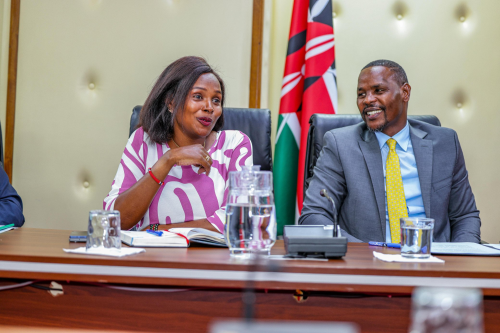
“Together with PS colleague for Wildlife we had an opportunity to chair a high-level multi-agency meeting focused on restoring Lake Ol’Bolossat, a critical national heritage and Kenya’s only natural lake in the central highlands,” Ng’eno stated.
Critical degradation levels
According to Ng’eno, recent studies have painted a dire picture of the lake’s condition, showing an alarming decline in water levels.
The degradation has led to severe consequences for both wildlife and human populations.
“Recent studies show that Lake Ol’Bolossat has lost over 68% of its surface area in recent decades, reaching critically low levels between 2023 and 2024,” the PS said.
“This has led to habitat loss, heightened human-wildlife conflict, and growing risks to livelihoods on the communities,” Ng’eno added.
Five-point restoration strategy
Ng’eno further stated that the ongoing restoration efforts are guided by the 2022–2032 Integrated Management Plan under the leadership of Tourism and Wildlife CS Rebecca Miano.
The plan, he says, focuses on five key areas: re-surveying and clearly marking the lake boundary; restoring degraded catchment areas; regulating water abstraction; addressing encroachment and reviewing illegal land titles; and strengthening community involvement in conservation.
“Lake Ol’Bolossat is a vital biodiversity hotspot, supporting over 800 hippos and more than 300 bird species. Its degradation, driven by catchment destruction, pollution, illegal water use, encroachment, and climate change is a reminder that environmental protection must remain central to our development agenda,” he stated.
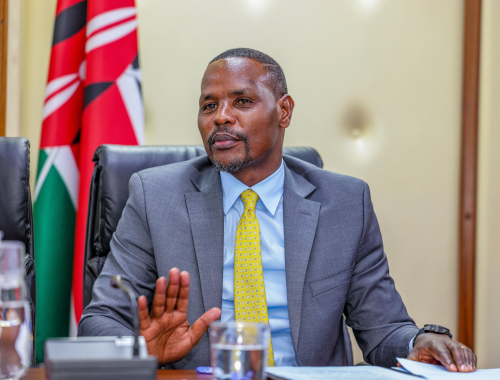
The PS expressed optimism about the collaborative approach and community engagement in the restoration effort.
“I am encouraged by the strong inter-agency collaboration and the voice of the local community at the table. Restoring Lake Ol’Bolossat is not just about saving a wetland, it is about securing ecosystems, livelihoods, and our shared future,” Ng’eno said.
“We remain fully committed to turning this restoration agenda into measurable impact,” he concluded.
The meeting brought together representatives from various government agencies and the county government to develop a coordinated response.
“The meeting brought together key institutions from Environment, Lands, Forestry, Water, Wildlife, Museums, and the Nyandarua County Government to take stock of the situation and agree on urgent, coordinated action,” he stated.