Advertisement
Govt dispels fears new Cybercrime Act curtails freedom of expression
Thursday 23rd October, 2025 02:09 PM|

The government has moved to calm fears that the recently assented Computer Misuse and Cybercrimes (Amendment) Act restricts freedom of expression.
Via a press statement, on Thursday, October 23, 2025, Government Spokesperson Isaac Mwaura said the law strengthens Kenya’s ability to tackle cybercrime while respecting constitutional freedoms.
Also Watch: Omollo urges lawmakers to bolster cybercrime laws amid rising digital threats
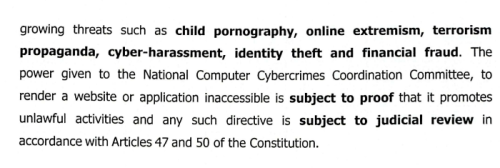
According to Mwaura, the amendments target real and growing threats such as child pornography, online extremism, terrorism propaganda, cyber harassment, identity theft, and financial fraud.
You Might Also Like



He clarified that the power given to the National Computer Cybercrimes Coordination Committee to block websites or applications is limited. Any action requires proof of unlawful activity and is subject to judicial review under Articles 47 and 50 of the Constitution.
“The freedoms of expression and media under Articles 33 and 34 remain intact,” Mwaura said.
“subject only to limitations prescribed by law in the interest of national security, public safety and morality.”
The government emphasised that similar measures exist internationally to protect citizens, especially children, from harmful online content.
Mwaura stressed that the law does not grant the government unchecked powers to silence dissent.
Other key bills assented
The media statement also highlighted other bills assented to by the President on 15th October.
These include the Wildlife Conservation and Management (Amendment) Act, the National Police Service Commission (Amendment) Act, the Land (Amendment) Act, the National Land Commission (Amendment) Act, the Air Passenger Service Charge (Amendment) Act, the Virtual Asset Service Providers Act, and the Privatisation Act.
Mwaura explained that the Privatisation Act introduces multiple layers of scrutiny for selling government assets, requiring Cabinet and National Assembly approval.
The Land amendments aim to protect public land and address historical injustices, while the Police Service Commission law establishes counselling units for officers’ mental health. The Virtual Asset Act sets up Kenya’s first regulatory framework for cryptocurrencies, improving consumer protection and international compliance.
He said all eight bills followed strict constitutional timelines, incorporating public submissions and parliamentary debate. The President acted within the law, he added, reinforcing citizen protection, economic modernisation, and institutional strengthening under the Bottom-Up Economic Transformation Agenda (BETA) and Vision 2030.
Author
Kenneth Mwenda
Kenneth Mwenda is a business, sports, and politics digital writer with over seven years of experience in journalism, covering breaking news, feature stories, and in-depth analysis across a range of beats.
For inquiries, he can be reached at [email protected]
View all posts by Kenneth MwendaLatest News







Advertisement
More on News