Advertisement
Govt defends G-to-G fuel deal amid ongoing crisis
Friday 17th April, 2026 12:32 PM|

Government Spokesperson Isaac Mwaura has come to the defence of the Government-to-Government (G-to-G) fuel importation model as a major policy change that has brought sanity to the fuel supply system in Kenya since the 2022 crisis.
In a statement on the X handle, the government spokesperson on Friday, April 17, 2026, reiterated its press release made on Thursday, April 16, 2026, in which Mwaura claimed that the old spot-market layout exposed the nation to exploitation by a group of oil traders, which created artificial scarcity as well as strain on the foreign exchange.
He claimed that the new structure was meant to close these loopholes and bring sanity to the industry.
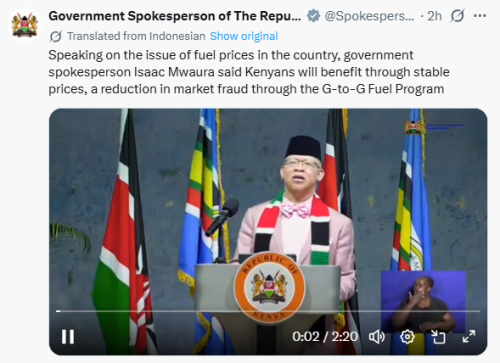
“Speaking on the issue of fuel prices in the country, government spokesperson Isaac Mwaura said Kenyans will benefit through stable prices and a reduction in market fraud through the G-to-G Fuel Program,” the government spokesperson’s statement read.
You Might Also Like

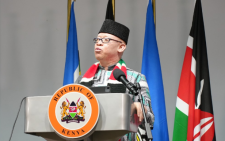

Speaking on the fuel prices in the country, government spokesperson Isaac Mwaura said Kenyans will gain from it, which will bring stable prices and a decrease in market fraud as a result of the G-to-G Fuel Program.
He said that the setup will see the government have direct access to large world oil suppliers, bypassing the middlemen, and will enable it to plan forward on deliveries and prices. This, according to him, has led to more predictable trends in supply and efficiency in the importation process.
Mwaura argued that the programme has not only created a steady supply of fuel over the past few years but also helped in stabilising macroeconomic conditions, such as relieving the Kenyan shilling and keeping inflation at bay.
He disapproved of statements by critics that the model has not been able to create value, labelling them as false.
Opposition’s statement on fuel crisis
According to Gachagua, the world supply shocks caused by Middle East tensions had led to a default under the G-to-G scheme, and authorities had to use emergency procurement schemes under the Petroleum Importation Regulations, 2023. He also claimed that President William Ruto is going to benefit from the change in fuel prices – claims made to be disapproved of by the government.
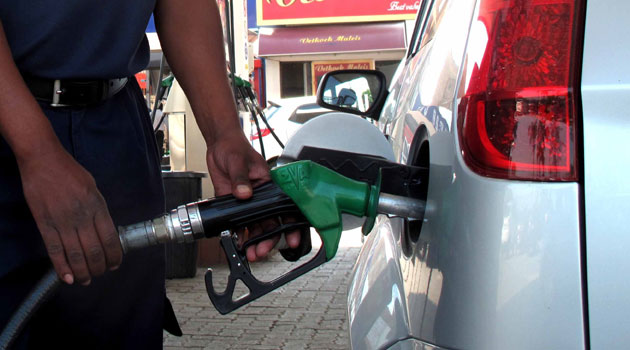
On consumer relief, Mwaura indicated that the state has acted to cushion Kenyans against increasing costs by implementing a KSh6.2 billion stabilisation fund in the form of the Petroleum Development Levy. He also stated that a short-term cut of VAT on petroleum products by 16 per cent to 8 per cent has helped balance the pump prices.
Although the government is justifying the policy, there is still debate on the G-to-G model, with many critics seeking more accountability and clarity on the long-term feasibility of the model.
Author
Latest News






Advertisement
More on News