Govt addresses claims linking police recruitment to 2027 political motives
By Aloys Michael, May 20, 2026Interior Principal Secretary Raymond Omollo has defended the ongoing recruitment of police officers, dismissing claims that the exercise is politically motivated ahead of the 2027 General Election.
Speaking during an interview on a local TV station on Tuesday, May 19, 2026, evening, Omollo said the recruitment drive is aimed at improving the country’s police-to-citizen ratio and strengthening security services, not influencing the upcoming elections.
According to the PS, Kenya has historically fallen below the internationally recommended police-to-citizen ratio of one officer for every 400 citizens.
“Recruitment of 10,000 officers and an additional 4,000 expected later this year to boost the ratio of officers to wananchi,” Omollo said.
His remarks come amid growing concerns over the National Police Service’s (NPS) preparedness ahead of the 2027 polls, following revelations of severe funding and staffing gaps within the security sector.
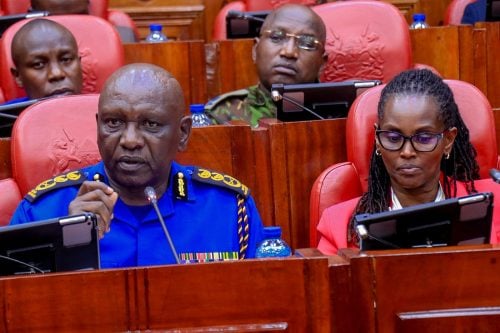
Appearing before the National Assembly Administration and Internal Security Committee during deliberations on the 2026/27 budget estimates on Tuesday, May 12, 2026, Inspector General (IG) Douglas Kanja warned that the police service lacks the personnel, transport equipment and aviation capacity needed to effectively secure the country as political activity intensifies.
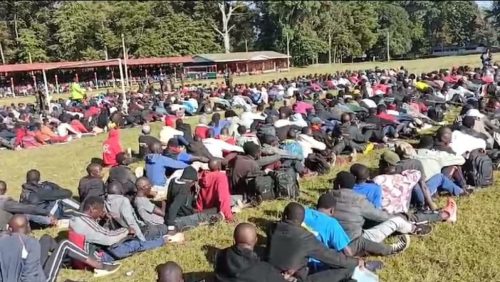
Kanja disclosed that plans to recruit 15,000 additional police officers before the elections had stalled due to budget constraints.
The government had initially planned to recruit 25,000 officers during President William Ruto’s first term, but only 10,000 officers have so far been enlisted, leaving a deficit of 15,000 personnel.
The National Treasury allocated Ksh2.9 billion for recruitment against a requirement of Ksh6.3 billion in the next financial year, creating a major gap in staffing plans.
“The lion’s share of those funds will go towards settling pending bills for operations of the 10,000 recruits currently under training,” Kanja told lawmakers.
The IG further warned that unless Parliament allocates additional funds, fresh recruitment may not happen.
“For fresh recruitment to be undertaken, additional funding must therefore be provided. There is a huge gap, and this is an area that this committee needs to look into seriously,” he added.
Police reforms
At the same time, Omollo revealed that the government is seeking approximately Ksh2 billion to facilitate ongoing reforms within the NPS.
The PS said the reforms are aimed at addressing years of neglect in the security sector, particularly in the welfare and working conditions of police officers.
“Whenever there’s a criminal act, the first question is, ‘ Where are the police? Over the years, police have suffered neglect in terms of investment in their space, and what President Ruto did is to correct the ills that have been in the security sector,” Omollo stated.
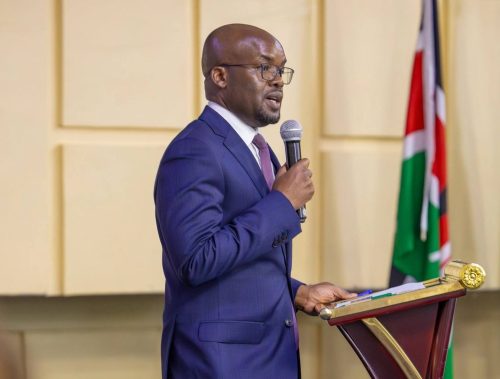
He noted that one of the key reforms undertaken by the government has been the implementation of salary increments for officers, especially those in junior ranks.
“Most significantly was the pay for the police officers, particularly those in the junior ranks. Out of the recommendations, there was to be an increment of between 4 and 40 per cent depending on the rank. What we have done is that those changes were to be done in three years. We have implemented what was needed in the first two years,” he said.
Moreover, the PS said that Parliament had already facilitated funding for the first two phases of the salary review, while budgetary provisions had also been made for the final phase in the 2026/27 financial year.
“We have been able to engage Parliament, and they have availed the budget. I have talked about two phases of the salary increment which we have already effected. We have also provisioned a budget for the last phase, which is around Ksh300 million in the FY 2026/27. On this, I must appreciate Parliament for having facilitated this,” he stated.
“Cumulatively, we’re looking at a budget of around Ksh2 billion.”