GBV committee pledges justice for femicide families
By Faith Lagat, February 3, 2026The Social Justice Centres’ Gender-Based Violence (GBV) Committee has reaffirmed its commitment to supporting families affected by femicide, emphasising solidarity and accountability in the pursuit of justice.
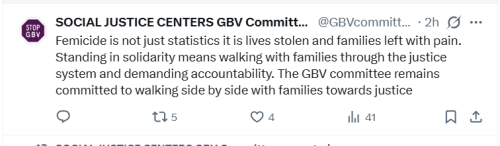
In a statement posted on X on February 2, 2026, the committe highlighted the human impact of femicide, noting that it represents lives lost and families left to cope with pain.
They stressed the importance of standing in solidarity with affected families by supporting them through the justice system and ensuring accountability, committing to accompany families throughout the process to seek justice.
“Femicide is not just statistics it is lives stolen and families left with pain. Standing in solidarity means walking with families through the justice system and demanding accountability. The GBV committee remains committed to walking side by side with families towards justice.”
Rising concerns over gender-based violence
The pledge comes amid growing alarm over gender-based violence in Kenya, as highlighted in the recent Report of the Technical Working Group (TWG) on Gender-Based Violence, led by former Deputy Chief Justice Nancy Baraza.
The report found physical violence as the most common form of GBV, followed by sexual abuse and harmful traditional practices. Femicide continues to pose a serious threat, while economic, emotional, and psychological violence add significantly to the overall burden.
The TWG also identified critical gaps, including the absence of a centralised and publicly accessible national database on GBV and femicide, which undermines prevention and accountability.
Despite legal protections guaranteeing gender equality and the right to life, weak implementation, patriarchal norms, low accountability, and fragmented support systems allow perpetrators to act with near-impunity.
Challenges in accessing justice
Survivors face systemic barriers, with many cases underreported or settled informally at family or community level. Mechanisms such as clan elders, Nyumba Kumi structures, or chiefs’ barazas often prioritise reconciliation over prosecution, leaving victims vulnerable to coercion or blame, particularly where family honour is invoked.
Harmful practices including early child marriage, widow cleansing, beading, and medicalised FGM persist, alongside rising online abuse.
The report notes that femicide cases are prosecuted under general murder provisions, leading to inconsistent handling. Vulnerable groups, including persons with disabilities, men, and boys, remain largely overlooked.
Recommendations include amending the Penal Code to codify femicide as a distinct offence, establishing a National GBV and Femicide Response Fund, creating a national GBV Management Information System, and professionalising community dispute resolution.