From Raila’s final rites to alternative rites: Kajwang’s 5 urgent concerns for Luo elders
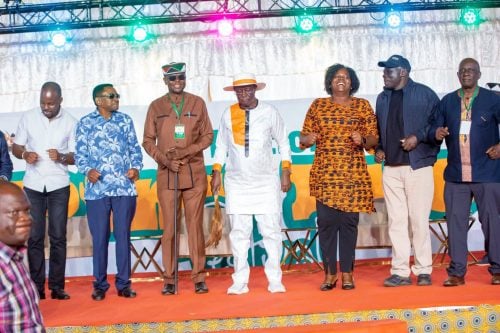
By Luke Oluoch, December 15, 2025Homa Bay Senator Moses Kajwang, on Monday, December 15, 2025, raised five thought-provoking concerns before the Luo Council of Elders during the annual Piny Luo Cultural Festival in Migori County.
He urged the council to provide clear guidance on key community issues.
Kajwang challenged the elders to explore how the Luo nation, with a population close to 25 million people across Africa, could unite for a stronger political impact, rivaling communities that maintain a dominant national presence.
“The Luo nation is as large as the Jewish nation—we are bigger than the Zulu. Yet the Jewish nation influences the world. How can the Luo synergise to reach that level?” he posed.
Defining Luo identity
Kajwang also questioned what it truly entailed to be Luo today amid rising modernisation.
He argued that identity should go beyond bearing a Luo name to embracing and understanding the culture.
Unlike the Maasai and Kikuyu, who actively teach and pass down the culture to their children, Luo youth lack a recognised rite of passage since the traditional removal of lower teeth has largely faded.
“We cannot remove our children’s teeth now, but is there a way the elders can help us and have a traditional rite of passage?” He posed.
He called for an updated version of the Luo Kit Gi Timbe Gi booklet that details the community’s culture and practices to reflect the evolving culture while remaining relevant to future and contemporary generations.
Alternative rites of passage
The senator urged the council to advise on establishing a modern alternative to traditional initiation rites.
Without one, he observed, many Luo children are Luo only by name, not by cultural immersion.
Kajwang emphasised the need for mainstream economic programs to uplift the community, highlighting the role of county governments as envisioned in the 2010 Constitution.
“Raila left us with devolved county governments at the grassroots,” he noted.
“I hope that through the governors and our counties have to make sure we follow up on plans and strategies to make the community economically empowered and alleviate poverty,” he stated.
Raila’s burial
Kajwang called on elders to sensitise the community—and the nation—about shifting away from costly, elaborate burials that deepen poverty.
He cited Raila Odinga’s final rites as an example. “If Raila could be buried after three days, it means anyone can be laid to rest even sooner, avoiding the financial and logistical burdens of prolonged rituals,” he said.
“Let us enlighten our people to abandon practices of flashy and expensive burial that leave families and households poorer and struggling,” he added.
Suba people
Finally, Kajwang urged the community to fully embrace the Suba as integral members of the larger Luo family, given their shared history and intermarriages, and to involve them in major cultural events.
He cited his example as a person of mixed blood of the Suba people.