Advertisement
Fear and hegemony driving U.S. provocation on Taiwan
Tuesday 02nd August, 2022 12:24 AM|
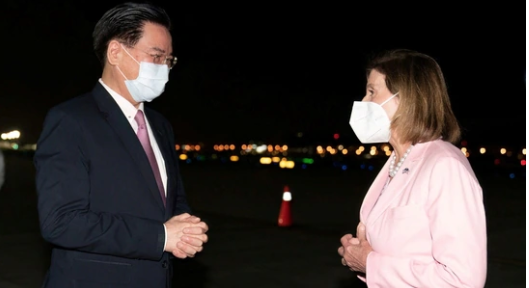
United States House of Representatives Speaker Nancy Pelosi has already landed in Taiwan following the first failed attempt earlier in the year after she tested positive for COVID-19. Chinese Foreign Ministry spokesperson Zhao Lijian had already expressed China’s fury against the current provocation. “China will take resolute and forceful measures to firmly safeguard national sovereignty and territorial integrity. All possible consequences that arise from this will completely be borne by the U.S. side.”
Subsequently, Chinese President Xi Jinping held “direct and honest” talks virtually with his US counterpart Joe Biden, and warned the US against playing with fire over Taiwan. Well, this is just part of the constant provocation by the superpower in its attempt to harass its geopolitical nemesis. Well, the situation is unfolding in the Taiwan Straits and observers are waiting for Beijing’s response to this uncalled for provocation.
Russia has also thrown its weight behind China and accused the US of “destabilisation” over the Pelosi Taiwan trip. Foreign ministry spokeswoman, Maria Zakharova, stated that “the USA is a state provocateur. Russia confirms the principle of “one China” and opposes the independence of the island in any form.”
In another previous case of playing hide-and-seek, the US came up with the “US-Taiwan Initiative on 21st-Century Trade” deal. The initiative includes trade and economic cooperation in diverse areas including digital trade enhancement, trade facilitation, sound regulatory practices, SMEs, environmental protection, standards, and addressing non-market policies.
These are areas that get to the core of Taiwan’s inner governing structures and obviously aimed at making Taiwan malleably US-compliant. Experts say it is actually a covert scheme aimed at undermining China’s authority through an all-encompassing governance initiative that drives Taiwan away from Beijing’s social, economic and political central authority.
It is still unclear how the initiative fits in U.S.’s recently unveiled China countering strategy – “invest, align, compete”. But it creates unnecessary tension between the countries at a time when the need for rapprochement has never been more urgent and important globally.
At a press conference, Ministry of Commerce spokesperson Gao Feng reiterated that the moves contradicted the binding One-China policy which the U.S. acknowledged years ago in principle. The Taiwan initiative also goes against the three joint Sino-U.S. communiques which act as guidelines in bilateral relations between the two countries. The initiative is also contrary to international law and the basic norms of international relations as it grossly interferes in China’s internal affairs.
While the US claims that a strong China is good for the world, it resents what its geopolitical adversary can do with that power. The U.S. has perfected the art of doublespeak not just on the Taiwan Straits, but virtually in all matters of a bi-lateral and multi-lateral nature related to China.
America’s paranoia is understandable. It knows it is just a matter of time before Taiwan follows reverts to motherland China back to its rightful historical belonging. The inevitable and ultimate consolidation of all Chinese territories will thrust China towards attaining the largest economy in the world status. That would definitely be a humbling albeit intimidating experience to the US due to its geopolitical implications.
U.S. President Joe Biden signed a bill on May 13 aimed at facilitating the Secretary of State to draft the requisite documentation for Taiwan to return to the World Health Organization (WHO) as an observer. This was aimed at undermining China’s centralised and successful fight against the COVID-19 pandemic, particularly the achievement of “zero COVID” which President Xi Jinping has sworn to achieve. It also usurps due process that WHO needs to undertake in such an event.
The U.S. is guilty as charged. Its actions send a clear message to Taiwan separatist forces that the superpower would support the country’s detachment from the motherland. It was also a daring gesture to China, going by previous insinuations that the latter could use the Russia playbook to invade Taiwan, in a snide reference to the ongoing Ukraine war.
May be the US is taking light of China’s warnings about interfering in its internal affairs. As Foreign Affairs Ministry spokesperson Zhao Lijian warned at a recent press conference, the US is pushing its luck too far. “If the US insists on playing the “Taiwan card”, it will only bring China-US relations into a dangerous situation.”
Author
PD columnist
View all posts by PD columnistLatest News






Advertisement
More on News