Advertisement
Elburgon: From timber titan to a town in decline
Monday 21st July, 2025 01:20 AM|
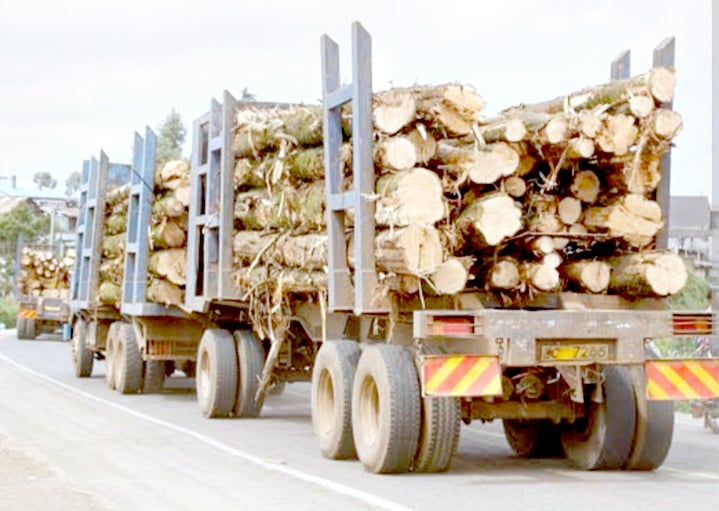
In its heyday, Elburgon town in Nakuru County was a bustling hub of economic activity, where the rhythmic clatter of trains and the deep growl of sawmill machinery painted the picture of a community on the rise.
Farmers once relied on donkeys to transport fresh produce from their farms to the waiting train wagons at the Elburgon railway station.
Locomotives chugged out of town with loaded wagons of cattle, sheep, and forest products, ferrying the region’s bounty to Kisumu and beyond.
Those who lived through this golden era speak of a town that never slept hungry, a place where opportunity knocked at every homestead.
You Might Also Like



Elderly residents recall a different Elburgon—one where unemployment was nearly unheard of. The town’s economy flourished thanks to the proximity of the Mau Forest Complex, which provided a steady supply of timber and other forest products.
“Elburgon and Molo had over 30 sawmills by the 1990s,” says 74-year-old Mzee Andrew Karimi.
“They employed hundreds of young people, some permanently, others as casuals in the logging fields.”
This growth also sparked the rise of ancillary businesses. Garages thrived, servicing the multitude of trucks and tractors that hauled timber from forests like Kiptunga and Barget, more than 20 kilometres away.
Life was vibrant, and for many, the forest was more than just trees—it was a source of livelihood and identity.
Then, somewhere in the mid-1990s, change came knocking—this time with a heavy hand. The government, concerned about environmental degradation, began scaling back logging operations.
In 1995, the number of sawmills in Rift Valley Province was slashed from 221 to 171. Soon after, a total ban on tree harvesting was imposed.
Felled livelihoods
Elburgon was hit hard. Sawmillers shut down operations, laying off workers and selling off tractors and lorries to repay bank loans.
The vibrant hum of the town faded into a grim silence.
“Young men who once earned a living in logging were suddenly jobless,” Karimi recalls. “Some turned to the shamba system, trying to cultivate crops in government forest land.”
The shamba system, or non-resident cultivation, allowed landless families to farm plots in areas earmarked for tree planting.
In exchange, they helped tend to tree seedlings while growing food crops like maize and vegetables. It was a lifeline—until it, too, was revoked.
Without jobs or land, many families began sinking deeper into poverty. Internal displacement made things worse.
In Kasarani, a large informal settlement within Elburgon township, over 1,300 families now live on small 80-by-20-foot plots.
Most homes lack basic sanitation, with pit latrines often dug dangerously close to shallow wells due to a lack of piped water.
“Life in the shanties is painful,” says Karimi, who has lived in Kasarani for years. “We dig pit latrines and wells just feet apart because we don’t have a choice.”
Eighty-year-old Joyce Wanjira Kariuki, who lost everything during the 2008 post-election violence in Keringet, found refuge in Elburgon—but not peace.
She remembers a time when even the poorest families had access to free firewood and off-cuts from sawmills. Today, not even sawdust is available.
Lost generation
The town’s youth have borne the brunt of the economic collapse. Joseph Kibe, a former sawmill worker, says the decline of the timber industry brought more than just poverty—it unleashed a wave of alcoholism and despair.
“Back then, no saw miller would hire a drunk,” he says. “Today, many young men are idle, drowning in illicit brews because there’s nothing to do.”
Kibe and his friends have heard of the Youth Fund, a government initiative meant to empower young entrepreneurs—but accessing the funds remains a mystery to many.
“Without employment, people sink into depression. Some even take their own lives,” he adds grimly.
Today, Elburgon stands as a sobering case study of what happens when a single-industry economy collapses.
Though conservation efforts have helped protect Mau Forest, they also left communities like Elburgon without a safety net.
One of the town’s last remaining sawmilling companies recently laid off more workers, citing rising costs and dwindling operations.
For Elburgon to rise again, residents say, it will take more than nostalgia and broken memories.
It will require strategic government support, sustainable reforestation programmes that also support livelihoods, and urgent interventions to stem youth unemployment and social decay.
Author
Waweru Bernard
View all posts by Waweru BernardLatest News








Advertisement
More on News