Advertisement
Duale: 67 Ebola tests negative as Kenya maintains high alert
Sunday 07th June, 2026 08:10 PM|
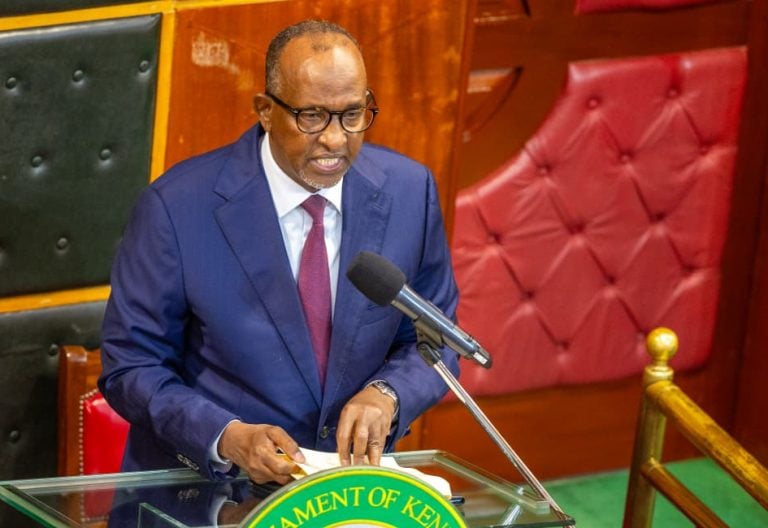
Health Cabinet Secretary Aden Duale has assured Kenyans that the country remains free of Ebola virus disease after 67 suspected cases tested negative, even as the government maintains heightened surveillance following outbreaks in neighbouring Uganda and the Democratic Republic of Congo.
Speaking during an event in Tana River on Sunday, June 7, 2026, Duale said, “As of today, there is no incident of Ebola outbreak in our country. We have tested 67 people as of yesterday. All of them have turned negative.”
He added that the country has screened 88,000 travellers at entry points, including borders, airports and seaports, as of Sunday morning. “We have done enough preparation. The country is on high alert,” Duale said.
“All our laboratories are on high alert. Kenyatta National Hospital, the National Police Service Hospital, MTR, and Eldoret – all of them have created enough beds within the isolation units of those hospitals in the event we get a case, God forbid.”
You Might Also Like



The ministry has also activated toll-free reporting channels, including *719#, where citizens can report symptoms such as headache and vomiting. Duale said partners, including the US and WHO, have supported the supply of PPEs and laboratory reagents.
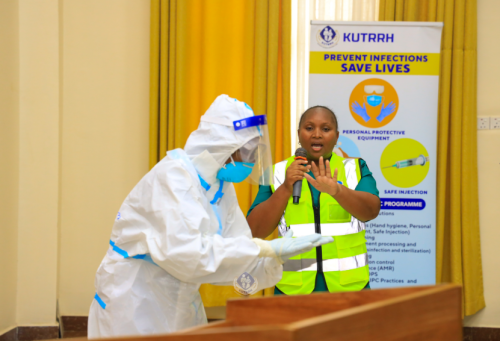
Health system readiness and surveillance
The government is partnering with the US to establish a high-end isolation, treatment and quarantine facility for infectious diseases. Duale noted that this marks the 17th Ebola outbreak globally, saying preparedness efforts are aimed at strengthening long-term response capacity.
He said 170 Kenyan healthcare workers who previously served during the 2015 Ebola outbreak in Liberia and Sierra Leone are undergoing refresher training. “I will meet them tomorrow. We have over 800; we are continuing to train,” he said.
Twenty-nine counties have also been identified to support preparedness through coordination with the National Public Health Institute, the Ministry of Health and the Council of Governors.
Homa Bay Senator Moses Kajwang’ has raised concerns over Kenya’s preparedness against Ebola, warning that lakeside communities may face heightened exposure due to cross-border trade and movement.
Speaking in response to ongoing national surveillance measures, Kajwang said isolation facilities in the region raise questions about readiness and capacity.
“If you go to the isolation units, you will find all of East Africa wote wako hapo. So if you are infected with Ebola, the question should be ‘Are we really prepared to tackle this?’ I believe that should be the conversation that we are having, not just about American citizens, but also about Kenyan citizens,” he said.
Kajwang’ further warned that communities along Lake Victoria remain vulnerable due to daily trade and movement across borders.
“We have never had Ebola, but the trade on the lake exposes our people to that disease,” he said.
Border monitoring and public health response
Health Principal Secretary Mary Muthoni earlier inspected the Malaba border on June 6 and confirmed that all 59 suspected cases had tested negative. She said surveillance systems remain active across high-risk entry points.
The Ministry of Health said four laboratories – the National Public Health Laboratory, KEMRI Nairobi, KEMRI Kisumu and the mobile lab at the Busia border – are supporting ongoing testing. A total of 347 rapid response personnel and more than 1,700 trained healthcare workers have been deployed, while simulation exercises continue in high-risk counties.
Authorities have urged the public to maintain hygiene, report symptoms early, and rely on official updates from the Ministry of Health, the Kenya National Public Health Institute, WHO and Africa CDC to prevent misinformation.
Author
Latest News






Advertisement
More on News