Deepening education funding crisis? MPs raise alarm over TVET, research and university budget gaps
By Emmanuel Rono, May 15, 2026The National Assembly Education Committee has raised concerns over deepening funding shortfalls across the Technical and Vocational Education and Training (TVET), research, and higher education sectors.
According to a statement by the Parliament of Kenya on May 15, 2026, the lawmakers warned that the gaps could undermine access, quality, and sustainability of key education programmes.
Appearing before the committee on May 14, the State Department for Technical and Vocational Education and Training has requested an additional Ksh19.162 billion to support scholarships for TVET students.
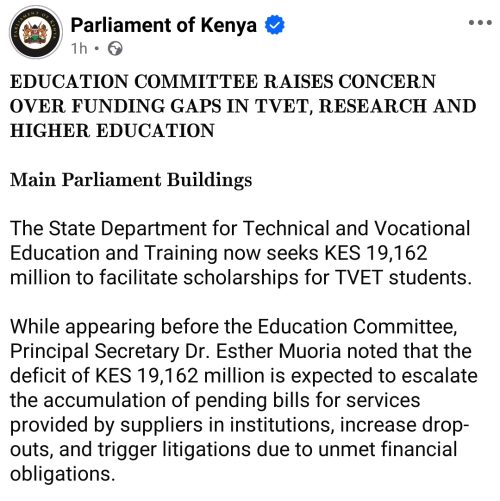
Principal Secretary Esther Muoria cautioned that the deficit could worsen, pending bills owed to suppliers in institutions, increase student drop-out rates, and expose institutions to legal disputes over unpaid obligations.
The department also sought Ksh 589 million as counterpart funding for the establishment and upgrading of TVET workshops across 69 institutions.
According to Muoria, the investment would modernise training facilities and equip institutions with state-of-the-art tools to improve practical learning outcomes.
“The establishment and upgrading of TVET workshops across 69 institutions will ensure that TVETs have state-of-the-art equipment,” she told the committee.
Govt’s underfunding
On their part, the State Department for Science, Research and Innovation, led by Principal Secretary Shaukat Abdulrazak, decried the underfunding of the department.
Their documents revealed that the State Department had been allocated Ksh1.312 billion during the BPS. However, the funds were shifted to Vote 1065, leaving zero development allocation for Vote 1067.
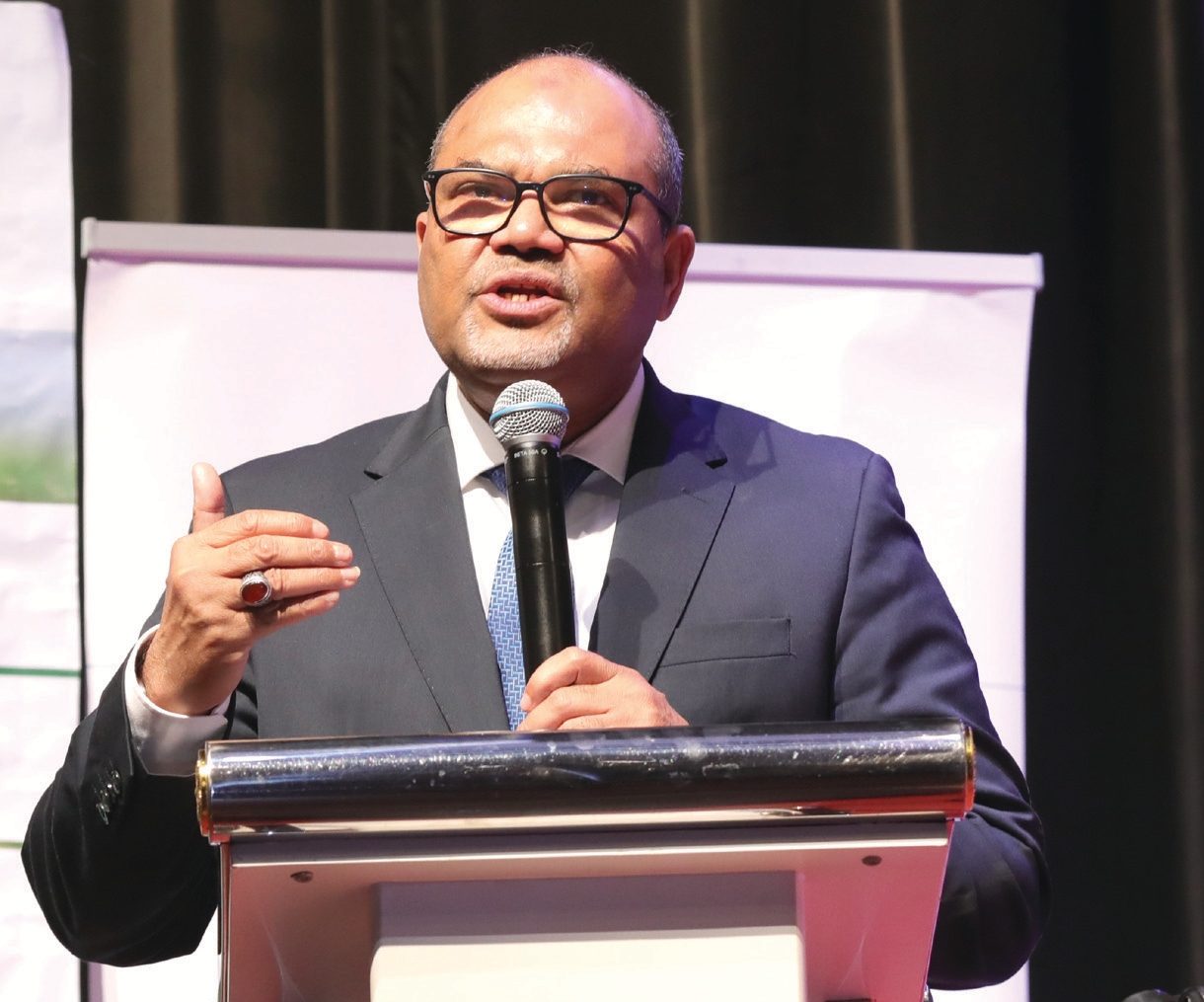
The Education Committee, chaired by Vice Chairperson Hon. Eve Obara, assured the ministry officials that it would pursue the matter to establish how the reallocations were undertaken and seek corrective action.
Meanwhile, the State Department for Higher Education, led by Principal Secretary Beatrice Inyangala, told the committee that it is facing a significant budget deficit in the 2026/27 Financial Year, having received nearly half of its requested recurrent allocation.
Need for recurrent expenditure
The department had sought Ksh 311.9 billion for recurrent expenditure and Ksh 11.4 billion for development, but the proposed estimates stand at Ksh 155.2 billion and Ksh 8.9 billion, respectively, leaving a recurrent funding gap of more than 50 per cent.
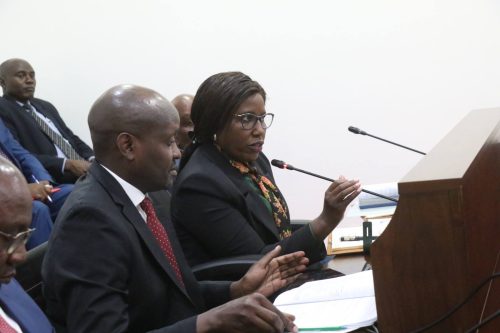
The Department, which oversees 43 universities and key agencies including the Higher Education Loans Board (HELB) and the Kenya Universities and Colleges Central Placement Service (KUCCPS), said the allocations will support implementation of the new higher education funding model and university scholarships and HELB loans, as well as research and innovation programmes.