CS Ruku outlines measures to tackle drought threat
By Faith Lagat, January 26, 2026Cabinet Secretary for Public Service, Human Capital Development, and Special Programmes, Geoffrey Ruku, has highlighted landscape restoration as a crucial strategy for Kenya to address the growing effects of climate change, particularly as the country faces severe drought conditions.
In an interview with a local TV station on Monday, January 26, 2026, CS Ruku pointed out the visible impact of climate change on the environment and livelihoods.
“There are issues to the effect of climate change that we are dealing with the drought at the moment. Probably in another couple of months, we’ll be dealing with floods,” he stated.
He also drew attention to the shrinking of water bodies, saying, “You can go to some places where I used to have rivers. They are gone. Some of the areas where I used to go and swim when I was a small boy. If we go there with you and I tell you we used to swim here, you say my mind is gone.”
Proactive measures to reduce rain dependency
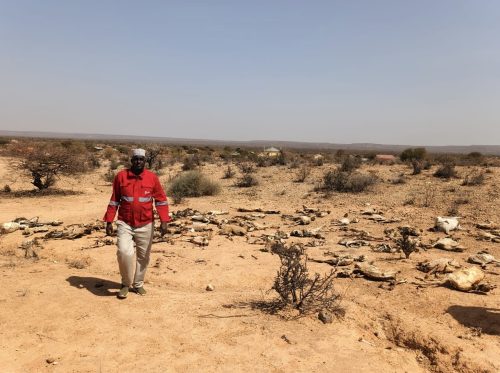
CS Ruku’s remarks come as drought continues to affect several arid and semi-arid counties, where communities face acute water and food shortages. His comments align with broader government efforts to strengthen resilience through environmental restoration and infrastructure development.
F/X
CS Ruku emphasised that restoring landscapes is essential to reduce reliance on unpredictable rainfall.
“We have to restore our landscapes. Landscape restoration is the way to go for our nation,” he said.
He praised the government’s flagship initiative under President William Ruto, describing it as “an extremely important program for our nation because landscape restoration is the only way we can be able to combat the effect of climate change.”
The programme includes a national target to plant 15 billion trees by 2032, aimed at increasing tree cover, reversing deforestation, and enhancing ecosystem resilience against climate shocks.
Beyond reforestation, the CS called for investments in water and irrigation infrastructure to ensure food production is less dependent on rainfall. “The issues to do with putting up infrastructure which can help us grow food in a manner that is not necessarily depending on rain, that investment must be done by our nation,” he said.
He added that recent cabinet approvals have paved the way for the National Infrastructure Fund, which will support critical projects in water management.
Legislation to support infrastructure projects
Looking ahead, CS Ruku said the National Assembly is expected to pass enabling legislation in February 2026 to channel resources into the fund.
“Water infrastructure is key. Building huge dams and irrigation projects so that we may not necessarily depend on rain-fed agriculture,” he explained. This approach, he noted, would help Kenya “pull ourselves out of the cycle of again and again depending on the rain for food.”
He concluded on a hopeful note, saying, “We are on the right track because the government has put in place the necessary measures towards raising funds for putting water infrastructure in place. What I mean water infrastructure is both drinking water and farming water.”