Advertisement
COP30’s cruise ship rooms offer raises concerns
Wednesday 23rd July, 2025 07:20 AM|

The Brazilian government has offered developing countries’ negotiators accommodation in cruise ships at November’s United Nations Climate Conference (COP30), costing no more than Ksh28,446 (US$220) a night.
The Amazon city of Belém is scrambling to get ready for the UN climate summit and ensure thousands of delegates have a place to stay, with locals hoping for economic benefits.
COP30 delegates could find themselves sleeping in converted classrooms, cruise ships or even tents as a shortage of hotel beds in the Brazilian host city has forced organisers and locals to come up with creative solutions.
With about 50,000 people expected, the accommodation crunch has raised questions about the decision to hold it in Belém, a city of 1.3 million people that is not one of Brazil’s biggest tourist destinations.
You Might Also Like

But COP organisers have pledged to provide at least 24,000 extra beds, including about 7,300 in public schools and military barracks.
The newly-built ‘COP30 Village’ will offer 400 suites for heads of state and other leaders.
Brazil’s COP30 presidency team said the cruise ships’ lodgings would first be offered to 98 of the “smallest developing countries and island nations”, with delegates from other countries able to book accommodation costing up to Ksh77,580 (US$600) a night at an unspecified time in the future.
Brazil’s offer came after representatives of some of the world’s poorest countries from African and Pacific delegations aired big concerns over the lack of affordable lodgings in Belém, writes Joe Lo in the authoritative UK-based Climate Home News digital publication’s latest edition.
Transparency issues
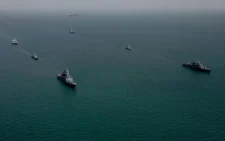
Many of the rooms are offered on two cruise ships that will be docked in the Port of Outerio – a 30-minute ride from the venue of the climate summit – providing 3,900 cabins and 6,000 beds.
“These two large ships are part of a variety of lodging options designed to accommodate all COP30 attendees,” said Valter Correia, the special secretary for COP30 overseeing logistics for the summit.
However, Brazil’s cruise ship accommodation offer and the costing has drawn criticism, with some of the negotiators describing the process as “opaque”.
Climate Home spoke to four climate negotiators from African and Pacific nations. None were satisfied with the COP30 presidency’s statement, saying that it came too late and the price caps were still too high and would price some developing countries out of participating.
A fifth negotiator, Adão Soares Barbosa from the Southeast Asian country of Timor-Leste, said his room has not been booked and US$220 a night is still “too much for developing countries”.
A spokesperson for the COP30 presidency said the accommodation platform is “operational”, but it can only be accessed by those specifically invited to submit their information.
Anne Rasmussen, lead climate negotiator for the small island group AOSIS, said that she had “seen the reports” on this offer and welcomed this initiative, but was awaiting formal communication from the COP30 presidency.
The COP30 presidency told Climate Home that available accommodation will include all modalities such as hotels, vacation rentals and ships, among others.
Three weeks ago, African and Pacific island nations expressed concern that the cost of rooms could prevent them from joining in negotiations at COP30, where issues like adapting to climate change and transitioning away from fossil fuels will be discussed.
The UN subsidises the costs of up to three people from some developing countries – least developed countries and small island developing states – to attend COP talks. But the payment, known as a daily subsistence allowance (DSA), is capped based on living costs.
For the city of Belém, UN guidelines – which are not specific to COP – say the DSA should be Ksh19,266 ($149) a day.
The UN’s climate arm, which has a severely limited budget, has not said if this limit will be raised for COP30.
An increase would involve the International Civil Service Commission, which sets the rates.
Because of the DSA rate, one negotiator representing one of the 98 governments offered the Ksh28,446 cap, saying that “even with this supposed Ksh28,446 price point, it’s still far beyond what most delegates can reasonably cover”.
Élite COP
“That doesn’t even account for the high cost of food and drinks at the venue,” they said, adding that if delegates are spending all of their DSA on accommodation, then they’re essentially being forced to pay out of pocket for everything else.
“This is increasingly shaping up to be an exclusive COP where only those with big budgets can attend,” they said, “Civil society and media participation seem like an afterthought, and that’s incredibly worrying.”
Another negotiator from one of the 98 governments offered the cap agreed, saying that “wealthy countries are always OK” and “the rich developing countries will send limitless delegates” but “the poor will send however many are paid for”.
Negotiators from the 57 developing countries who were not offered the $220 a night cap were also dissatisfied.
“Ksh77,580 ($600) is way above the limit we have for our per-person costs,” said one official from an African state, “it’s going to be really hard for us to participate if the accommodation situation is not resolved.”
“None of our delegation has booked as of yet, and we’re urgently trying to resolve it, but it’s just really expensive as of now,” they added.
One negotiator said the process of choosing which countries were offered the Ksh28,446 a night cap was “opaque”.
They pointed out that some countries whose governments were offered the cap have higher per-person incomes than some of those that were not.
Kenya, which has been offered the cap, has a gross domestic product (GDP) per person nearly three times higher than that of Nigeria, which has not been offered the cap.
Asked about the criteria for choosing the 98 nations, the COP30 presidency said it is made up primarily of Least Developed Countries (LDCs) and Small Island Developing States (SIDS).
They did not explain why countries like Kenya, Sri Lanka and Nicaragua, which are not LDCs or SIDS, were chosen.
While rooms in Belém are listed on Airbnb for the COP30 dates for less than Ksh12,930 (US$100) a night, most governments, and many companies and NGOs have rules against booking Airbnbs due to safety and other concerns.
Green shipping campaigners also criticised the pollution involved in using cruise ships to host COP30 delegates.
The two ships – MSC Seaview and Costa Diadema – will rely on their onboard generators to power their air conditioners, televisions and other equipment, a COP30 spokesperson said, adding that “these generators use different types of fuel, ranging from conventional diesel to biodiesel.”
Together, the two ships emit over 140,000 tonnes of carbon dioxide equivalent a year, according to EU data – more than entire Pacific island nations like Nauru and Kiribati.
NGO One Planet Port’s Lucy Gilliam told Climate Home the cruise ships are “a climate disaster” with a much higher carbon footprint than staying in a hotel.
“I think it makes a farce of the COP”.
Author
Alberto Leny
View all posts by Alberto LenyLatest News




Advertisement
More on News