Advertisement
Concerns as Khan supporters tried under army laws
Friday 19th May, 2023 04:50 AM|
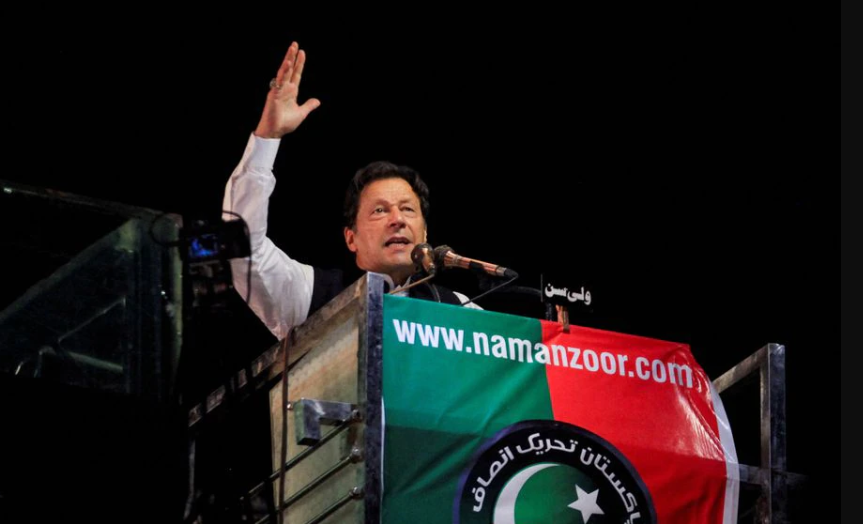
As soon as Akram* saw the news last week that Imran Khan had been arrested, he thought of stepping out and protesting against what he believed was an “abduction” of a former prime minister.
“I messaged our WhatsApp group of PTI [Pakistan Tehreek-e-Insaf] supporters, asking that we must gather outside to protest against this illegal act,” the 40-year-old told Al Jazeera on Wednesday on condition of anonymity due to fears for his safety.
Akram, a marketing professional, joined some 80 others who took to the streets in Pakistan’s largest city of Karachi to demand the release of Khan, who was detained by paramilitary troops on charges of corruption on May 9 as he appeared at a court in the capital, Islamabad, for a different case.
“We had placards and we were chanting slogans supporting Khan. Initially, uniformed policemen came to us and strictly told us not to block roads or create any civic unrest. But within half an hour, a group of policemen in civilian clothes came and picked more than 40 of us, threw us in a police vehicle and took us to a lock-up,” Akram told Al Jazeera.
He added that he was taken to five different police stations before being placed “in a tiny cell” with more than 30 others.
“The conditions were repulsive, and there was barely any space to breathe there. The police kept me for two days, without filing any case, before releasing me,” said Akram.
His release on May 11 came on the same day the Supreme Court declared Khan’s arrest illegal. The arrest had triggered 48 hours of violence across the country that saw rioting, arson and vandalism against public and private properties, including military installations.
More than 10 people were killed in the clashes and thousands were arrested, including many senior PTI leaders.
Amir Mir, the interim information minister of Punjab province, where more than 3,200 people were arrested, said those accused of targeting the residence of the top military commander in the eastern city of Lahore and other military buildings would be tried in military courts.
“The offenders were identified only after 100 percent confirmation of their involvement in the attacks. We will make an example out of them so nobody can dare repeat this in future,” Mir told reporters on Wednesday.
On Tuesday, Pakistan’s National Security Committee approved the military’s decision to try those involved in rioting under the country’s draconian army laws, which overrule civilian courts.
The military courts are separate from Pakistan’s civilian legal system where the judges are members of the army’s legal branch. The hearings taking place at military installations where the media does not have access. If convicted, a person has no right to appeal their case in another court.
International rights organisations and groups within Pakistan have staunchly criticised the decision to use military courts to try civilians, arguing that this risks violating their right to due process.
The Pakistani army is a dominant player in the country’s political affairs and directly ruled it for more than three decades since 1947.
Author
Story Agencies
View all posts by Story AgenciesLatest News



Advertisement
More on News