Concern as Kenya bleeds Ksh4.3B annually due to unsafe water and sanitation
By Aloys Michael, January 23, 2026Kenya is quietly losing billions of shillings every year to a crisis that flows beneath its streets and across its rivers: unsafe water and poor sanitation.
The cost is counted not only in money, but in missed school days, lost work hours, and preventable illness, especially among children.
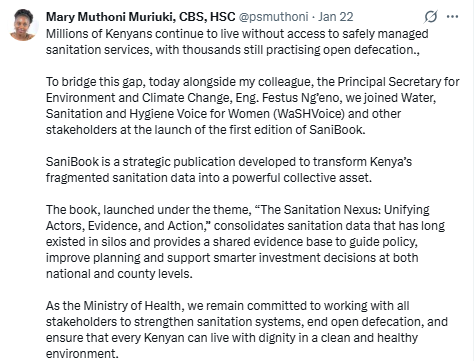
Speaking on Friday, January 23, 2026, the Public Health Principal Secretary, Mary Muthoni, said that the country spends about Ksh4.3 billion annually treating diseases linked to unsafe water and sanitation.
“Millions of Kenyans continue to live without access to safely managed sanitation services, with thousands still practising open defecation. The health impacts are visible across the country. When untreated sewage flows into open spaces, rivers, or drainage channels, it contaminates water sources used for drinking, cooking, and washing,” she said.

“The result shows up in clinics and hospitals as diarrhoea, cholera, typhoid, and worm infections. Children bear the heaviest burden, with repeated infections affecting their nutrition, growth, and ability to learn.”
Effect on productivity
On top of this, an estimated Ksh2.1 billion is lost each year through reduced productivity when people are too sick to work or attend school. These figures point to a system under strain, where prevention is far cheaper than cure, yet remains underfunded.
“Only about 15 per cent of Kenya’s population is connected to sewer systems. This leaves millions relying on unsafe alternatives such as pit latrines, septic tanks that are poorly maintained, or open defecation,” the PS revealed.
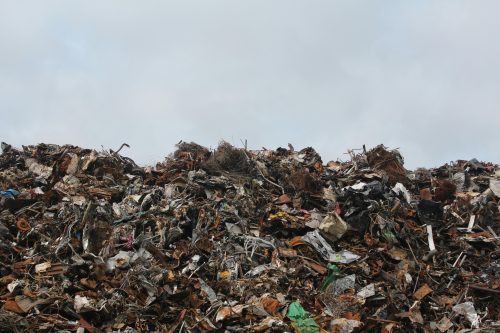
Dwindling public health?
Closing this gap and meeting national sanitation targets would require at least Ksh500 billion in infrastructure investment, a figure that underscores how far the country still has to go
The sanitation challenge is not just technical, but also social and institutional. Kenya has piloted numerous sanitation projects over the years, often with promising results. However, many of these initiatives fail to move beyond the pilot stage.
A key reason, experts say, is the lack of sustained funding and limited community involvement. Projects designed without strong local ownership often collapse once initial support ends.
Another major gap lies in data. Sanitation information in Kenya has long been scattered across ministries, counties, development partners, and non-governmental organisations. This fragmentation makes it difficult to plan effectively, track progress, or direct resources where they are most needed. Without reliable, shared data, decision-making becomes reactive rather than strategic.
It is against this backdrop that the Ministry of Health, alongside the Ministry of Environment and Climate Change, has backed new efforts to bring order to the sector through the launch of the joint Water, Sanitation and Hygiene Voice for Women (WaSHVoice) and other stakeholders to launch the first edition of SaniBook.
The publication, the PS said, aims to transform Kenya’s scattered sanitation data into a single, usable resource.
“The Sanitation Nexus: Unifying Actors, Evidence, and Action,” SaniBook brings together evidence that has long existed in silos. Its goal is to support better policy choices, improve planning, and guide smarter investment decisions at both national and county levels,” she wrote on X.