Advertisement
Commission of Inquiry that stopped former AG’s match to State House
Monday 03rd January, 2022 08:00 AM|
Chris Oyuga
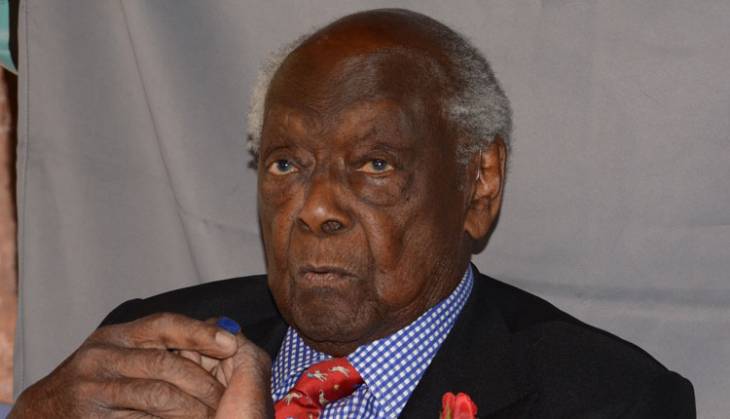
If there is one thing that Charles Njonjo detested throughout his life, it was the Commission of Inquiry appointed by President Daniel arap Moi to probe him over allegations of trying to overthrow his then nascent government.
Until his death, Njonjo could not believe a man he had fought hard to take to State House after Jomo Kenyatta’s death in 1978 would turn against him and destroy his political career.
Besides being formed to investigate allegations of attempts to overthrow President Moi’s government, the Commission headed by Justice Cecil Miller, was to also investigate a cache of weapons found in a house on Nairobi’s Lenana Road.
According to the chronicles by the Kenya Yearbook, Njonjo has always insisted that he had no intention of overthrowing Moi, saying people who thought he was too powerful and wanted him out of the power equation made up “the whole thing”.
“These people were like wild dogs baying for the blood of a rabbit, ” Njonjo has been quoted as saying.
Weapons claims
The Commission was formed in 1983 after Njonjo had fallen out of favour with the system and was branded a traitor amid accusations he had planned to overthrow President Moi’s government in August 1982.
He was also alleged to have been party to the activities of a man named Andrew Mungai Muthemba, who was tried for independent Kenya’s first treason case.
Prosecutors claimed Muthemba, a relative of Njonjo, had tried to acquire weapons illegally through the Kenya Air Force. Muthemba was later acquitted.
Njonjo denied all the allegations leveled against him. He baffled the commission when he declined to be cross-examined by his lawyers.
He, however, made a short statement in which he thanked Moi.
“But I do believe that the very fact that such proceedings have taken place is a tribute to the maturity and stability that exists in our country and the Christian wisdom of his Excellency the President.”
The commission said: “In making his statement, Njonjo did not appear to be concerned with the proceedings of the inquiry. Instead, he purported to address the President directly. By doing so, he once again left all the allegations made against him and the mass of the evidence adduced before us untouched, thereby leaving it open to adverse inferences to be drawn against him.”
The commission ruled: “…Njonjo conducted himself in a manner prejudicial to the security of the State. We find this allegation well established.”
Njonjo was later pardoned by President Moi.
Author
People.Reporter
View all posts by People.ReporterLatest News

Advertisement
More on News
