Advertisement
Christmas is just another day to fight for survival, IDPs say
Tuesday 24th December, 2019 12:00 AM|
Lilian Kaivilu
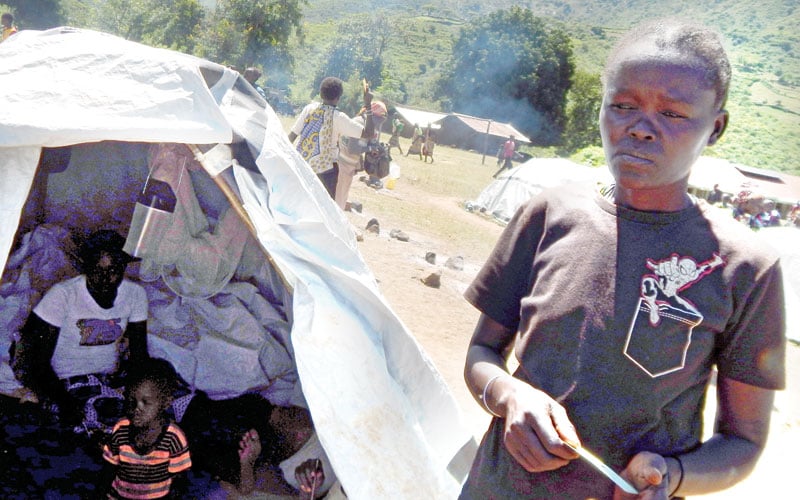
Billows of smoke from different places rise up to the skies at Ntepes Early Childhood Development Education centre in Marigat Sub-county, Baringo.
It is almost lunchtime and each of the 38 households in the centre is preparing lunch.
As other Kenyans prepare for Christmas, these families are in a fight for survival since December 1, when they were displaced by floods from Molo River in the area.
The Ntepes ECDE camp has became their home since then and Christmas may not be any different from their daily struggles.
The water stream outside the only classroom in the compound is their source of water.
Though dirty, the internally displaced persons (IDPs) have no alternative. They use it for drinking, cooking and other household chores.
Women, girls and children sleep in one room while men and boys share a small room opposite the main structure in the school compound.
Access fruits
The elderly, pregnant and nursing women have sought temporary residence in the neighbouring homesteads. Some, however, have to make their meals from the camp.
Josephine Lokesek, a mother of five, while preparing lunch for her children who have been staying with her at the camp since December 1, says she has no specific plans for Christmas.
“Life is tough here. For me, the priority is a safe delivery and basic food for my children,” she says.
For her and six other pregnant women in the camp, essential meals such as fruits, vegetables and milk have become luxury as they are in short supply.
“A glass of milk at the nearest shopping centre here retails at Sh40. If I were in my home, I would milk for free. We also do not access any fruits or vegetables while in this camp,” she adds.
Lepeliani Tom Sekenge, acting Ilchamus chief, called on well wishers to provide aid to those residing in the camp.
“We are asking for food for the entire team to eat together. Up to now we haven’t received any food donations towards Christmas,” he says.
Harsh conditions
Mark Rotich, Baringo county Kenya Red Cross vice chairman, said the Ntepes ECDE displacement camp hosts 38 households, which include 22 school-going children, seven elderly people, 21 adolescents, 40 women of reproductive age, 17 lactating mothers and six pregnant mothers.
Sanitation, inadequate food and lack of access to clinics are some of the challenges the IDPs are facing.
Evans Lolmodooni, chairperson of the Ntepes displacement committee, decried harsh conditions in the camp, especially being borne by nursing and pregnant mothers.
“Women are sleeping on the cold floor. There were also frequent mosquito bites before Red Cross distributed mosquito nets to them,” he said.
Swept away
In West Pokot county, Paroo Primary School is now home to people displaced by floods that claimed over 58 lives.
According to Geoffrey Lipale, the county Health Executive, 25 bodies have since been buried, 16 bodies are still missing and one is yet to be recovered.
At the displacement camp, Alice Pkaroi sits under a tree, resting after preparing lunch for her five children.
She was a business woman in her Solio village before the floods swept her home away.
Here, she and other mothers sit most of the day as their businesses were also swept away. Life is no longer the same.
“We cannot access a balanced meal as we used to. Basic items such as mosquito nets, fruits and shops to access personal items are inaccessible,” she says.
Author
People Reporter
View all posts by People ReporterLatest News








Advertisement
More on News