Advertisement
Children in polluted areas likely to suffer lung cancer
Saturday 19th July, 2025 01:00 AM|

There is a likelihood of a child born in highly-polluted areas in Nairobi developing chronic respiratory diseases such as asthma and pneumonia, and worse still, lung cancer, health experts have revealed.
Several studies presented at the just-concluded global Clean-Air Forum in Nairobi have validated these revelations, identifying areas where hospital waste is poorly incinerated as the most prevalent.
This is even as it emerged that only five tonnes out of 1,000 tonnes of hospital waste generated per month in Nairobi is properly incinerated.
World Resources Institute (WRI)’s Country Representative for Kenya, Dr George Mwaniki, said on July 18, 2025, that while there is only one incinerator that’s certified to handle hospital waste, meaning that a lot of that waste is destroyed through open-air burning.
You Might Also Like


“Of course, the burning of hospital waste contributes to a lot of air pollution. Imagine the chemicals that come from hospital waste into the atmosphere, for instance, medicine, vials that were carrying it, and all burning and releasing the toxins to the atmosphere,” he wondered, noting that it’s a serious issue that qualifies for a crisis.
The experts — who include air quality specialists, environment and public health authorities — are concerned that burning things like antibiotics in the open are likely to interact with other bacteria in the environment, creating some level of bacterial resistance. He said this situation goes beyond pollution and becomes something else.
Urgent concern
“When we talk to Nairobi City County, the health department, there is a lot of citizen complaints about air pollution, and the biggest complaints are actually coming from communities living next to hospitals that have been seen as contributors,” Mwaniki said, noting that this indicates that it is actually a big issue that needs to be addressed urgently.
According to some of the complaints recorded in the studies, children from such settlements have asthma.
“I actually do have a colleague we work with, who lived in that area, and according to her, she used to take the children for medication every month due to an asthma attack or a respiratory issue,” he added.
However, being part of the team that was doing work around air quality in Nairobi, she realised that the problem might be the exposure from the incinerator, prompting her to relocate, and in the last six months, she has not taken the children to the hospital.
“There is a need for county governments to take action on hospitals,” he suggested.
Due to this, notes Dr Justus Simba, a child health specialist and senior lecturer in Child Health and Paediatrics at Jomo Kenyatta University of Agriculture and Technology (JKUAT), children living in polluted areas in the city are facing increased risks of lung problems compared to those in rural areas, a health specialist has revealed.
This is largely due to constant exposure to polluted air in the city, which has a direct negative effect on their lung health.
“Children’s lungs are affected when they live in polluted environments. Studies have also looked at patients, and as a lung specialist, I can say that the key change needed is either reducing pollution or moving them to cleaner areas,” he said
Simba noted that shifting children from highly polluted parts of the city to cleaner areas often results in noticeable improvement in their lung symptoms.
He pointed out that air pollution is one of the main causes of asthma in children.
“I’ve seen patients whose symptoms worsen when they visit Nairobi compared to when they are in rural areas or other towns,” he said.
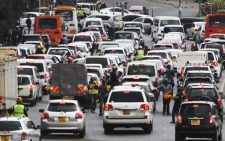
The specialist also referenced research by a colleague that showed pollution levels rise sharply during morning and evening rush hours, around 6 am and 6 pm, exposing children to dangerous spikes in harmful air particles.
Simba said that long-term exposure to polluted air damages the protective lining of the airways, making it easier for bacteria and viruses to cause infections, such as pneumonia.
To protect children’s lung health, he recommended that homes be well ventilated.
“Air pollution comes from both outside and inside the house. For indoor air, simple measures like keeping windows open during the day, even in colder months, can help reduce pollutants,” he explained.
Simba cautioned families about indoor hazards such as mould, which appears as a white substance on tiles, and the use of dirty cooking fuels.
Vulnerable demographic
“The safest and cleanest option is electricity, followed by gas. These choices significantly reduce indoor air pollution,” he added, advising families living close to busy roads to consider moving their homes even a few metres further away from highways to reduce exposure to vehicle fumes.
According to the World Health Organisation (WHO), about 600,000 children under 15 years die every year due to respiratory infections linked to air pollution.
In 2021, pollution was connected to over 700,000 deaths among children under five years old.
Simba said children are especially vulnerable because their lungs and immune systems are still growing, making the impact of pollution even more harmful.
Raphael Muli, a public health specialist working at the Nairobi County Government, and currently coordinating climate change and air pollution at the county, said one of the biggest challenges that the city is facing is the high volumes of medical waste generated from both the public and private facilities.
“One of the biggest challenges is that this waste is, most of it is highly infectious and it needs to be managed in a good way so that it does not pose risks to the public,” he said, pointing out that one, and the most recommended way is either incineration or using the new technologies like microwaving, where waste burnt to ashes with no fumes being discharged.
Unfortunately, according to Muli, there are very few of these facilities in the county, and inadequate infrastructure to ensure that the waste is managed and handled safely.
He said there is quite a big number of private facilities, both low-level, middle and high-end facilities, but most of the so-called incinerators are not really incinerators but burning chambers, according to Muli who added that because they are unable to combust waste to ash because a burning chamber will, at the end of the day emit a lot of smoke, which poses high risks.
This is because there are furans, carbon dioxide and much other particulate matter that come out from the burning of this waste.
“So, as a county, I think we are making steps to ensure that this particular space is equally controlled to prevent any health effects that can affect the population because when people inhale this smoke, there are risks of upper respiratory infections, there are risks of cancer and many other conditions that can come out of inhaling some of these fumes that come out from some of these incinerators,” he said.
Author
George Kebaso
View all posts by George KebasoLatest News








Advertisement
More on News