Central African Republic’s president sworn in for 3rd term after disputed election
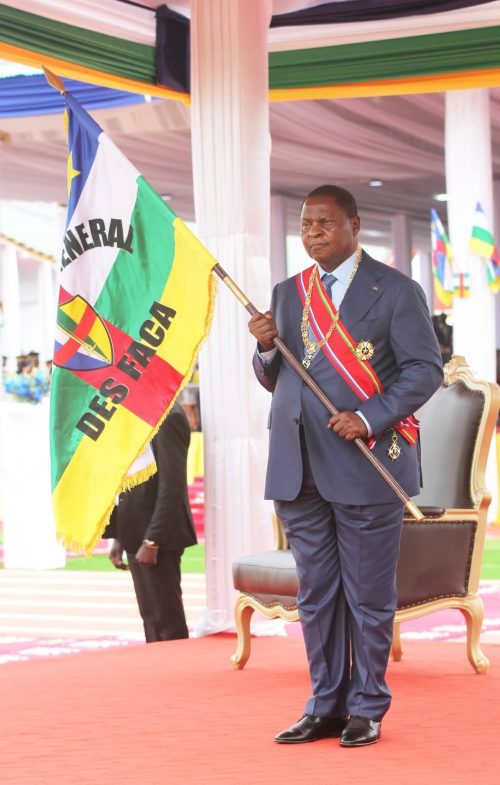
By Associated Press, March 31, 2026The president of the Central African Republic, Faustin-Archange Touadéra, was sworn in for a third term on Monday, March 30, 2026, three months after a disputed general election.
Touadéra will be serving a new seven-year term. He was declared the winner of the vote in December, which was boycotted by the coalition opposition party following a 2023 constitutional referendum that removed term limits and increased the presidential term from five to seven years.
“We aspire to build a sovereign economy and ensure transparent management of our natural resources,” Touadéra said at the swearing-in ceremony in Bangui, attended by the presidents of Congo-Brazzaville and Comoros.
Sandwiched between war-wracked Sudan and the Democratic Republic of Congo (DRC) among other countries, the security situation in CAR has eased since the civil war of the 2010s, but it remains “fragile,” according to Touadera.
“I reached out to the armed groups … and peace is returning thanks to this willingness to engage in dialogue,” Touadera said in January.
“I will continue this extended hand policy,” he added.
Opposition parties and civil society rejected the results of the election, which the Constitutional Council said that Touadéra won with 77.9 per cent of the vote.
“You have to be a fool to believe that,” said Frédéric Godoba, a civil society activist.
Conflict has broken out in the country since 2013 after mostly Muslim rebels seized power and forced then-President François Bozizé to quit. The conflict was de-escalated by a 2019 peace deal between the government and 14 armed groups. Six of the 14 groups later withdrew from the agreement.
The Central African Republic is one of the countries where Wagner, a Russian mercenary group, was first active in Africa.
Mathilde Tarif, a researcher at Belgium’s Ghent University, said Touadera faced multiple challenges.
“One… will be his ability to maintain stable domestic security forces,” she said.
The success of this term “will depend greatly on the effectiveness of the partnerships he has established with Rwanda, the United Arab Emirates, and Russia,” on which “he relies to continue stabilising his regime,” Tarif said.
Today, nearly 90 per cent of the territory is under government control, compared with 80 per cent held by armed groups in 2021, according to various analysts.