Advertisement
Auditor-General questions cost recovery, tax exemptions in Turkana oil proposal
Wednesday 11th February, 2026 08:49 PM|

Auditor-General Nancy Gathungu has raised concerns over proposed revisions to cost recovery limits and tax exemptions in the South Lokichar oil development plan, warning Parliament that failure to address the gaps could significantly reduce Kenya’s share of petroleum revenues.
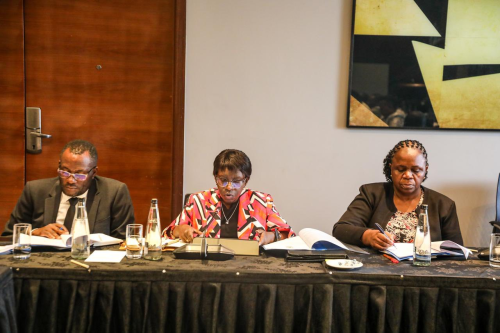
Appearing before a joint sitting of the National Assembly Departmental Committee on Energy and the Senate Standing Committee on Energy on Wednesday, February 11, 2026, Gathungu said legislative, fiscal and oversight weaknesses in the proposed development of oil Blocks T6 and T7 in Turkana County must be resolved before approval.
“The Office of the Auditor-General remains committed to ensuring transparency and accountability in the petroleum sector but requires stronger legal backing and timely access to information,” a statement by Parliament reads.
Red flags
The Auditor-General revealed that despite constitutional mandates to audit public resources, including petroleum revenues, no approved recoverable cost statements for the two blocks have been submitted for audit to date.
You Might Also Like


“The lack of audits on costs incurred during the exploration phase has denied the country an opportunity to disallow ineligible expenditures, which could ultimately reduce government revenue once production begins,” Parliament stated.
Gathungu warned that under the Petroleum Act, 2019, the government may audit contractors’ books within seven years, but delayed audits risk contractors’ accounts being deemed correct by default.
The Auditor-General expressed concern over proposed revisions to fiscal terms.
“Proposed revisions to fiscal terms—including exemptions from VAT, withholding tax, railway development levy and import declaration fees—could result in multi-billion-shilling revenue losses if approved without thorough review by the Kenya Revenue Authority,” the statement notes.
She further flagged the contractor’s request to raise the cost recovery limit to 85 per cent from the current limits of 55 per cent and 65 per cent for the respective blocks, noting that the Petroleum Act caps cost recovery at 60 per cent.
“While acknowledging that such incentives may aim to attract investment, higher cost recovery limits reduce immediate government take and require robust real-time monitoring to prevent cost inflation,” Parliament added.
Gathungu also questioned the contractor’s request for unitization of the development area under harmonised fiscal terms, stating that both blocks are held by the same contractor and may not meet the legal threshold for unitization under the Petroleum Act.
Call for strengthened oversight
Gathungu pointed out broader legislative gaps requiring parliamentary attention.
“Unclear procedures for awarding petroleum contracts, lack of prescribed formats for reporting recoverable costs, ambiguity on government participation percentages in upstream projects, and Kenya’s non-membership in the Extractive Industries Transparency Initiative (EITI)” were among gaps identified,” Parliament stated.
“Non-membership in EITI may elevate governance risk perceptions among international lenders and investors, potentially increasing borrowing costs for energy infrastructure projects,” Parliament added.
Gathungu expressed concern that Parliament has not debated most of the performance audit reports submitted by her office.
“Consideration of those reports would have helped close policy and operational gaps earlier,” Parliament stated.
Urging lawmakers to carefully consider the identified gaps before approving the South Lokichar Field Development Plan, she cautioned that petroleum resources can either accelerate development or fuel economic distortions if poorly managed.
“The Office of the Auditor-General will continue to provide quality and timely audit reports to Parliament,” Gathungu said, calling on lawmakers to debate audit findings expeditiously and follow up on implementation of recommendations to safeguard public interest.
Author
Cy Muganda
View all posts by Cy MugandaLatest News






Advertisement
More on News