Advertisement
Amnesty condemns govt silence in Mwagodi’s abduction
Sunday 27th July, 2025 11:49 AM|

Amnesty International has faulted both the Kenyan and Tanzanian governments over their silence and inaction during the abduction and enforced disappearance of Kenyan activist Mwabili Mwagodi.
In a statement issued Sunday, July 27, 2025, the global human rights watchdog welcomed Mwagodi’s recovery but raised concerns over what it termed “deeply troubling” silence throughout his detention and eventual release.
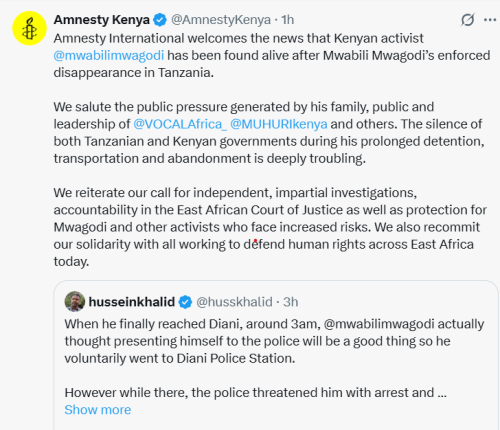
“The silence of both Tanzanian and Kenyan governments during his prolonged detention, transportation, and abandonment is deeply troubling,” read the Amnesty Kenya statement on X.
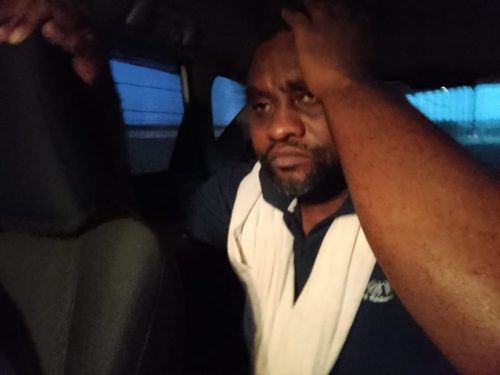
Mwagodi was found alive on the morning of July 27, 2025, after being dumped in a remote area of Kinondo, Diani, in Kwale County. According to Vocal Africa CEO Hussein Khalid, the activist had been abandoned in a bush around 3 am and walked for approximately three kilometres before managing to call his family.
You Might Also Like


He was later taken to Pandya Hospital in Mombasa for medical examination.
Amnesty added that only relentless public pressure from his family, VOCAL Africa, MUHURI Kenya, and other supporters led to his release. The organisation called for independent investigations and accountability, including through the East African Court of Justice. It also urged both governments to guarantee protection for Mwagodi and other human rights defenders facing increasing risks.
Cross-border collusion
The Kenya Human Rights Commission (KHRC) has echoed Amnesty’s concerns, accusing both governments of cross-border collusion in the abduction. Mwagodi, known for his outspoken criticism of political interference in religious spaces, had travelled to Dar es Salaam, Tanzania, for work in the hospitality industry before going missing on July 23.
KHRC linked his disappearance to earlier threats and surveillance after he led a peaceful protest during a church service in Nyahururu in June 2024.
The commission described the incident as “deliberate, coordinated, and criminal,” calling it part of a growing pattern of regional repression targeting vocal activists. It cited the abduction and assault of Kenyan activist Boniface Mwangi and the detention of Ugandan journalist Agatha Atuha—both cases involving Tanzania and currently under review at the East African Court of Justice.
On July 26, Mwagodi’s family and Vocal Africa sought help from Kenya’s Directorate of Criminal Investigations (DCI), but their request was declined.
The DCI cited jurisdictional limitations, stating the case was outside their mandate. The matter has since been reported to the police and the Ministry of Foreign Affairs.
Both KHRC and Amnesty have demanded full disclosure on Mwagodi’s condition, investigations into threats against his family, and an end to enforced disappearances.
They also condemned a police attempt to detain Mwagodi in Diani despite his voluntary surrender, urging the governments to uphold human rights commitments and protect activists across East Africa.
Author
Latest News







Advertisement
More on News