Agness Zani defends 10-point agenda report amid opposition claims of PR spin
By Aloys Michael, March 19, 2026Chairperson of the 10-Point Agenda Committee Agnes Zani has defended the recently released 10-point agenda report, dismissing opposition claims that it is merely a public relations exercise.
Her comments come amid growing criticism from legislators and party leaders who have described the report as lacking substance and failing to deliver tangible results.
The 10-point agenda, unveiled by the Orange Democratic Movement (ODM) and United Democratic Alliance (UDA) on March 10, 2026, Zani argues that it was designed as a strategic framework to drive economic transformation, industrialisation, youth employment, and enhanced governance across Kenya.
However, critics argue that the document is largely rhetorical, offering little in the way of measurable outcomes.

Speaking in an interview on K24 TV on Thursday, March 19, 2026, she emphasised that the committee’s role is to collate and disseminate accurate data, not to create content for political gain.
“We are not giving allocations; we are reporting projections. These are reports we receive and then communicate to the principals and the nation,” Zani said.
She stressed that the agenda is a roadmap, not an election manifesto, and highlighted the committee’s commitment to transparency.
Zani further defended the methodology used in compiling the report, noting that leadership integrity and anti-corruption measures were central to the committee’s assessment.
“One of the key issues was the conflict of interest act, which has already been put into place. Our work is about contextualising the challenges and ensuring that projections reflect real progress on governance and development,” she said.

UDA-ODM report jitters
Despite these reassurances, the report has faced intense scrutiny. Embakasi East MP Babu Owino described the agenda as a negative one out of ten during a Nairobi launch of an alternative people’s report.
“The 10-point agenda released yesterday was a mere PR exercise. Everything that was released lacked the necessary detail, and important parts were not adequately addressed,” Owino said.
He particularly criticised the agenda’s failure to deliver on promises of youth employment, pointing out that while one million jobs were pledged annually, tangible results remain elusive.
Other legislators have echoed these concerns. Murang’a Senator Joe Nyutu dismissed the report as a ceremonial speech rather than a substantive evaluation of government performance.
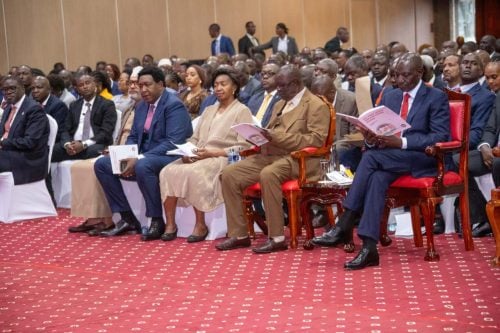
10-point agenda scrutiny
On his part, Vihiga Senator Godfrey Osotsi questioned its relevance to the realities facing ordinary Kenyans. Osotsi highlighted deficiencies in electoral reforms, police brutality compensation, and access to justice for individuals in detention without legal representation.
The opposition has also pointed to delays in reporting. Nairobi Senator Edwin Sifuna previously accused the committee of inactivity since August 2025.
“It’s been six months, and so far they have done absolutely nothing,” Sifuna said, warning that the committee must submit its final report by the March 7, 2026, deadline without further delay.
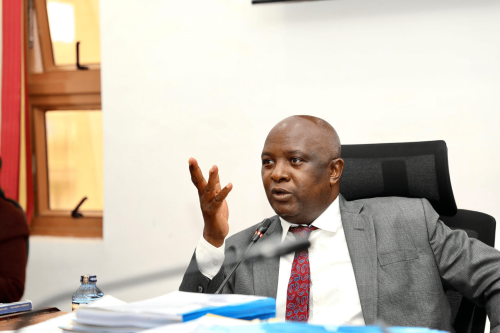
In response, Zani defended the timeline and the committee’s approach. She argued that independent verification of data and careful consultation with experts were necessary to ensure credibility.
“If a fair comment is made upon you, you do not reply with abuses. The statements made by opposition leaders amount to fair comment, and we welcome constructive criticism,” she said.
Zani also stressed the agenda’s broader goal: addressing Kenya’s economic and governance challenges sustainably, arguing that the framework is designed to provide a foundation for policy decisions and to track progress on initiatives ranging from industrialisation and infrastructure to youth empowerment and anti-corruption measures.
While opposition voices continue to challenge the report’s relevance and execution, Zani remains steadfast that the 10-point agenda is more than a PR exercise.
“Our role is to provide clarity, context, and accountability. We are committed to ensuring that the agenda reflects reality, not rhetoric, and that Kenyans can hold their leaders to account,” she said.