Advertisement
Why pulpit politics are back as 2027 race heats up
Friday 20th March, 2026 03:03 PM|

As the country’s political temperature begins its gradual rise toward the 2027 General Election, a familiar arena is re-emerging at the centre of the pulpit.
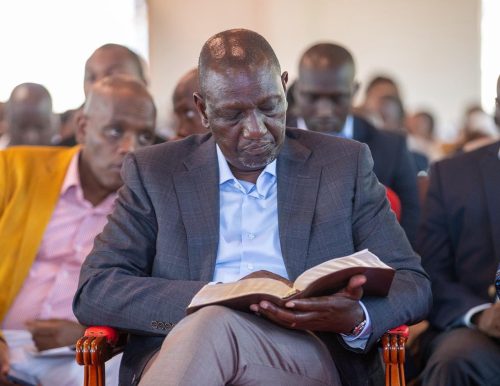
Once again, churches across the country are shifting from quiet spaces of worship to contested platforms where politics, morality, and public accountability intersect.
Across denominations, from traditional mainstream churches to evangelical ministries, clerics have in recent months taken firm positions on governance, corruption, and the deepening economic frustrations facing young Kenyans.
What was once an unspoken boundary between faith and politics is steadily eroding, with religious leaders openly challenging the political establishment.
You Might Also Like
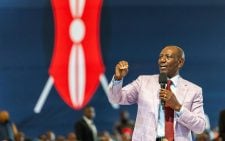

This renewed assertiveness initially positioned the church as a unified moral voice. Several institutions openly criticised the administration of Ruto, calling for accountability and urging urgent intervention on unemployment and the rising cost of living.
In some cases, congregations went further, barring politicians from addressing worshippers altogether, a sharp departure from long-standing tradition.
Symbolically, some clerics, particularly within Catholic and Anglican circles, rejected donations and gifts from political leaders, distancing themselves from what critics have long described as political capture of religious spaces.
For a brief moment, the church appeared to reclaim its historic role as a moral watchdog, reminiscent of its influence during the pro-democracy struggles of the 1990s.
However, that posture is now shifting rapidly.
Church poker political game?
As political realignments for 2027 begin to take shape earlier than expected, churches are once again becoming theatres of political mobilisation.
Politicians are steadily returning to pulpits, often accompanied by donations framed as contributions to complete the construction of the church of Christ and high-profile appearances that had recently fallen out of favour, particularly during the peak of youth-led protests.
This shift shows the enduring strategic importance of religious institutions in Kenya’s political landscape. Churches command large, loyal congregations and wield significant influence over public opinion across communities, making them invaluable platforms for political messaging.
Historically, this relationship has delivered tangible political dividends. The church played a notable role in the 2022 elections, where Ruto successfully cultivated strong ties with religious leaders.
That relationship had earlier been reinforced during the 2010 constitutional referendum, where sections of the church mobilised opposition to the proposed charter.
Now, that same influence is drawing politicians back to the pews, but not without friction.
Recent events illustrate how quickly churches can become flashpoints in the escalating political contest.
Opposition leaders accused Deputy President Kithure Kindiki of orchestrating a blockade that prevented them from attending a church ceremony in Meru County.
Among those affected were Kalonzo Musyoka, former Deputy President Rigathi Gachagua, and former Attorney General Justin Muturi, who claimed they were denied access to the induction ceremony of Bishop Muthuia Mwiti at the Methodist Church in Kaaga.

“The police, acting under direct instructions from Deputy President Kithure Kindiki, physically blocked our entry,” he said.
“Let me be clear about what this means: This is a deliberate, calculated and unconstitutional act of political repression carried out on a Sunday morning at a house of God against Kenyan citizens exercising their most basic rights.”
The church, however, offered a contrasting account, clarifying that the opposition leaders had not been invited and that Kindiki was the official guest.
The conflicting narratives highlight how religious spaces are increasingly entangled in political rivalries, often forced to navigate delicate balances between neutrality and perceived alignment.
These tensions are unfolding against a broader backdrop of disruptions and violence linked to political activity in churches. Gatherings attended by Rigathi Gachagua have, in several instances, been marred by chaos.
One of the most dramatic incidents occurred at a church in Othaya, Nyeri County, where an attack involving police and suspected goons forced Gachagua to flee through a back route.
Women and children were caught in the melee, with reports of tear gas deployment and destruction of property. A similar confrontation erupted at a Nairobi church in Kariobangi North, where rival youth groups clashed, leaving several people injured and disrupting a thanksgiving service.
Opposition leaders argue that these incidents point to a broader pattern of intimidation. Nairobi Senator Edwin Sifuna has claimed that some clerics have received threats warning them against hosting politicians associated with certain political factions.
Taken together, these developments signal a complex and evolving relationship between faith and politics in Kenya. Religious institutions are once again being pulled into the heart of political contestation, sometimes willingly, other times reluctantly.
Author
Latest News



Advertisement
More on Insights