When will the next blood moon grace our skies? Total lunar eclipse explained
By Kenneth Mwenda, September 9, 2025The next blood moon will appear on March 3, 2026, giving skywatchers in North America, Asia, Australia, and the Pacific Islands a chance to witness a rare total lunar eclipse. This phenomenon, which turned heads across Europe, Africa, Asia, and Australia on September 7–8, 2025, was not visible in the United States, leaving many enthusiasts eager for the next opportunity.
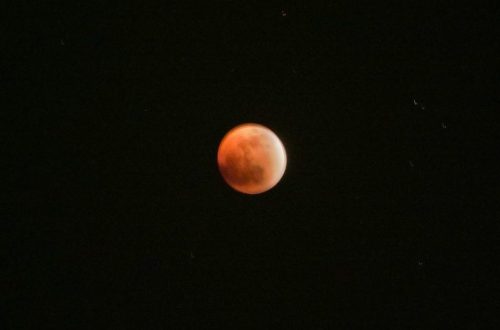
A blood moon occurs during a total lunar eclipse, when the Earth comes directly between the sun and the moon. As sunlight passes through Earth’s atmosphere, shorter blue wavelengths scatter, leaving the longer red and orange wavelengths to illuminate the Moon’s surface.
This gives the moon its signature reddish hue, earning it the dramatic name “blood moon.” The exact shade of red depends on atmospheric conditions, such as dust, clouds, or pollution, which can intensify the colour.
During the September 2025 eclipse, the totality phase lasted about one hour and 22 minutes, with the entire eclipse spanning three hours and 29 minutes. While millions in Europe, Africa, Asia, and Australia enjoyed the crimson spectacle, North American observers had to wait.
Residents along the U.S. West Coast, from Alaska to California, will have the best view of the upcoming March 2026 blood moon, able to watch every stage of the eclipse in full.
Lunar eclipses safe to watch without glasses
Lunar eclipses are generally safe to observe with the naked eye, unlike solar eclipses that require protective glasses. For a closer look, binoculars or a small telescope can enhance the experience, but they are not necessary to enjoy the view.
“A lunar eclipse happens when the Earth passes directly between the Sun and the Moon, blocking sunlight and casting a shadow on the lunar surface,” the Kenya Space Agency (KSA) disclosed.
Skywatchers often report a surreal feeling as they see the moon slowly transform under Earth’s shadow. From the moon itself, the sight would be even more extraordinary: Earth would block the sun, casting the lunar landscape into a reddish twilight, lit by the combined glow of every sunrise and sunset happening across the planet.
Beliefs and scientific insights
Cultural interpretations of blood moons are as varied as they are fascinating. In Kenya, the Samburu people view a lunar eclipse as a period when celebrations are paused until balance returns.
The Maasai believe a celestial spirit “swallows” the moon, prompting rituals and chants to restore order. Along the Kenyan coast, eclipses are often seen as omens of misfortune, and certain activities like cooking or childbirth are avoided.
Across West Africa, the Yoruba interpret the event as a quarrel between cosmic siblings, while the Bambara and Dogon of Mali see it as a moment for ancestral communication and prophecy.
From a scientific perspective, lunar eclipses offer astronomers a valuable opportunity to study Earth’s atmosphere, measure the moon’s surface features, and refine models of orbital mechanics.
By analysing the filtered light reaching the moon, researchers can detect atmospheric gases, dust, and pollutants, contributing to climate science. Historically, eclipses also helped ancient civilizations improve calendars and predict future celestial events.