What is the future of ODM after Raila’s death?
By Faith Lagat, October 15, 2025The death of Raila Amolo Odinga on October 15, 2025, has placed the Orange Democratic Movement (ODM) at a critical juncture.
Odinga, who passed away at 80 in Kochi, India, following a cardiac arrest, was the heart of the party, shaping its identity as Kenya’s leading opposition force and a champion of democratic reforms.
His absence raises pressing questions about ODM’s cohesion, leadership, and political relevance as Kenya approaches the 2027 general elections. Analysts note that the party’s reliance on Odinga’s personal brand leaves it vulnerable in a rapidly evolving political landscape.
Raila’s legacy and ODM’s challenges
As ODM’s founding leader, Raila Odinga’s influence was unparalleled.
He mobilised support across Nyanza, Western Kenya, and parts of the Coast, contesting the presidency five times between 1997 and 2022. His advocacy for multiparty democracy and constitutional reform, particularly the 2010 Constitution, cemented ODM’s role as a reformist force in Kenyan politics.
However, Raila’s dominance also created dependence on his endorsement, with senior party leaders often looking up to his authority.
Internal divisions had already surfaced before his death. In October 2024, tensions emerged over the appointment of Kisumu Governor Peter Anyang’ Nyong’o as interim leader, with senior executives questioning his pro-government stance and age.
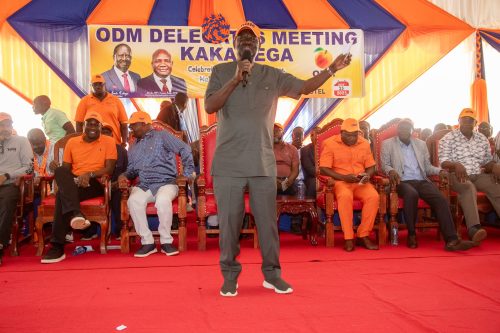
These disagreements highlight the broader challenge ODM faces in maintaining unity without Raila’s unifying presence. In its traditional strongholds, Kisumu, Migori, Siaya, and Homa Bay, residents mourned Raila as a “kingpin” and expressed concerns over potential political marginalisation, signalling the difficulty the party faces in retaining its core ethnic and regional support.
Succession and political identity
Leadership succession is now ODM’s most immediate concern. Potential candidates include Minority Leader Junet Mohammed, who has been involved in key party decisions, such as postponing ODM’s 20th-anniversary celebrations in 2025.
No single leader, however, matches Raila’s national stature or cross-regional appeal. Political analysts suggest that the party’s ability to groom a unifying and charismatic figure will determine its performance in upcoming elections. While Raila’s death may open the door for merit-based politics, this transition also risks fragmentation if internal factions fail to align behind a shared vision.
ODM’s relationship with the ruling administration further complicates its path forward. Raila’s recent cooperation with President William Ruto, including the donation of land for Ruto’s affordable housing project in Kisumu in May 2025, blurred the party’s opposition identity.
While Raila maintained that ODM was not part of the government, this engagement created uncertainty among party members and supporters, particularly as the 2027 elections approach. Emerging leaders who align too closely with the United Democratic Alliance (UDA) could risk weakening ODM’s credibility as an opposition force.
External pressures
The party also faces external competition. Opposition figures such as former Deputy President Rigathi Gachagua and Wiper leader Kalonzo Musyoka have challenged ODM’s dominance, while some MPs, including Suba South’s Caroli Omondi, have warned of declining influence in traditional strongholds.
Raila’s unsuccessful bid for the African Union Commission chairmanship earlier in 2025 also underscored vulnerabilities in the party’s national and international profile.
Despite these challenges, ODM’s institutional framework and historical significance provide a foundation for resilience. Its central role in shaping Kenya’s democratic landscape and its strong regional networks offer opportunities for renewal.
Analysts suggest that the party must redefine its identity, foster new leadership, and clarify its opposition stance while addressing internal divisions and external pressures.
Raila’s legacy as a democrat and reformer will continue to inspire, but the party’s future will depend on its ability to adapt to a post-Raila era.