Waters of life: How Elgeyo Marakwet’s indigenous communities are saving their forests to save furrows
By Faith Lagat, December 14, 2025In the steep escarpments and mist-shrouded highlands of Elgeyo Marakwet County, water flows as the very heartbeat of life itself.
High in the Cherang’any Hills and the ancient depths of Embobut Forest, crystal-clear springs emerge from rock and rich soil, giving birth to rivers and streams that wind toward the sun-baked Kerio Valley, transforming rugged terrain into lifelines of survival.
From rituals passed down to protect hidden springs to youth-run tree nurseries and county-supported restoration projects, their accounts reveal a living system sustained not by distant policy alone, but by daily commitment across generations.
These precious sources feed an intricate network of gravity-fed irrigation furrows meticulously carved into rugged escarpments by generations of indigenous hands. Some stretch more than 50 kilometres, nourishing terraced farms that have sustained the Marakwet people and neighbouring communities for centuries.
Crafted with astonishing precision using traditional tools and shared ancestral knowledge, the furrows stand as one of Africa’s most enduring examples of indigenous hydraulic engineering, now listed on Kenya’s UNESCO Tentative List for its global significance.
Yet climate variability, deforestation, landslides, and rising population pressure threaten both the upstream forests that cradle the water and the downstream furrows that deliver it.
Even so, across Elgeyo Marakwet, a quiet revival is underway as communities unite to protect the forests above and secure water, food, and culture below.
Speaking to People Daily Digital, residents, elders with weathered hands that have tended the land for decades, women leaders anchoring families and communities, energetic youth envisioning a secure future, and county officials tasked with stewardship describe a landscape woven from generations of memory, labour, and responsibility.
To them, forests are both shelter and sacred source; furrows stand as enduring inheritance rather than simple channels; and water remains a communal lifeline governed by time-honoured customs and quiet cooperation.
Forests, ancestors, and the origins of water
The Sengwer (Indigenous People) trace their origins to ancient hunter-gatherer communities of the Cherang’any Hills and Embobut Forest, where they lived long before colonial boundaries existed.
Oral histories link them to the early Nilotic peoples known for cave settlements, hunting, honey gathering, and small-scale herding. As larger Kalenjin groups migrated into the region, the Sengwer moved deeper into the forests, preserving their identity as forest dwellers.
Within these forests lie sacred groves, glades, and springs believed to hold ancestral spirits and the sources of water. For the Sengwer, forests are not only ecological systems but spiritual landscapes where culture, memory, and survival converge.
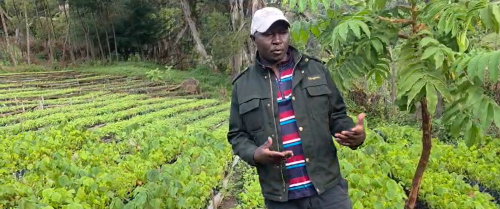
Sengwer community representative Elias Kimaiyo reflects on this deep bond. “The forest is actually our identity… we carry it at heart. That is why since eternity, we have been inhabiting the forests, as it was a mutual benefit, as we protected it by conserving in order to have our furrows still flowing,” he says.
Kimaiyo recalls ancestral practices around water sharing that governed access to furrows long before modern laws. “The ancient furrows dating back to our beloved Sengwer ancestors, where they did fully out of ancient technology to help the neighbouring communities get water for farming and domestic use on a small scale,” he notes.
“However, the other clans who were on the lower parts of the valley, when they wanted to use the water from the furrows, would come borrow the water from the Sengwer; some traditions would be done, with songs, local brew would be shared, and it was done only by a special group of people, and then the water would be released.”
He adds that violations carried consequences rooted in belief systems. “Also, if they would forcefully access the water, some traditions would be done, and the furrows would not completely dry up until they follow the traditions.”
According to Kimaiyo, the engineering itself was deliberately designed to protect both people and land. “The technology used was so high in that the furrows were designed in a way that does not cause threat to the surrounding communities; they could not burst nor cause erosions. The clans would open the water for use; they include the Kaparketun, Karimwor, and Kiton, among others.”
This ancestral connection binds the Sengwer closely to their Marakwet neighbors. The Marakwet’s irrigation furrows depend on springs that rise within Embobut Forest and the Cherang’any ranges. Protecting these forests therefore safeguards water flows essential to farming, livestock, and domestic use far beyond the forest edge.
Kimaiyo describes ongoing conservation rooted in indigenous knowledge. “We have indigenous knowledge and are now trying to rehabilitate the trees that have been extinct, like the bamboo canopy forest, which helps much in water conservation… Of the twelve tree species that we have, include Tendwo, Sewerwa, Faait, Chorwo, and Epurwo, among others.”
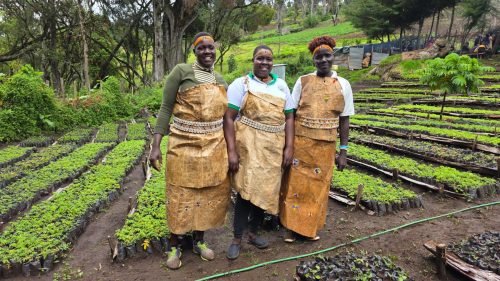
He highlights the role of women-led initiatives. “We also have women’s groups with several tree nurseries only with indigenous trees that are often planted along the riparian areas to increase water levels and to keep water catchment areas intact. We only deal with trees that are favored by our ecological zone, like rosewood and cedar, among others.”
Cultural taboos still guide protection. “We also have trees that should not be cut down; any tree that buds flowers would by then cost someone, even up to a goat or a sheep, as a penalty. This was not until the KFS Act came into action; they did not actually consider our ancient knowledge.”
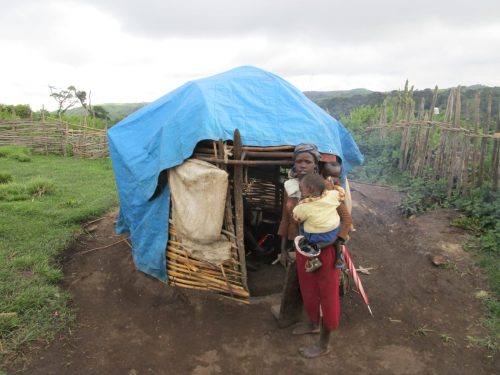
Yet challenges remain severe. “The evictions from the forest are still ongoing, something we feel that is against the laws… This year alone, the KFS arrested over 100 people; others are already in court,” Kimaiyo says. “After evictions and burning off of our homesteads, we are now forced to live in makeshift camps for survival.”
He notes the erosion of livelihoods. “The beekeeping and hunting and gathering that was endowed has in time faded because of evictions and also after the government criminalized hunting.”
Kimaiyo also warns of emerging threats. “The major threat now lies with the recent proposed Embobut dam, which will bring a threat to these furrows as it will be a threat to the ancient technology.”
Engineering water: The living legacy of Marakwet furrows
For between 300 and 500 years, and by oral tradition, over six centuries, the Marakwet have maintained one of Africa’s most sophisticated indigenous irrigation systems.
Their gravity-fed hill furrows, carved meticulously along steep escarpments, draw water from highland rivers such as the Embobut, Arror, and Kerio tributaries and channel it to farms in the valley below.
Some furrows extend over 40 kilometres, maintaining gradients of about 1:500, an engineering achievement realised long before modern surveying equipment. Colonial records from the early 1900s counted more than 400 active furrows. Several remain in use today, including the 18-kilometre Kolowa furrow near Tot, which still delivers water daily.
Each furrow is constructed, repaired, and managed communally. Clan committees allocate water annually under customary law, organise cleaning and maintenance, and resolve disputes.
Indigenous tools such as the mukombet, combined with simple sighting techniques, enabled builders to achieve accuracy that continues to astonish modern engineers. Recent LiDAR studies and radiocarbon dating confirm that many furrows built before 1800 remain operational.
Recognised for its global significance, the Marakwet irrigation system is listed on Kenya’s UNESCO Tentative List. It stands as evidence that indigenous knowledge systems can support dense populations sustainably in fragile environments for centuries.
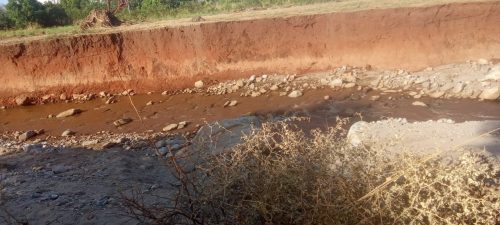
Yet these marvels are increasingly vulnerable. Reduced forest cover upstream weakens spring flows, while landslides and erosion block channels with debris and silt. Climate change has intensified these threats, turning once-predictable seasons into cycles of floods and prolonged drought.
The central role of women and youth
The furrows and restored forests directly translate into tangible economic gains for communities.
In the Kerio Valley lowlands, gravity-fed irrigation supports year-round farming of staple crops such as maize, sorghum, and millets, alongside high-value fruits and vegetables, including mangoes, bananas, pawpaws, avocados, and assorted greens. These crops ensure household food security while generating income through local and regional markets.
Upstream agroforestry initiatives under Community Forest Associations (CFAs) and Participatory Forest Management Plans (PFMPs) have expanded these benefits.
Since 2020, more than 100,000 seedlings, including fruit varieties such as mango and avocado, have been distributed, diversifying incomes. Beekeeping, a traditional Sengwer and Marakwet practice, thrives in protected forests, yielding honey for both household use and sale.
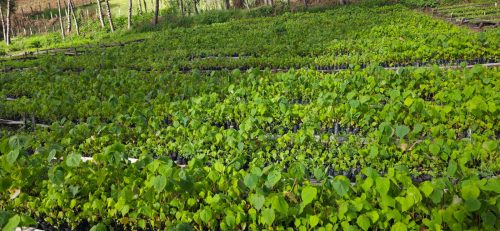
Community members report increased crop yields from reliable water flows, reduced erosion, and nature-based enterprises such as ecotourism, with over 2,500 women and youth trained in conservation-linked livelihoods.
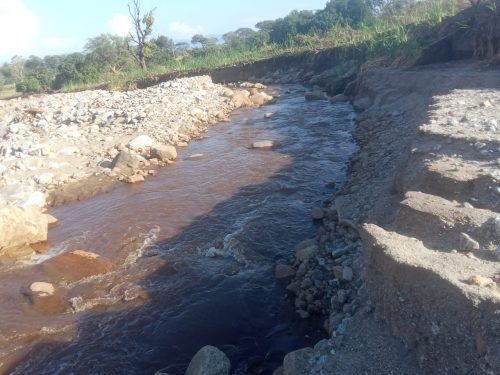
However, the system remains exposed to climate shocks. In November 2025, devastating landslides struck parts of Elgeyo Marakwet, sweeping away sections of furrows in Endo Ward. Farms were cut off from water, and households struggled to cope.
Arror youth leader, Emmy Kibaina, recalls the aftermath, barely holding her tears. “As a result of the November 1, 2025, landslides, our furrows were swept off and silted and blocked by the debris. It has really been difficult for us as we could not access water unless we had a huge water storage,” she says.
Recovery followed tradition. “Just as soon as we were done with traditional cleansing, as most of our people were lost to the landslides, men and youth embarked on unsilting. They begin with one furrow, and when done, proceed to the next furrow. It is a hard task but we the women, remain at home as part of a tradition that the unblocking is a male-dominated job,” Emmy explains.
Women remain central to protection efforts. Chief Irene Limo from Chesoi underscores their dependence on the system. “As women, we rely in awe of these furrows because at times when there is low water flow, we really hustle and go over 20 kilometres in search of water used for domestic purposes, so we do everything to ensure its safety,” she says.
She highlights afforestation efforts. “The reason we have several trees in our tree nurseries across several communities is to maintain and plant them in our forests to evade the dry seasons and to save our furrows, which have, in the long run, proven to be a great deal; we cannot afford to lose them to silting or drying up.”
Youth groups play a parallel role. “We have a group that we keep seedlings with variety according to the seasons; currently, we have mango fruit, avocado, among others. This is because they take time to mature for transplanting and can endure, unlike tomatoes and some other perishables,” Emmy explains.
Despite dedication, challenges persist. “However, things get worse when there are low water levels, especially during the dry seasons, when the furrows almost run dry… we also travel kilometres away to secure water with jerrycans on our backs, which is really tedious,” she says.
Chief Limo, however, envisions complementary solutions. “Women in Chesoi would largely appreciate it if there were water channelling through pipes to taps or within homesteads. Our animals also benefit from these furrows, and it flows downstream to places like Tot-Kolowa, where irrigations are done, and that’s where we get plenty of food to feed other communities and Kenya at large.”
REDD+ projects, implementation
Kenya implements REDD+ in phases, with strong readiness progress including its participatory National REDD+ (Reducing Emissions from Deforestation and Forest Degradation) Strategy (finalised December 2021) targeting afforestation, governance, plantation productivity, value chains, and finance mobilisation.
These initiatives, as detailed in the National REDD+ Strategy report, demonstrate reduced emissions, biodiversity gains, and community development.
While referrencing the National REDD+ strategy report, “Kenya’s participation in REDD+ is premised on the conviction that the process holds great potential in supporting the: Realisation of vision 2030 and the National Forest Program (2016) objectives of increasing forest cover to a minimum of 10% and the Government’s efforts in designing policies and measures to protect and improve its remaining forest resources in ways that improve local livelihoods and conserve biodiversity,”
The 2020-submitted Forest Reference Level proposes 52,204,059 tCO₂/year based on 2002-2018 data. The near-complete National Forest Monitoring System, Safeguards Information System, and developing REDD+ Registry support transparent tracking, verification, and carbon credit issuance.
“Specific objectives include: Increased forest and tree cover, Enhanced productivity of the forest, Increased investments in forest development, Protecting existing forest cover, Integrated good governance in the forestry sector, Enhanced forest-based economic, social and environmental benefits, Enhanced livelihoods of the Indigenous Peoples and Local Communities,” reads part of the National REDD+ strategy.
Several projects across the country illustrate REDD+ implementation in practice. The Kasigau Corridor REDD+ Project, the world’s first certified REDD+ initiative, protects more than 200,000 hectares of forest while delivering community benefits through job creation, education programmes, water projects, and wildlife conservation.
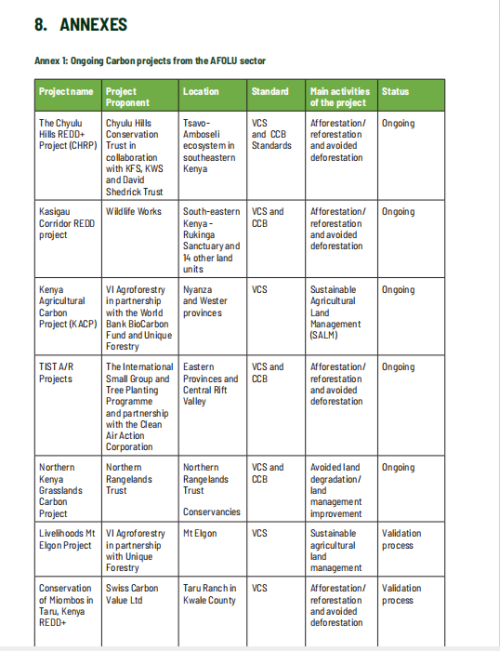
National REDD+ Strategy report. PHOTO/A screengrab by PD Digitalhttps://www.un-redd.org/sites/default/files/2022-05/NATIONAL%20REDD%2B%20STRATEGY%202022.pdf
The Chyulu Hills REDD+ Project focuses on safeguarding key landscapes and wildlife corridors, while supporting local livelihoods through beekeeping initiatives, ranger employment, and education programmes.
Mikoko Pamoja, a community-led mangrove conservation project in Gazi Bay, has been selling carbon credits since 2010 to fund mangrove restoration and deliver social benefits at the local level.
Kenya’s REDD+ approach aligns with Elgeyo Marakwet’s Cherangani Hills, where indigenous communities conserve forests to protect vital water sources; similar community governance and restoration efforts could scale via REDD+ incentives for carbon stocks and livelihoods.
For communities in Elgeyo Marakwet, successful REDD+ implementation offers the potential for results-based financing that can reinforce traditional forest guardianship, secure water resources for furrows, and deliver multiple benefits, including improved livelihoods, biodiversity conservation, and resilience against climate change impacts.
Community action is increasingly supported by structured conservation programmes. The Participatory Forest Management Plan (PFMP) in Elgeyo Marakwet emphasises community-led restoration.
Initially targeting 256 hectares of degraded forest between 2018 and 2023, the programme ultimately restored over 250 hectares through collaboration with the Kenya Forest Service (KFS), Nature Kenya, and local Community Forest Associations (CFAs).
CFAs monitor regrowth, enforce anti-deforestation rules, and oversee sustainable resource use under the county’s Sustainable Forest Management and Tree Growing Policy, aligned with national REDD+ strategies.
County Forest Conservator Paul Koech outlines the framework. “Currently, the forest cover is 29.6 percent, while the tree cover is at 19.9 percent,” he says. “Implement participatory forest management plans (PFMPs) where every aspect of forest ecosystems is a zone with a distinct work plan it provides for. Natural forests where only indigenous trees grow.”
He explains that plantation forestry is the cultivation of exotic trees as a crop for desired products, mostly timber, pulpwood, and fuelwood.
Enforcement combines patrols and law. “Forest rangers and scouts carry out routine foot patrols to detect and deter any illegal activity within forests,” Koech says. “Also, the Forest Conservation and Management Act 2016 provides a legislative avenue to convict and sentence offenders, and sustainable utilisation of forest resources ensures no deforestation.”
Yet gaps remain. “I know about REDD+, but we have no solid idea what it does and minimal information. No interaction with the community on this in EMC,” Koech admits.
Kimaiyo echoes this concern. “On the REDD+, we have encountered them, but we would like them to go further into the grassroots level and share information with the communities. Also, they should consider the indigenous communities, as the Carbon Act is embedded into the interest of communities with lands, which we do not have.”
From the agriculture sector, Phylis Maiyo notes progress. “We have supported the communities through the allocation of annual development plans, training, and sensitization of conservation of forests at the upstream,” she says. “The specific interventions we have introduced are continuous rehabilitation of the furrows and planting of indigenous trees along the furrows.”
The impact is evident. “Yes, there have been increased crop yields because of the increase in water levels resulting from the conservation efforts,” Maiyo says.
Bridging grassroots action and policy advocacy is Monica Yator, Team Leader of GLFx Baringo, one of the Global Landscapes Forum’s chapters in Kenya. “As an Indigenous woman leading the Indigenous Women and Girls Initiative (IWGI), I have had meaningful engagements with REDD+ initiatives on conservation matters,” she says.
“What we do is simply climate justice and biodiversity conservation, training indigenous communities in agroecological practices while advocating for the protection of ancestral lands that are vital for our cultural continuity and livelihoods.”
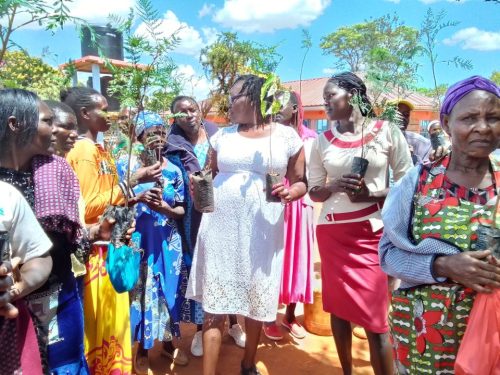
Kimaiyo, however, calls for alignment. “We have bylaws and a governance structure… we have mapped the land, and we called the government also to give us a place where we can tend to our indigenous tree seedlings… this would go a long way as we align with President William Ruto’s 15 billion trees vision.”
In Elgeyo Marakwet, the waters of life continue to flow from forest to furrow, from ancestors to youth sustained by communities determined to protect what has sustained them for centuries.