Understanding fuel prices in Kenya: A breakdown of taxes, levies, and duties per litre
By Ndiritu Wanjiru, April 20, 2026The process of fuel pricing in Kenya is a systematic formula that has been controlled by the Energy and Petroleum Regulatory Authority (EPRA).
The landed cost is the centre of this formula, as it is the cost of imported refined fuel, including freight and insurance. This base price is then modified by including taxes, levies, and distribution margins and then reaching the consumer.
The Energy and Petroleum Regulatory Authority (EPRA) announced a reduction in fuel prices following a government decision to lower the value-added tax on petroleum products.
In a notice issued on the night of April 15, 2026, EPRA said the changes were made in line with a tax revision by the National Treasury.
“Pursuant to Legal Notice No. 70 dated 15th April 2026, the Cabinet Secretary for National Treasury has revised the value-added tax rate from 13% to 8%,” the authority said.

Practically, 1 litre of petrol at a price close to Ksh200 indicates the layering of this system. About half the price is the price of the fuel, and a large part of it, usually more than Ksh80, is the taxes and levies imposed by the government.
Taxes and levies per litre breakdown.
The major part of the pump price consists of various taxes imposed at various levels. One of the most noticeable levies is the excise duty, which is levied at a constant percentage per litre on diesel and petrol.
This tax does not depend on the world oil prices and thus makes it persistent in driving the prices even when the world costs are reducing.
One other significant factor is the Road Maintenance Levy, which consumes a good percentage per litre and is utilised to finance road infrastructure.
It accompanies the Petroleum Development Levy, which was implemented to stabilise the fuel prices and aid the petroleum-related investments but also goes straight to the retail price.
Value Added Tax (VAT) is also charged, though unlike other levies, it is imposed on the overall price after other levies have been computed. This has the multiplier effect of consumers paying tax on top of other taxes.
The smaller levies, like the Petroleum Regulatory Levy and the Railway Development Levy, and the charges on imports, could only be seen as small charges per se, but when taken in combination, they contribute a few shillings to each litre.
Total tax per litre.
These taxes and levies have a significant proportionality when added to the ultimate fuel price. In the case of petrol, taxes are up to and above Ksh80 per litre, with diesel having a slightly lower but still substantial tax burden.
This implies that consumers in most instances pay more than a third of their amount at the pump to the government.
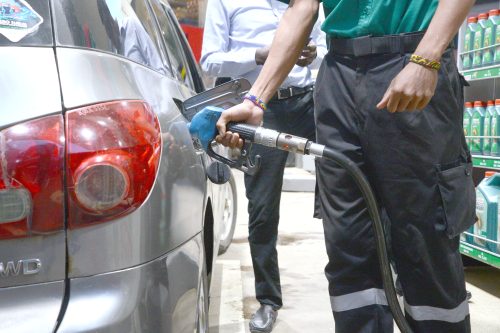
These charges are the reason why the prices of fuels are relatively high despite fluctuations in global oil prices. These taxes are fixed and cumulative, which means that a significant part of the cost would be shielded against the global market fluctuations.
Fuel price increase through taxes
In a number of ways, taxes raise fuel prices. First, all levies are cumulative and increase the cost base, and then the profit margins are included. Second, VAT creates a tax-on-tax effect, increasing the total price by more than the total of individual charges.
Moreover, several such taxes are fixed; that is, they fail to fall when the world oil prices are falling. This curtails how much the consumers are able to enjoy the lower international fuel prices.
Meanwhile, fuel is a revenue-generating product of the government, and thus it is among the commodities that are most taxed in the country.
Petrol vs Diesel: Reasons for difference in prices
Even though both fuels are highly taxed, petrol is usually more appealing in terms of excise duty than diesel. This renders petrol a little more taxed and expensive. Nevertheless, the diesel prices may still be at par with the petrol prices based on the disparities in the importation prices and demand patterns.
Taxation is a key factor that influences fuel prices in Kenya just as global oil markets do. Government charges are a key factor in determining the price that consumers pay, with over Ksh70 to Ksh80 per litre, comprising taxes and levies.
Consequently, any change in these taxes directly and immediately affects the price of fuel and the economy at large.