Uhuru Kenyatta’s retirement: Benefits defined by law, not favour
By Ndiritu Wanjiru, May 5, 2026When former President Uhuru Kenyatta exited office, he stepped into a legal framework designed to preserve the dignity of the presidency beyond tenure. His retirement package is not a matter of executive goodwill or political discretion; it is grounded in the Presidential Retirement Benefits Act, which transforms post-presidency privileges into enforceable legal rights.
The former head of state is entitled to state-funded housing, a pension, official cars, medical benefits, office help and lifelong security under this law. They are not symbolic perks but institutional guarantees; they are supposed to carry the weight of the office in which he once served.
High threshold to lose benefits
These benefits are not absolute despite the breadth they have. A similar law specifies stringent circumstances under which they can be cancelled.
A former president will lose state privileges in case he or she is convicted of a criminal offence that would lead to a sentence of six months or more in prison.
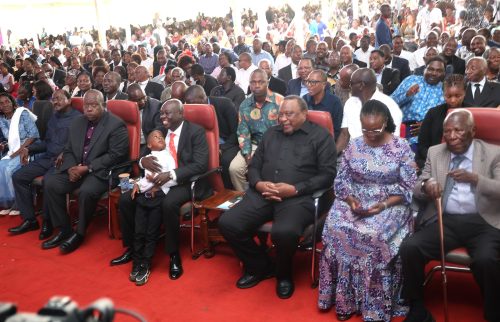
Removal is also provided in instances of behaviour that is deemed to be contrary to the dignity of the office.
But this is a deliberately high threshold. It provides that benefits cannot be easily revoked or at the political convenience. Any such action should be supported by the evidence, the law and the justification within the context of the law.
Constitution as shield of protection
In addition to statute, the Constitution of Kenya 2010 offers a second and more potent level of protection. It does not directly establish that any state action should be provided, such as their withdrawal; however, it governs by which means any state action should be provided, including their withdrawal.
Article 47 ensures that there is fair administrative action, and in this case, Kenyatta cannot be deprived of his benefits without due process and the right to be heard. Article 27 incorporates equality before the law, which would protect him against selective or politically motivated treatment.
Article 10 further sustains the rule of law; that is, all the actions that are taken against him must be lawful, transparent and accountable.
All these provisions combine to make the weaponisation of state power against a former president hard.
Role of Parliament: Not to execute, but to make laws
Parliament is commonly perceived as the body that can take away a former president’s perks. Its strength is less intense in reality. It cannot, by a resolution or motion, directly withdraw the privileges of a former head of state.
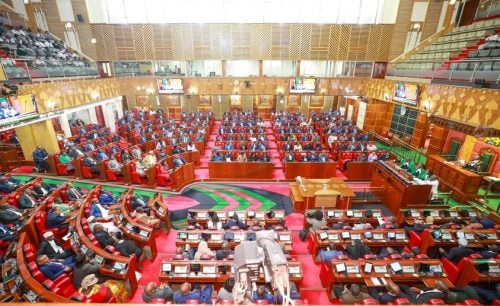
It has its power in legislation. The Presidential Retirement Benefits Act can be amended or repealed by parliament, potentially redefining what former presidents are entitled to or tightening the conditions under which they are entitled to receive such benefits. But even this power is restricted.
Any amendment should be in accordance with the constitutional standards. Parliament may not make laws that unjustly aim at an individual or are retroactive and remove rights that have already been earned. This would most probably be questioned and reversed in court.
Legal guarantees.
The safeguarding of Uhuru Kenyatta is not accidental but rather designed at several legal tiers:
- Statutory protection: His rights are not at the mercy of his discretion but are enshrined in law.
- Procedural protection: any effort to deprive them has to be through due process.
- Protection of the Constitution: The basic rights and legal principles prevent abuse.
These layers assure that though accountability can be achieved, it should take a very legal route.
Law over politics
The argument as to whether the privileges of a former president may be revoked is often more a question of politics than of law. Practically, the system is chosen to withstand these pressures.
Ultimately, it is not a question of whether it is possible to take away benefits but whether the law permits it. And in the case of Kenya, the answer is very simple: under severe, highly regulated circumstances.