Advertisement
Search for alien life, are we alone in the universe?
Tuesday 14th November, 2023 10:15 AM|
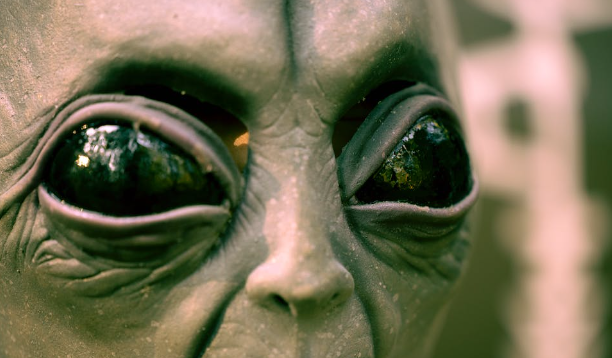
Have you ever pondered, while gazing at the night sky, if there could be someone out there looking back at you? Within our observable universe there are approximately 70 sextillion stars and over 200 billion galaxies. The unfathomable scale of this celestial ocean transcends human comprehension.
The possibility that we are not alone in the cosmos is both exciting and terrifying. Given the expanse of the cosmos and quantity of planets that may support life. Our milky way galaxy is just a grain of sand on the beach of the universe.
Cosmic puzzle of whether we are the only ones in the universe is a topic of fascination and scientific inquiry. As we gaze at the stars, we wonder if we are the only beings in this vast cosmic ocean!
The hunt for alien life is not a new phenomenon. For generations, it has piqued human interest. It is a journey that has captured the passion and ambition of countless people throughout history.
The Greek philosopher Epicurus, for instance, hypothesized the existence of other worlds in the cosmos. His theories, while revolutionary, were largely speculative, but they paved the way for future explorations into the unknown. When the telescope was invented in the 17th century, it revolutionised our knowledge of the cosmos. Astronomers such as Galileo Galilei started seeing celestial bodies in unprecedented detail.
The Milky Way, a band of light stretching across the night sky, was discovered to be a massive collection of stars. These findings revealed that our own environment was not as unique as we had believed.
Carl Jansky’s discovery of radio waves from space in the twentieth century marked the beginning of radio astronomy, a field that has since become crucial in the search for alien life. Unbelievably, some of these exoplanets are found in what is known as the Goldilocks zone, where circumstances may be ideal for life as we know it.
The adventure of searching for alien life is far from done. Our natural curiosity, our want to explore, and our quest to comprehend our role in the universe are the driving forces behind this adventure.
James Webb Space Telescope and Kepler Space Telescope have revolutionised our understanding of the universe by revealing evidence of water on Mars and Jupiter’s moon Europa. Europa, Jupiter’s largest moon, is a fascinating celestial body covered in an icy shell, with scientists estimating an ocean of liquid water twice the volume of Earth’s combined oceans.
This groundbreaking mission has expanded our knowledge of the cosmos and our place in it. The telescopes has also detected strange anomalies on distant moons and captured images of alien yet familiar landscapes. Furthermore, the Kepler space telescope discovered Kepler-22b an Earth-like planet in the habitable zone.
Its size is slightly larger than Earth. New scientific disciplines, such as astrobiology and exoplanetology, are developing. These multidisciplinary sciences integrate astronomy, biology, geology, and other disciplines in order to comprehend the possibility of life elsewhere in the cosmos.
The search for extraterrestrial life could alter our understanding of life’s role in the cosmos and its ultimate fate. Despite the universe’s silence, we learn about the rarity and preciousness of life, our place in the cosmos, and the value of the search itself. Given the billions of stars in our galaxy, many of which are similar to our sun, and the high possibility of them housing Earth-like planets, it is logical to believe that some of these planets may harbour sentient life.
Despite man’s greatest efforts, we have uncovered no evidence of extraterrestrial civilisations, no transmissions, no spacecraft, nothing! This contradiction has scientists baffled. As intriguing as these notions are, they merely help to deepen the enigma.
— The writer is an innovations evangelist and a PhD [email protected]
Author
Muhoro Macharia
View all posts by Muhoro MachariaLatest News








Advertisement
More on Insights