Saba Saba: Raila, Matiba and key players who shaped Kenya’s pro-democracy struggle
By Sharon Atieno, July 7, 2026As Kenya marks the 36th anniversary of the historic Saba Saba movement, the spotlight once again falls on the political figures whose defiance helped dismantle one-party rule and lay the foundation for the country’s modern democratic order.
Although Saba Saba is often associated with the July 7, 1990 demonstrations, historians agree that the movement was driven by a broad coalition of opposition leaders, clergy, lawyers, civil society activists and ordinary Kenyans who challenged the then Kenya African National Union (KANU) government under President Daniel arap Moi.
Kenneth Matiba and Charles Rubia ignited the movement
The push for political reforms gained momentum after veteran politicians Kenneth Matiba and Charles Rubia openly demanded the restoration of multiparty democracy at a time when Section 2A of the Constitution had made KANU the country’s only legal political party.
Despite government warnings, the duo called for a public rally at Nairobi’s Kamukunji Grounds on July 7, 1990. Days before the event, both leaders were arrested in an attempt to stop the demonstrations, but their detention instead fuelled public anger and inspired thousands of Kenyans to take to the streets.
According to historical records, the demonstrations were violently dispersed by security forces, leaving dozens dead, hundreds injured and many others detained, marking a turning point in Kenya’s democratic journey.
Raila and Jaramogi became symbols of the Second Liberation
Among the most recognised faces of the struggle were veteran opposition leader Raila Odinga and his father, Jaramogi Oginga Odinga, whose political activism became synonymous with the fight for democratic reforms.
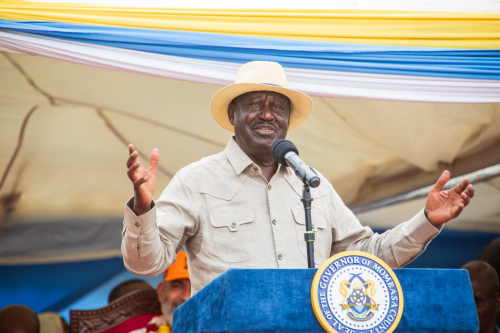
Jaramogi, Kenya’s first Vice President, was among the leading voices demanding political pluralism, while Raila emerged as one of the prominent figures of what later became known as the Second Liberation movement after enduring detention and political persecution.
Their sustained advocacy, alongside other reformists, kept pressure on the government even after the 1990 protests had been crushed.
Pressure forced Kenya to embrace multiparty democracy
Although the Saba Saba demonstrations did not immediately achieve their objectives, they triggered sustained domestic and international pressure that eventually compelled the Moi administration to repeal Section 2A of the Constitution in December 1991, restoring multiparty democracy. The reforms paved the way for Kenya’s first multiparty General Election in 1992 and fundamentally altered the country’s political landscape.
Over the years, Saba Saba has evolved beyond the original campaign for multiparty politics into a broader symbol of constitutional freedoms, accountability, human rights and citizen participation.
The anniversary has gained renewed relevance in recent years as youth-led movements continue invoking its legacy while demanding governance reforms, with many describing today’s civic activism as an extension of the struggle launched by the pioneers of 1990.