Raila’s impactful 2025 moments that sparked national debate
By Mabonga Makhanu, December 7, 20252025 will be one of the years etched in people’s memories. The nation has been unable to move on without the former Prime Minister Raila Odinga.
His final days remain fresh in people’s minds. And even though he made headlines in death, there are things he did while still alive, at the tail end of his life, that dominated national conversations and sparked heated debate.
AUC defeat
The year had begun well for Raila. His eyes were firmly set on the African Union Commission chairmanship.
The vote, held on February 15, 2025, saw him defeat all candidates in the first round, but he failed to attain the required two-thirds majority.
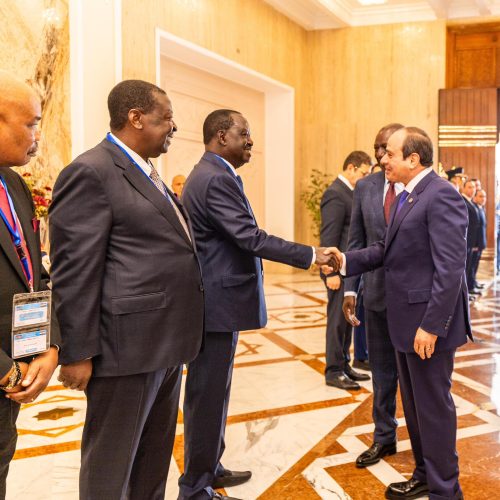
The election dragged on until the sixth round, where he withdrew, effectively handing victory to Djibouti’s candidate, Mahamoud Ali Youssouf.
This move ignited debate among Kenyans and fed into the long-held label by his critics of Raila being a “perennial loser”. His opponents celebrated, while his supporters were visibly disappointed. Upon his return, Raila simply told his supporters to “wait for the next step.”
ODM-UDA MoU at KICC
After the AUC defeat, Raila came back into the country and, on March 7, 2025, signed a broad-based agreement at KICC.
The 10-point agenda, which included the implementation of NADCO, among other key issues ODM leaders had long pushed for, was unveiled.
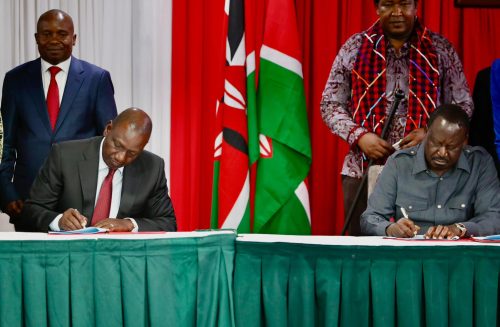
But this moment marked one of the sharpest shifts in public perception of Raila. A man long viewed as the people’s champion suddenly appeared to be betraying the same people by entering into government.
What shocked the country even more was the demeanour of Nairobi Senator Edwin Sifuna, the ODM Secretary General, who had previously been fiercely critical of the government. He read the 10-point agenda out loud, but his body language and tone painted a picture of someone cornered and conflicted. President William Ruto and Raila later addressed a charged crowd outside KICC.
Many analysts interpreted this as Ruto securing Raila’s political goodwill ahead of the 2027 elections, a handshake moment reminiscent of Raila’s 2018 deal with former President Uhuru Kenyatta.
Protest victim compensation
During the Madaraka Day celebrations on June 1, 2025, at Raila Odinga Stadium in Homa Bay, Raila made a bold call for compensation of protest victims, framing it as a step toward national healing.

His proposal, however, sparked immediate backlash. Many Kenyans argued that justice, not compensation, should come first. Opposition leaders also rejected the idea.
In response, President Ruto formed a compensation panel chaired by Makau Mutua and deputised by LSK President Faith Odhiambo, who later resigned after facing intense public criticism.
Intergenerational conclave
On July 7, 2025, during the Saba Saba protests, Raila was expected to address supporters at Jacaranda Grounds. But police barricades sealed off the city, leaving no access routes.
This forced him to address the nation from the Serena Hotel instead. In his statement, he called for an intergenerational conclave, a national dialogue meant to bring together all age groups, including the Gen Z youth who had carried the weight of protests since the killing of Albert Ojwang and the emotional June 25 commemorations.
Raila envisioned the conclave presenting its final outcomes to a national referendum.
Scrapping of CDF
Another defining moment came on August 14, 2025, during the Devolution Conference. Raila ignited a nationwide storm by calling for the scrapping of the CDF and reducing funds allocated to governors.
His remarks split the country. MPs, including his own loyalists, were furious.
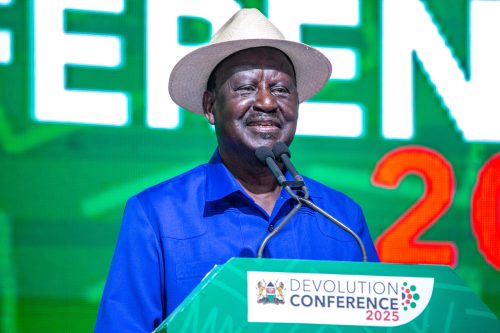
Millie Odhiambo accused him of favouring governors over MPs, reminding him they were all his political “children”. Junet Mohammed expressed outright anger, vowing to personally convince Raila to change his stance.
Governors in senate
Raila also dismissed the practice of governors appearing before the Senate for oversight, arguing that oversight should be a mandate of MCAs only.
This drew immediate pushback from key Senate allies, including Nairobi Senator Edwin Sifuna and Migori Senator Eddy Oketch, who insisted that the Constitution clearly assigns primary oversight to County Assemblies and secondary, complex oversight to the Senate.
The debate raged across Parliament and the public.
UDA-ODM PG

Just days later, on August 18, 2025, during the joint ODM–UDA PG in Karen, Raila doubled down on his remarks, again calling for the scrapping of CDF.
His declaration sparked heckling and outrage from MPs, but he stood his ground, insisting that MPs should stick to representation and oversight, not fund management.
Warning to ODM MPS
On September 22, 2025, Raila made what would become his last major public address before leaving for medical treatment abroad.
He cautioned ODM members against making public statements not sanctioned by party organs. He stressed that the ODM–UDA agreement was strictly a working arrangement until 2027 and had nothing to do with the 2027 elections.
“Who told you that we will not have a candidate in 2027?” he posed, signalling ODM’s intention to return to its roots.
Soon after, Raila disappeared from the public eye, sparking confusion and speculation about his health. ODM, through its Secretariat under Dennis Onsarigo, issued a statement dismissing reports of Raila’s illness.
Former Deputy President Rigathi Gachagua’s rebuttal escalated into a political storm that later landed him in trouble.
Death
After days of speculation, Raila breathed his last on Wednesday, October 15, 2025, in India. His death brought the entire nation to a standstill. It was at this moment that the true magnitude of Raila’s influence became evident.
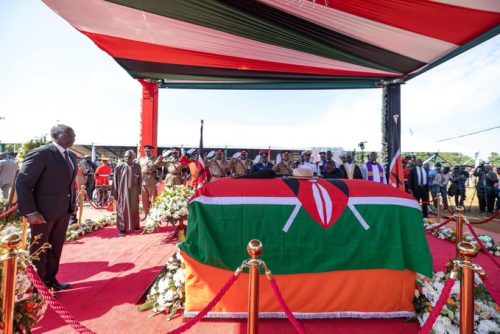
Funeral arrangements began immediately. A Kenya Airways aircraft with tail number KQ203 left for India with a 20-member delegation led by Prime Cabinet Secretary Musalia Mudavadi. The plane was tracked so heavily that its identifier was changed to RAO001.
Upon return, Raila’s remains received a water cannon salute, an honour usually reserved for members of the aviation fraternity. He was accorded a state funeral. During the public viewing at Kasarani, a tragic stampede occurred, claiming four lives. Raila was later laid to rest at Kango ka Jaramogi at the family tomb.
Even in death, people still travel to his grave to pay tribute. His impact continues to echo across the nation.