Political betrayals that left supporters wounded, abandoned and confused nationwide
By Mabonga Makhanu, December 17, 2025The year 2025 has been unusually fast-paced on Kenya’s political scene. Many Kenyans can hardly believe that the year is already drawing to a close.
Despite the speed with which events have unfolded, political betrayals have not ceased. Although they were not as frequent as in previous years, the few that occurred and the magnitude they carried left Kenyans talking, with barely any breathing space from one betrayal to the next.
The year began on a vibrant note, as promising as many before it. However, the first major incident that dominated public debate emerged in early March.
On March 7, 2025, at the Kenyatta International Convention Centre (KICC), the late former Prime Minister Raila Odinga signed a Memorandum of Understanding (MoU) with President William Ruto. The agreement between ODM and UDA introduced a 10-point agenda, one of the key items being the implementation of the National Dialogue Committee (NADCO) report.
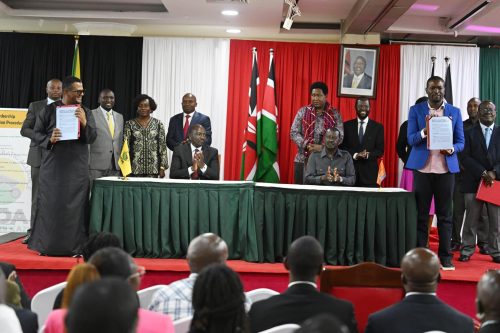
This move did not sit well with many Kenyans who had long viewed Raila as a defender of human rights and a symbol of resistance against state excesses. Seeing him align with a government he had fiercely fought for years was widely interpreted as a departure from his long-held stance on justice and accountability.
UDA/ODM MOU
Nairobi Senator Edwin Sifuna appeared visibly conflicted during the event. Despite having publicly opposed the broad-based government arrangement, Sifuna, as ODM Secretary General, found himself in a Catch-22 situation.
He was compelled to read the 10-point agenda, even though he had been openly critical of the pact in the days leading up to the signing.
His body language suggested discomfort, at times appearing as though he wanted to distance himself from the very words he was reading. This moment alone kept Kenyans talking for days.
The MoU attracted sharp criticism from Raila’s former Azimio la Umoja allies. Wiper Party leader Kalonzo Musyoka termed the agreement the “biggest betrayal of Kenyans”.
“What has come out of KICC today is the biggest betrayal of Kenyans. The People’s Loyal Coalition will never betray Kenyans for temporary comfort,” Kalonzo said.
Jubilee Party Secretary General Jeremiah Kioni also expressed dissatisfaction, stating that Raila’s move betrayed the Azimio la Umoja commitment by exiting the alliance to partner with UDA.
National dialogue
Another perceived betrayal followed during the Madaraka Day celebrations in Homa Bay, again involving Raila Odinga. While addressing the crowd at an event graced by President William Ruto, Raila called for compensation of protest victims as a way of fostering national healing.

This proposal angered many Kenyans. Critics argued that justice should precede compensation, especially for victims of police brutality.
Speaking in the presence of the president only reinforced the perception that Raila had aligned himself with the state. For a man who had long demanded accountability, the remarks were seen as deeply contradictory, further painting him in a negative light.
Intergenerational conclave
Raila’s name continued to dominate the betrayal narrative during the Saba Saba protests.
After failing to address supporters at Kamukunji Grounds, he later held a press conference at Serena Hotel, where he called for a national intergenerational conclave to halt the protests.
Young Kenyans who were actively agitating for their rights strongly rejected the proposal, accusing Raila of attempting to pacify dissent. He was forced to publicly defend his position amid widespread backlash.
Albert ojwang
Public anger also erupted when Albert Ojwang’s father accepted Ksh2 million from President William Ruto following his son’s controversial death, which had been linked to police involvement.
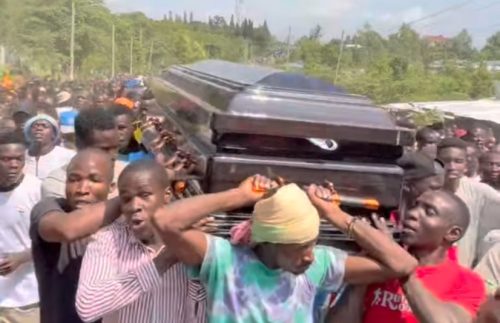
While Kenyans had initially sympathised with the family, the father’s decision to thank the president and say that Ojwang had been treated “like a son” was widely interpreted as an attempt to evade justice. Public goodwill and financial support from well-wishers declined significantly thereafter.
Raila-Sakaja bromance
In Raila Odinga’s final months, his apparent closeness to Nairobi Governor Johnson Sakaja also caused friction within his support base.
Many of his supporters—particularly those aligned with Embakasi East MP Babu Owino, who is eyeing the Nairobi gubernatorial seat in 2027—viewed this as a betrayal, just as Sakaja did.
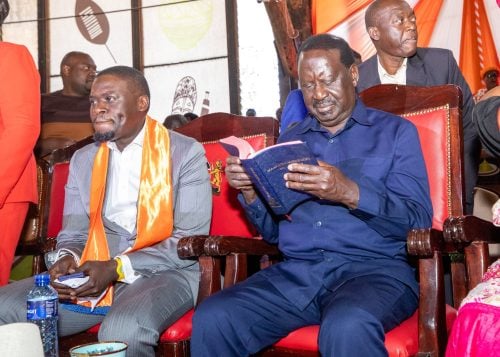
Babu Owino publicly addressed the issue using an analogy of two sons with one father, lamenting that Raila had chosen to support “the neighbour’s son” over his own. While acknowledging that Raila had the right to make his own decisions, Babu declared that he would pursue his political ambitions independently and announced his support for Kalonzo Musyoka.
The sense of betrayal deepened during attempts to impeach Governor Sakaja. Raila moved swiftly to shield him, a move critics argued undermined devolution and constitutional oversight that Raila had long advocated for.
They maintained that impeachment is a constitutional process and that Raila should have allowed it to proceed rather than personally intervening to stop it.
Faith odhiambo
The Law Society of Kenya (LSK) President Faith Odhiambo also found herself accused of betrayal. Long regarded as a human rights defender, her acceptance of the position of vice chairperson of the Committee of Experts on compensation for protest victims, chaired by Makau Mutua, sparked public outrage.
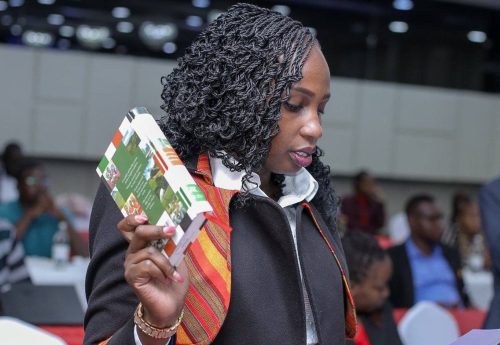
Many accused her of abandoning the cause she had long championed. Although she later resigned from the committee, the damage to her public image had already been done.
Gideon Moi’s senatorial contest
Former Baringo Senator and KANU leader Gideon Moi also entered the betrayal discourse. His sudden decision to abandon the Baringo senatorial race left supporters furious. They had gathered at Baringo Airstrip, ready to accompany him to the IEBC offices in Kabarnet, complete with party-branded trucks.
Gideon failed to show up, only to later announce his support for UDA candidate Vincent Kiprono Chemitei, who eventually won the seat.
Savula Malava situation
In Kakamega, Deputy Governor Ayub Savula shocked supporters after making a last-minute switch from the opposition Democratic Action Party (DAP-K), led by Eugene Wamalwa, to supporting UDA candidate David Ndakwa.
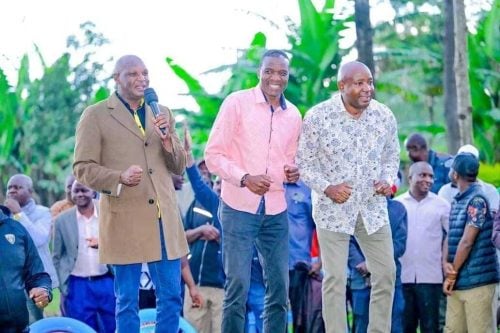
Savula had initially been expected to campaign for KNUN Secretary General Seth Panyako and even appeared on campaign posters, only to cross over at the tail end of the race.
Former Deputy President Rigathi Gachagua has consistently described himself as a victim of political betrayal. He has repeatedly termed his impeachment in late 2024 as the “betrayal of the century” by a man he trusted and helped ascend to power. In 2025, during former Attorney-General Justin Muturi’s book launch, Gachagua revealed that he intends to write his own book detailing how he was politically betrayed by the head of state.
In conclusion, although Raila Odinga passed away on October 15, 2025, his final year dominated Kenya’s betrayal narrative more than any other political figure.
His actions, particularly in the latter part of the year, ensured that his name appeared most frequently in discussions of political betrayal, followed closely by other leaders whose decisions left lasting impressions on Kenya’s political landscape.