Pi Day 2026: How International Mathematics Day inspires hope through numbers
By Kenneth Mwenda, March 14, 2026Every year on March 14, people around the world mark International Mathematics Day, a celebration of the role mathematics plays in everyday life, science and technology.
The date also has a lighter side: it is widely known as Pi Day, a nod to the mathematical constant π (pi), which represents the ratio of a circle’s circumference to its diameter.
In written form, 3‑14 mirrors the first three digits of π-3.14 – making the date a perfect fit for celebration.
Pi Day traditions include puzzles, quizzes and even friendly baking contests involving pies, because “pi” and “pie” sound alike. These activities have helped generations of young learners enjoy mathematics in a fun, memorable way.
The number π has been studied for millennia. Ancient Babylonians and Egyptians approximated it, but it was Archimedes of Syracuse who first calculated it rigorously using polygons, laying the foundation for modern mathematics.
‘Mathematics and Hope’: Theme for 2026
Each year, International Mathematics Day carries a theme. For 2026, UNESCO chose “Mathematics and Hope.” The organisation explains that mathematical thinking helps people make sense of complex data, tackle uncertainty and develop solutions that benefit society.
“UNESCO celebrates mathematics as a universal language that inspires understanding, cooperation, and optimism in tackling humanity’s shared challenges,” UNESCO says.
The theme encourages educators to show how mathematics supports evidence‑based decision‑making and international cooperation in fields like science, technology and sustainability.
On March 14, schools and universities often hold workshops, competitions, public lectures and exhibitions. Students might design posters, produce short videos, or take part in logic games that illustrate math’s reach beyond the textbook. These events aim to make mathematics feel relevant and approachable.
In some places, the International Mathematical Union suggests classroom activities that let students explore mathematical reasoning in practical ways. One example is a game called Group Screening, which shows how pooled testing can reduce the number of tests needed to find positive cases within a group.
The celebration has drawn attention from global leaders and scholars. Pope Leo XIV, who taught mathematics and physics, sent a message on International Mathematics Day 2026, urging participants to consider the ethical and moral dimensions of emerging technologies.
“Algorithms and artificial intelligence require requires not just intellectual effort and ingenuity but an integral growth of the whole person, in order to encompass the moral dimension of these emerging technologies,” he said. The Pope encouraged mathematicians to be “prophets of hope, truth, and goodness” in the digital era.

Why March 14 was chosen
The date 3/14 was originally selected not because of any official decree, but because it neatly matches the number π. According to historians of the day, the first known Pi Day celebration took place in 1988 at the Exploratorium museum in San Francisco, where physicist Larry Shaw gathered visitors to march in a circle and enjoy fruit pies.
Over the years, the date gained wider interest as a way to teach students about mathematics. In 2009, the United States House of Representatives passed a resolution recognising March 14 as National Pi Day and encouraged educators to mark it with appropriate activities.
In November 2019, the United Nations Educational, Scientific and Cultural Organization (UNESCO) took the idea further. UNESCO officially declared March 14 as International Mathematics Day, following a proposal from the International Mathematical Union (IMU). The first official observance was held on March 14, 2020.
Einstein’s birthday
March 14 carries additional significance in world history. It is also the birthday of Albert Einstein, born on this day in 1879 in Ulm, Germany. Einstein’s work transformed human understanding of space, time and energy. His 1905 papers introduced ideas such as special relativity and the equivalence of mass and energy, famously expressed in the equation E = mc².
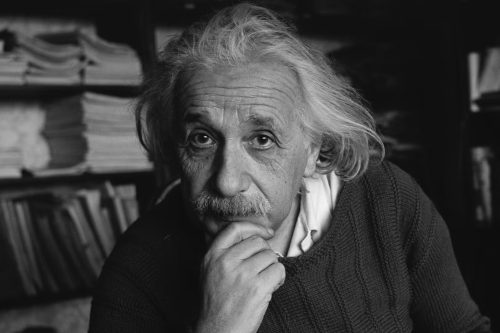
Einstein’s influence is so enduring that many communities add his story to Pi Day celebrations. In Princeton, New Jersey, where he lived for more than two decades, annual events honour both Pi and his birthday with talks, exhibits and public activities.
His birth on Pi Day offers a symbolic link between timeless mathematics and human curiosity.
Beyond mathematics and Einstein, March 14 has seen a range of notable events. In 1805, the UK’s House of Commons once adjourned so members could watch a young actor perform Hamlet. In more recent history, inventions and scientific firsts took place on this date, reflecting the broad sweep of human achievement.