Advertisement
Limitations for just green tech policies in Africa
Wednesday 22nd November, 2023 07:00 AM|
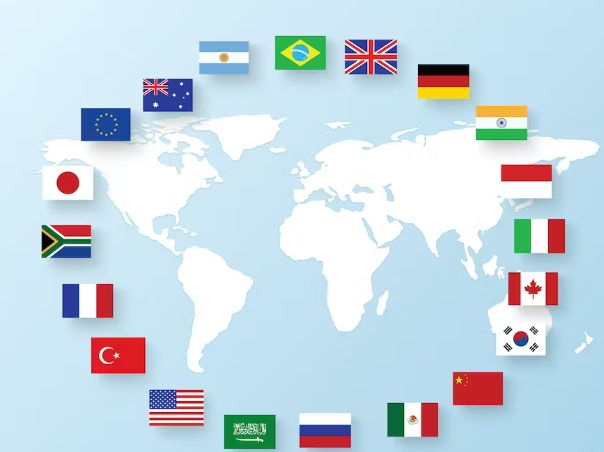
This week’s Berlin G-20 Investment Summit has been characterised by what Reuter’s reports as a ‘renewed interest’ by major powers in new economic opportunities emerging in Africa.
The two-day G20 Compact with Africa conference, which forms a key feature of the Berlin Summit, has been marketed as a platform for bilateral and international discussions on directing private investments towards Africa’s renewable energy production and establishing a ‘win-win’ outcome for Europe and Africa respectively.
This outcome can generally be surmised as reliable green energy suppliers for European industry in furtherance of its clean transition into the fourth industrial revolution and improved but sustainable economic development for the 13 African countries participating as Compact members.
To this end, President William Ruto, in a statement related to the Compact with Africa conference, stressed Africa’s preparedness for private investments in its green energy projects and alluded to the continent’s efforts in implementing policies that encourage the same.
Kenya more specifically, in being the first African country to adopt a framework climate law in Africa through its Climate Change Act 2016 and one of the few to legislate for local renewable energy production through its Energy Act 2019, appears to be uniquely positioned to actualise benefits of the economic arrangement being suggested at G20 Compact with Africa conference.
The Climate Change Act 2016 provides for the research, transfer and investment in low carbon and climate resilient technologies while Kenya’s Energy Act sets up a Renewable Energy Resource Advisory Committee tasked with guiding the adoption of the aforementioned technologies in local energy production and consumption.
If policies are developed to guarantee the strict enforcement of these provisions, Kenya could transform itself into a key partner in Europe’s energy transition process.
However, a just energy transition which takes into account the interests of both parties cannot be fully and positively realised by discounting the historically unequal trade relationship that exists between Africa and Europe.
Europe’s renewed economic focus on Africa follows decades of intense Chinese and more recently Russian geopolitical influence on the continent.
International investment laws that facilitate energy production tend to uphold structural regimes that protect the extractive activities of foreign investors at the expense of local interests and industry. They have equally failed to address the instability resulting from political regimes propped up by these investors and State apparatus of their countries.
In Mali and Niger, this has culminated in military coup d’états which although deemed unconstitutional continue to enjoy popular support by challenging resource governance policies that promote the interests of French business and a few local elites.
With European countries at the helm of the current status quo, Chinese and Russian competition in Africa’s energy and resource sector represents an opportunity for African States to counter European dominance over its energy resources, challenge the international laws that have maintained this imbalance and implement an energy transition that is intrinsically conducive to their interests as well.
Consequently, in spite of the promising policies on green technology, to achieve a just energy transition it is critical that Kenya clearly elucidate her demands in a manner that recognises the continent’s economic history.
Foreign private investments in green energy projects under the current international investment regime will not yield the economic growth being envisioned if the legal inadequacies that contribute to the resource exploitation presently being witnessed in Africa are not formally addressed.
— The writer is an independent researcher in technology law
Author
Mayombe Odubah
View all posts by Mayombe OdubahLatest News



Advertisement
More on Insights