Advertisement
Kenya must rise above tribal politics ahead of 2027
Wednesday 25th June, 2025 04:20 AM|
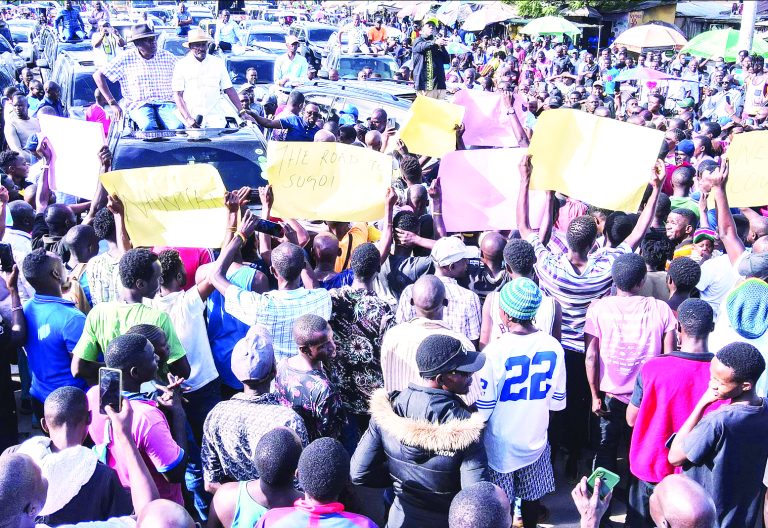
As the countdown to the 2027 General Elections begins, Kenya is once again witnessing a familiar rise in political tension among the political elites.
For a country that has come a long way in democratisation, this is a critical moment – one that will either strengthen our democratic ideals or expose the deep fractures within our political culture and ethnic diversity.
At the heart of this concern is the manner in which our politics is being conducted by some of the leading politicians.
Campaigns are starting to heat up, yet instead of centring on policies and the pressing issues affecting ordinary Kenyans—such as unemployment, healthcare, food security, and public debt—many political actors are resorting to tribal mobilisation or, as commonly pronounced, balkanization. This is both disheartening and dangerous.
You Might Also Like
Kenya is a mosaic of 44 ethnic communities, including the El Molo, our most recently recognised ethnic group.
These communities are bound together not just by geography, but by a shared aspiration for justice, equality, opportunity, peace and progress.
Every Kenyan deserves a seat at the table – what many call “the cake-baking table” – without prejudice or exclusion based on ethnicity or political affiliation.
Unfortunately, the very leaders who preach democracy and equity are often the first to violate those valued national ideals.
Some leaders have built their platforms not on national unity but on ethnic arithmetic—popularly referred to as the “tyranny of numbers.”
But if one truly seeks to be a national leader, why should their national appeal stop at tribal borders, honestly speaking, good people?
Why should presidential campaigns revolve around ethnic blocs rather than the needs of all 47 counties without segregation?
This is a troubling trend. Political messaging is increasingly focused on rallying one’s “own” people instead of presenting national visions.
For instance, in regions such as Nyanza, where I come from, it is rare to see robust opposition politics akin to what is often witnessed in Ukambani, Nyeri, or Mt Kenya region. Neither is it in Western.
Why are some regions immune to political diversity? Why is healthy political competition treated as a betrayal in certain areas?
The recent public split between former Deputy President Rigathi Gachagua and the current administration illustrates the fragility of alliances built solely on ethnic loyalty.
Today, Gachagua styles himself as a champion of rights, even as he reportedly and evidently speaks in the language of tribal entitlement to enrich his political ego and settle political scores. Is it very good?
This shift in tone speaks volumes about the hollowness of our political commitments when not anchored in principle or agenda-based issues.
Our dream of national unity is being steadily undermined by tribal jingoism. I am sorry to echo what is baffling many Kenyans, see what’s trending in the active political sphere, especially within the opposition realms. And unless we confront this head-on, we risk repeating the mistakes of the past.
Kenya cannot afford to retreat into ethnic corners every five years. We must instead build a politics of ideas, values, and accountability.
The author is a senior writer with People Daily, a media consultant and an advocate for inclusive governance and democracy.
Author
Latest News



Advertisement
More on Insights