Is UDA–ODM 10-Point Agenda facing implementation hurdles ahead of joint PG?
By Ndiritu Wanjiru, March 10, 2026As the legislators of the Kenya Kwanza Coalition and the Orange Democratic Movement are about to discuss the achievements of the 10-Point Agenda, the lack of apparent and quantifiable milestones in the framework is starting to become subject to increased criticism.
The agenda announced through consensus between William Ruto and the late Raila Odinga in March 2025 was offered on the platform of the roadmap to bipartisan collaboration to stabilise the political situation in the country and focus on the urgent national needs.
By that time, the framework was being commonly considered as a major move towards defusing political tensions and spurring the dialogue between the government and the opposition leaders.
Criticism over feasibility and implementation
Almost one year later, however, doubts are arising about its feasibility and speed of implementation. Critics believe that the agenda is not specific enough to provide tangible benchmarks that can be applied to gauge progress due to its lack of critical governance and economic issues.
The 10-point structure is more of a generalised commitment, unlike structured policy initiatives that offer clear deadlines and deliverables; this structure does not provide any dates, legislative goals or performance indicators. In order to supervise the process, a bipartisan implementation committee headed by a former nominated senator, Agnes Zani, was set up to facilitate consultations and give recommendations.
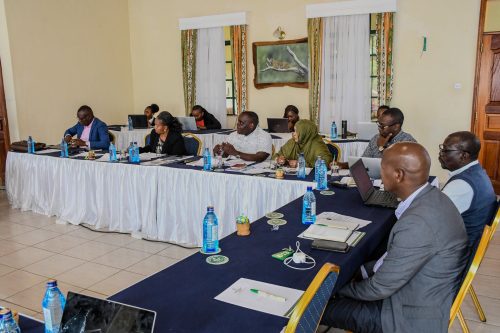
The committee has since been conducting consultations with stakeholders such as the government ministries, civil society organisations and individuals before coming up with a report which is likely to be looked at by the lawmakers. Although the consultations have been there, it is observed that the process has been primarily about dialogue and reporting other than actual policy actions.
Lack of well-established milestones has made it challenging for the Parliament as well as for the people to monitor the progress of the initiative or how the promises are being carried out. This has raised the question that the agenda may merely be symbolic in the event that the recommendations are not put into practical legislative and policy changes.

Since Members of Parliament are set to discuss the report, the next question on the agenda will be whether the general promises as inscribed in it can be transformed into practical policies that can deal with the socio-economic and governance issues facing the country.
The 10-point agenda
The 10-Point Agenda that was signed by President William Ruto and the late Raila Odinga was concerned with some of the important areas of governance and economy. These were to deal with the high cost of living, audit of government debt, boosting anti-corruption, restructuring the electoral commission, protecting the right to assemble and hold peaceful protests, devolution, the two-thirds gender rule in public appointments, review of electoral processes, inclusiveness in government, and accountability in institutions of the state. The system was to facilitate the collaboration between the government and opposition in discussing the national agenda through dialogue and institutional changes.