Inside Gachagua’s DCP plan to woo western Kenya ahead of 2027
By Aloys Michael, January 11, 2026As the road to the 2027 General Election slowly takes shape, political bigwigs are keen on marshalling their forces to take a stand on the political chessboard.
Both the government and the opposition are quietly but steadily bolstering their forces. Western Kenya, long seen as politically loyal to the country’s most popular party but often divided, has suddenly become a hot battleground.
At the centre of this fresh scramble is former Deputy President Rigathi Gachagua and his newly formed outfit, the Democracy for the Citizens Party (DCP).
For decades, the Mulembe Nation has largely walked with familiar political brands. The Orange Democratic Movement (ODM), Ford-Kenya, and, more recently, DAP-K have enjoyed strong roots here.

These parties are not just political vehicles; they are woven into the region’s history and identity. That is why DCP’s sudden entry and apparent traction have raised eyebrows.
A recent Infotrak survey paints a telling picture. ODM still leads the pack with 25 per cent popularity, followed by the ruling UDA at 20 per cent. But it is DCP’s emergence as the third most popular party at 7 per cent that has unsettled many.
For a party barely out of the blocks, this is no small feat. Ford-Kenya trails with similar numbers, while DAP-K struggles near the bottom.
DCP taking big?
Numbers alone, however, do not tell the full story. What DCP seems to be tapping into is a quiet sense of political fatigue among voters.
Many feel that Western Kenya has remained a voting bloc with little bargaining power. Promises are made every election cycle, but development and influence rarely match the numbers delivered at the ballot.
Gachagua’s strategy appears simple: disrupt the old order and speak directly to local frustrations. His party’s strong showing in Busia, Kakamega, Bungoma and Trans Nzoia suggests a deliberate focus on areas where traditional parties are weakened by internal wrangles. In Vihiga, where support is low, DCP still signals intent rather than retreat.
A key pillar of this push is former Kakamega Senator Cleophas Malalah, now DCP’s deputy leader. Malalah understands the local political terrain and has a grassroots style that resonates with younger voters.
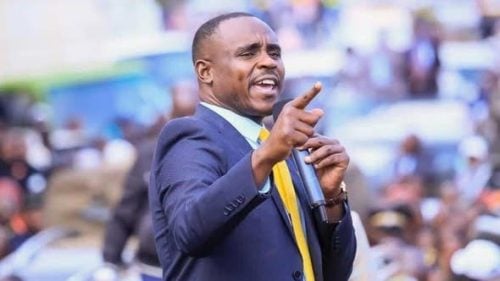
The Malava by-election, though ending in defeat, served as a testing ground. DCP’s candidate Edgar Busiega faced intense pressure to step down, exposing deep cracks within DAP-K. The episode left many supporters disillusioned, not just with candidates, but with party leadership.
On the other side, traditional heavyweights are not sitting pretty. Ford-Kenya leader Moses Wetang’ula and DAP-K’s Eugene Wamalwa face the hard truth that regional loyalty is no longer guaranteed.
The fact that DAP-K performs poorly even in Trans Nzoia, home to its top leadership, speaks volumes. Internal power struggles and mixed messaging have taken a toll.
Meanwhile, UDA’s strength in the region is anchored by Prime Cabinet Secretary Musalia Mudavadi.
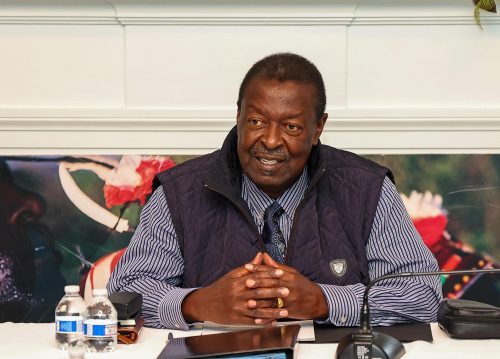
By folding ANC into the ruling party, Mudavadi offered President William Ruto a bridge into Western Kenya. For many voters, Musalia remains a unifying figure, even if opinions about the government are divided.
In this crowded field, DCP’s rise does not yet mean dominance. Seven per cent is modest, but symbolically powerful. It signals a protest mood, a search for alternatives. Gachagua’s gamble is that by 2027, frustration will outweigh tradition.
Western Kenya is no longer just choosing between old rivals. It is rethinking its place in national politics, and whether DCP becomes a lasting force or a brief disruption will depend on how well it listens, organises and delivers.