Advertisement
Impeachment ruling: Senate and Gachagua to lock horns at Court of Appeal
Wednesday 10th June, 2026 07:50 AM|

The battle over former Deputy President Rigathi Gachagua’s impeachment is far from over. With both the Senate and Gachagua preparing separate appeals against different aspects of the High Court ruling, the Court of Appeal is now poised to determine not only the fate of one of Kenya’s most consequential political disputes but also the future standards governing impeachment proceedings.
The High Court on Monday, June 8, 2026, delivered what could be described as a split decision. While the judges upheld Gachagua’s impeachment, they simultaneously found that his constitutional right to a fair hearing had been violated during the Senate proceedings and awarded him compensation.
New legal front unleashed
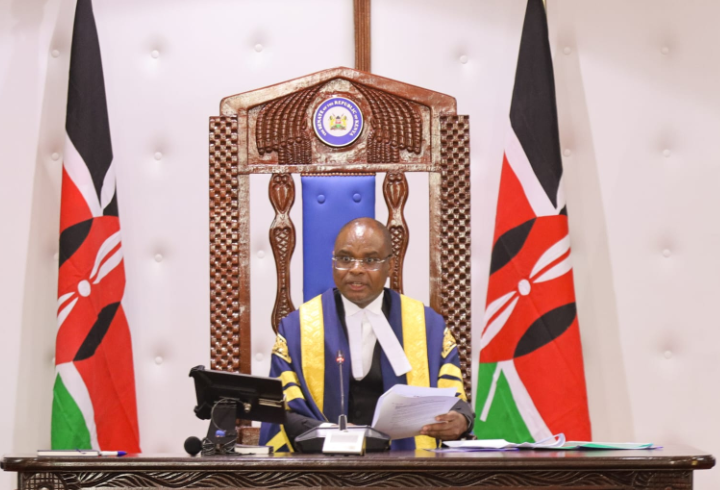
On one hand is the Senate, led by Speaker Amason Kingi, which has rejected the court’s finding that the House violated Gachagua’s rights. The Senate argues that it acted within its constitutional mandate and followed the law in handling the impeachment process.
In the ruling, Justices Eric Ogolla, Anthony Mrima and Fridah Mugambi found that Parliament acted within the law during the impeachment process.
You Might Also Like



The judges, however, found that Gachagua’s right to a fair hearing had been infringed during the Senate trial after he was denied an adjournment despite his absence from the proceedings.
According to the judgement, the decision denied him sufficient opportunity to present his case, which the court noted is a violation of his constitutional right to a fair trial.
As a result, the court awarded Gachagua Ksh50 million in damages to be paid by the Senate, while maintaining that the violation was not significant enough to invalidate the impeachment.
According to the Senate, its appeal is therefore aimed at protecting the institution’s authority and ensuring that the finding of procedural unfairness does not become a precedent that could constrain future impeachment proceedings.
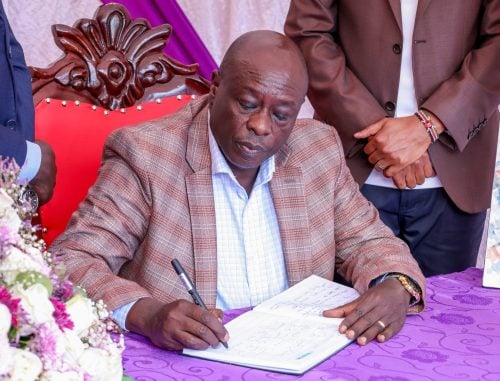
On the other hand is Gachagua, whose objective is far broader. The former deputy president has vowed to challenge the judgment that upheld his removal from office, arguing that the judges misapplied the law and failed to adequately address the principles of natural justice. He has indicated that he will pursue the matter through the Court of Appeal and, if necessary, the Supreme Court.
Speaking after the delivery of the landmark judgement on Tuesday, June 9, 2026, Gachagua said he was shocked by the court’s 350-page ruling, arguing that it contained contradictions after finding that his constitutional rights had been violated during the impeachment process but still upholding his removal from office.
“We shall proceed to file an appeal,” Gachagua said, maintaining that he respects the court but disagrees with its interpretation of the law.
The divergent appeals mean the appellate court will be confronted with two distinct but interconnected questions. First, whether the Senate conducted a fair and constitutionally compliant impeachment trial. Second, whether the impeachment itself should stand despite the court’s findings regarding procedural shortcomings.
For the Senate, a successful appeal would vindicate its handling of the proceedings and reinforce Parliament’s authority in impeachment matters. Such a ruling would provide clarity on the extent to which courts can scrutinise parliamentary processes and could strengthen the Senate’s position as the ultimate trial chamber in impeachment cases.
However, failure to overturn the finding on a fair hearing could have significant implications. It would affirm that constitutional rights remain fully applicable even within parliamentary proceedings and could compel lawmakers to revise impeachment procedures to ensure stronger protections for individuals facing removal from office.
Gachagua’s high stake
For Gachagua, the stakes are even higher. A successful appeal could potentially unravel the legal foundation of his impeachment and reopen debate over the legitimacy of his removal. Such an outcome would not only have major political consequences but could also redefine the threshold for impeaching senior state officers.
Conversely, if the Court of Appeal upholds the High Court’s decision, Gachagua’s impeachment will remain valid, leaving him with only the Supreme Court as a final avenue for legal redress. A defeat at both levels would effectively cement the legality of the impeachment and establish a lasting judicial precedent.
Beyond the political fortunes of the former deputy president, the case carries broader constitutional significance. It raises fundamental questions about the relationship between Parliament and the judiciary, the scope of fair hearing rights in impeachment trials, and the standards that should govern the removal of senior state officials.
The Court of Appeal’s decision is therefore likely to extend well beyond the interests of the immediate parties. It could shape how future impeachments are conducted, clarify the limits of parliamentary power, and define the extent to which constitutional safeguards apply in political accountability processes.
Author
Latest News







Advertisement
More on Insights