How ODM is slowly losing its DNA after Raila’s demise
By Mabonga Makhanu, February 8, 2026The Orange Democratic Movement (ODM), since its inception in 2005, seems, if recent activities within the party are anything to go by, to be slowly losing its DNA and what it has been known for over the past 20 years.
Under the leadership of its party leader, the late Raila Odinga, the party grew in vibrancy year after year. Despite never clinching the presidency, ODM remained vibrant, and its influence continued to expand.
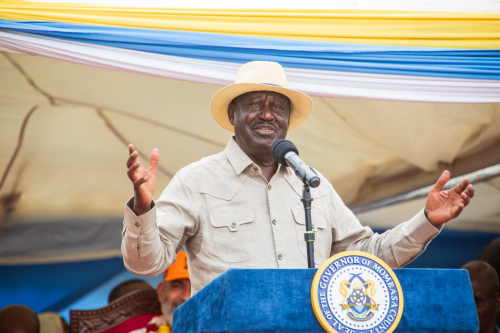
Even parties that had briefly tasted power lost relevance immediately after their leaders left the “House on the Hill,” but ODM managed to maintain its appeal.
ODM post Raila’s demise
This, however, appears not to be the case following the demise of Raila Odinga. The party now seems to be taking a different direction, gradually forgetting its identity. What carries more weight is the history of ODM: during every election, the party traditionally fielded its own presidential candidate.
From the looks of things, however,ODM currently has no presidential candidate of its own and may instead support other parties, particularly the United Democratic Alliance (UDA) as part of a proposed pact recently pushed by party insiders.

This move has caused rifts within the party. Embakasi MP Babu Owino rejected the pre-coalition talks, arguing that “not once in Raila’s leadership did ODM seek partners or coalitions as it is doing now; other parties always came to ODM to form alliances.”
ODM was a party founded on street protests and rebellion, as East African Legislative Assembly (EALA) MP Winnie Odinga stated during the “ODM at 20” celebrations. She emphasised that the party’s future should not be decided in private discussions or “pillow talks,” and she was right in protecting the identity of ODM.
Today, however, ODM seems to have become an appendage of the state, defending every government move even when the state errs. The party has often remained silent on the challenges Kenyans face, largely due to its alliance with the government under the broad-based deal.
Even when Raila was alive, despite having led his party into a broad-based deal with Ruto, he spoke out whenever there were injustices. In contrast, the current dispensation is largely silent, using every platform to praise the government.
Orengo’s ODM view
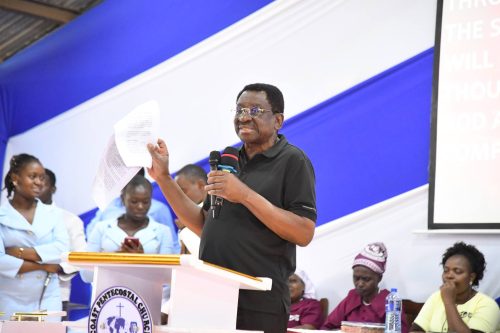
Siaya Governor James Orengo, who has played a key role in ODM since its birth, recently stated that should the party enter into a coalition with UDA, it would lose the national identity that the late Raila Odinga fought hard to build and would risk being reduced to a regional party.
“However, I now see renewed attempts to push ODM back into a purely regional, or even Luo-centric, party. Leaders and members from other regions have become noticeably quiet amid the internal conflicts within the party. History shows us that this is exactly how national parties are weakened and regionalised.”
He further added that, if ODM had truly desired to enter a pact with UDA, it should have done so from a position of strength, with the upper hand—not as it currently stands, appearing desperate for UDA’s attention.
“If ODM chooses to work with Kenya Kwanza or UDA under the current circumstances, the likely outcome is that the party will gradually shrink and retreat into Luo Nyanza. Some recent pronouncements already give the impression that ODM is merely a regional party, yet this is not true; ODM remains a national party. We must be extremely cautious not to be driven in that direction,” Orengo said