How DCI’s new Good Conduct biometric system will tackle crime and fake certificate syndicates
By Aloys Michael, July 15, 2026The Directorate of Criminal Investigations (DCI) is set to roll out a new biometric identification platform that promises more than faster processing of Certificates of Good Conduct. The technology is expected to become a powerful tool in the fight against identity fraud, fake Certificates of Good Conduct, and criminal syndicates that exploit weaknesses in document verification.
Beginning Monday, July 20, 2026, the DCI will officially launch the Multi-Biometric Identification System (MBIS)-ABIS Version 5, replacing the older fingerprint identification platform that has been in use for years. While the agency says the upgrade will significantly reduce waiting times for applicants, the system’s biggest impact could be in strengthening Kenya’s criminal investigations and protecting the integrity of one of the country’s most important government documents.
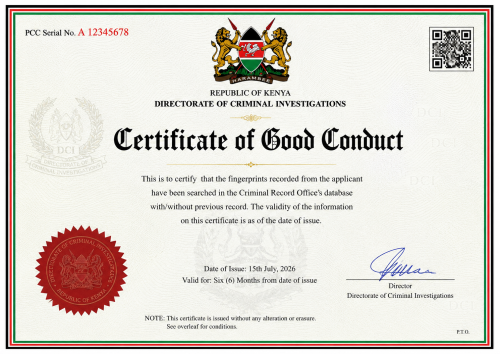
The Certificate of Good Conduct is required by thousands of Kenyans every year for employment, recruitment into public service, visa applications, professional licensing and other official processes. Its importance has also made it a target for fraudsters who forge certificates, alter personal details or use stolen identities to obtain clean police clearance records.
With the new biometric platform, the DCI aims to make such fraud far more difficult by ensuring every Certificate of Good Conduct is linked to verified biometric data.
Crime detection
Unlike the previous system, MBIS-ABIS Version 5 is designed to process and compare biometric records more accurately using advanced fingerprint identification technology. Every applicant’s fingerprints and biometric details can be matched against records stored in the DCI‘s central database, allowing investigators to verify identities with greater precision before issuing a Certificate of Good Conduct.
The upgraded system is expected to reduce duplication of records and expose attempts by individuals to register under different names using the same fingerprints. This capability could help detectives identify repeat offenders, uncover identity fraud networks and improve the accuracy of criminal investigations.
Beyond processing Certificates of Good Conduct, the biometric platform strengthens forensic investigations by enabling detectives to compare fingerprints recovered from crime scenes against millions of records more efficiently. Faster biometric matching could shorten investigation timelines, identify suspects more quickly and strengthen evidence used in criminal prosecutions.
The DCI has described MBIS-ABIS Version 5 as a game-changing platform built to deliver “faster, smarter service.” However, security experts say its greatest value lies in creating a trusted biometric database that makes it increasingly difficult for criminals to obtain a Certificate of Good Conduct using false identities.

Ending fake certificates
The rollout comes as lawmakers push for reforms aimed at modernising the application process while maintaining strict security standards.
A Bill sponsored by Kanduyi MP John Makali proposes ending the requirement for applicants to submit fresh fingerprints every time they renew a Certificate of Good Conduct. Instead, once an applicant’s biometrics are captured, subsequent applications could be processed online using securely stored biometric records.
Appearing before a parliamentary committee in April, Makali said the proposal would leverage technology to improve service delivery while making it easier for job seekers and Kenyans living abroad to access Certificates of Good Conduct.
The DCI currently processes about one million Certificates of Good Conduct annually, placing enormous pressure on existing infrastructure. The new biometric system is expected to ease that burden by speeding up processing while maintaining high levels of security.
The technology is also expected to disrupt fake Certificate of Good Conduct syndicates that have taken advantage of manual verification processes and forged documents. Employers, government agencies and foreign missions increasingly rely on the certificate to verify applicants, making authenticity more important than ever.

By linking every Certificate of Good Conduct to a verified biometric record, the DCI will be better placed to detect fraudulent applications before certificates are issued. The system also creates a reliable biometric trail that investigators can use to verify documents presented for employment, immigration or other official purposes, making forged certificates easier to detect.
The launch of MBIS-ABIS Version 5 aligns with the government’s broader digital transformation agenda, including digital birth certificates and the planned rollout of a digital national identity card. Together, these initiatives are expected to create a more secure and integrated identity verification system across government services.
For applicants, the immediate benefit will be faster processing of Certificates of Good Conduct. For the DCI, the bigger gain is a stronger biometric database that can help dismantle fake certificate syndicates, combat identity fraud, improve forensic investigations and enhance public confidence in one of Kenya’s most sought-after government documents.