Blurred boundaries: What ODM’s stand against Oketch Salah reveals
By Faith Lagat, February 7, 2026The Orange Democratic Movement’s swift statement on February 7, 2026, distancing itself from Oketch Salah was more than administrative housekeeping. It was a public attempt to redraw boundaries that have become dangerously blurred inside one of Kenya’s oldest opposition parties.
In a post on its official X account, signed by National Chairperson Gladys Wanga, ODM declared that any activities, statements, or engagements undertaken by Oketch Salah are carried out strictly in his personal capacity and do not represent or bind the Orange Democratic Movement in any way.
The party emphasised that all official activities must be approved by the Party Secretariat, with approval from the leadership, currently headed by Oburu Oginga.
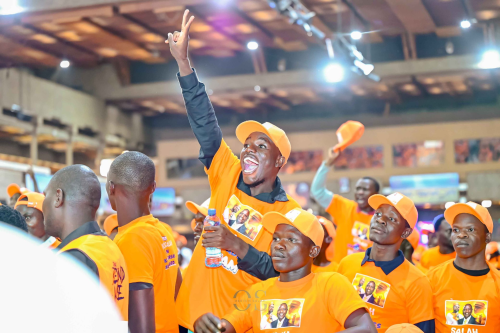
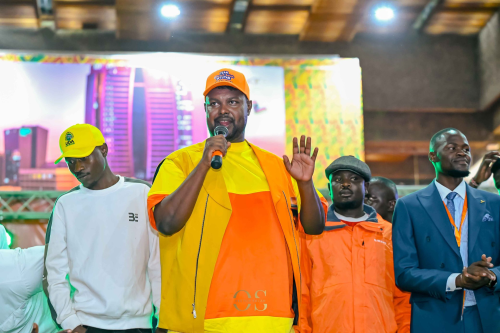
The trigger was clear: on February 6, Salah had organised an event at the Kenyatta International Convention Centre where participants wore ODM-branded T-shirts and caps bearing President William Ruto’s portrait.
For many loyalists, the sight of the party’s orange colours fused with the face of the man Raila Odinga spent decades opposing was jarring. Saboti MP Caleb Amisi captured the mood when he asked, “When did (ODM) NDC meet and approve that our t-shirts and caps be printed with Ruto’s image?”
Competing narratives of loyalty
The merchandise was only the latest flashpoint. Oketch Salah, a businessman who styled himself as Raila Odinga’s adopted son, has spent months sharing what he claims were the late party leader’s final political wishes.
He insists that Raila, during private conversations, including while they were together in India, wanted a strengthened ODM to eventually endorse President Ruto for re-election in 2027.
Salah has also taken aim at Nairobi Senator Edwin Sifuna, claiming Raila suspected him of being someone’s mole and that recent events have vindicated those suspicions.
These claims have not gone down well with Raila’s biological children. EALA MP Winnie Odinga dismissed Salah’s accounts as fabrications, saying she, not Salah, was at her father’s side in his final moments. Raila Odinga Junior backed his sister, calling Salah’s responses nonsense.
Mumias East MP Peter Salasya, while defending Winnie and Junior’s loyalty, made cryptic remarks about the spirit of Baba, one day revealing the full truth.
Restoring order amid a fragile transition
ODM’s statement exposes how porous the party’s internal boundaries have become since Raila’s passing. Without its charismatic founding leader, ODM is struggling to define who speaks for it, who interprets Raila’s legacy, and who gets to steer its future.
On one side are figures like Salah, outsiders claiming intimate access to Raila’s thinking, pushing a narrative of accommodation with the Kenya Kwanza government.
On the other hand are long-time insiders like Sifuna, Siaya Governor James Orengo, and Caleb Amisi, insisting Raila’s final instruction was for ODM to remain independent and field its own presidential candidate in 2027. Orengo has warned of a plot to “auction” the party to President Ruto and vowed to protect its identity.
The leadership, caught in the middle, now issues clarifications and warnings to grassroots leaders against organising events without clearance. It is a sign of how fragile internal discipline has become when a single individual’s actions can spark national debate about the party’s soul.
Ultimately, the Oketch Salah incident reveals a party in transition, grappling with grief, power vacuums, and competing visions. The orange colours still evoke powerful memories of Raila’s decades-long fight for democratic space, but they no longer guarantee unity.
As 2027 approaches, ODM must choose whether it will heal these fractures through inclusive dialogue or allow blurred boundaries to deepen into permanent divisions. For now, the public disowning of one man feels like a small but necessary step toward reclaiming clarity.