Beyond the speech: What happens after Ruto’s State of the Nation address?
By Mabonga Makhanu, November 20, 2025It has always been a constitutional requirement for the president to address Parliament in a joint sitting of the Senate and the National Assembly once every year, mostly on the second-to-last Thursday of November.
Many people focus on the speech delivered by the president and what he will say, but very few follow up on what happens after his address.
The Constitution, however, envisages a clear process. After addressing Parliament, the speech, also referred to as the report, is supposed to be given to parliamentarians.
Also watch: Ruto highlights growth of fibre network and digital hubs across Kenya
Since their primary work is legislation, they are expected to continue with the report and guide its implementation.
Pillars of the address
Article 132(1)(b) requires the president to submit and provide a report on the progress and measures taken in fulfilling the national values and principles of governance under Article 10.
In the next segment, Article 132(1)(c), the president is also expected to give an annual report on how the country is meeting its international obligations, including treaties and agreements it has entered into.
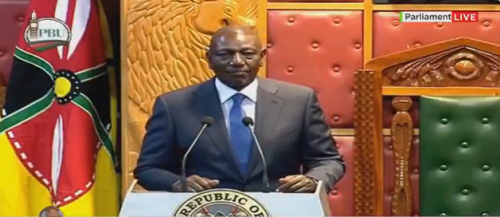
Last year, in 2024, as part of this constitutional requirement, the president went ahead to cancel the Adani deal that had caused public uproar, earning him a standing ovation from parliamentarians.
Under Article 132(1)(c)(iii), the head of state is required to report on the state of national security. Since the president is also the chair of the National Security Council (NSAC), which is required to submit an annual report on the state of security, this is the point at which the president delivers that report to Parliament for deliberation.
What’s next after speech?
Since the two Houses are the primary oversight bodies, the president must submit the report to them. Thereafter, they return to their respective chambers to embark on legislation, implementation plans, and debates on the president’s speech.
The MPs analyse the contents of the speech, criticise where necessary, raise concerns, point out gaps, and make recommendations.
After the debate, each House votes to adopt a resolution based on the president’s speech. The three pillars of the president’s report on progress on national values, international obligations, and national security are then forwarded to the relevant committees.
For example, the report on international obligations goes to the Foreign Affairs Committee in the National Assembly.
National security matters are handled by the relevant committees in both houses, such as the National Assembly Defence Committee, and the Justice and Legal Affairs Committee (JLAC) handles matters relating to national values.
The committees analyse the reports and compile their findings.
Their recommendations are then forwarded to the relevant ministries, state departments, independent commissions such as the National Police Service if it concerns security, and other government institutions.
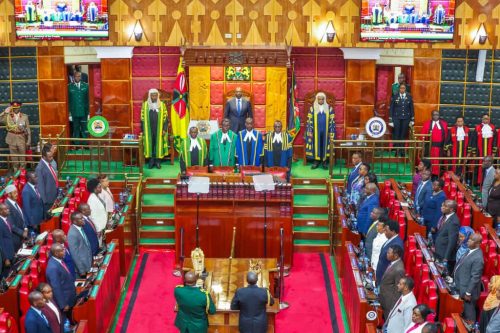
It is a whole process that Parliament, according to the Constitution, is required to follow to the letter.
These come after President William Ruto’s address to the parliament, where he highlighted a number of achievements his administration has made since he assumed power.
The report was delivered to both houses and is set to be debated just as the constitution envisages.