Advertisement
Act on climate crisis after electoral dispute ruling
Tuesday 30th August, 2022 01:03 AM|
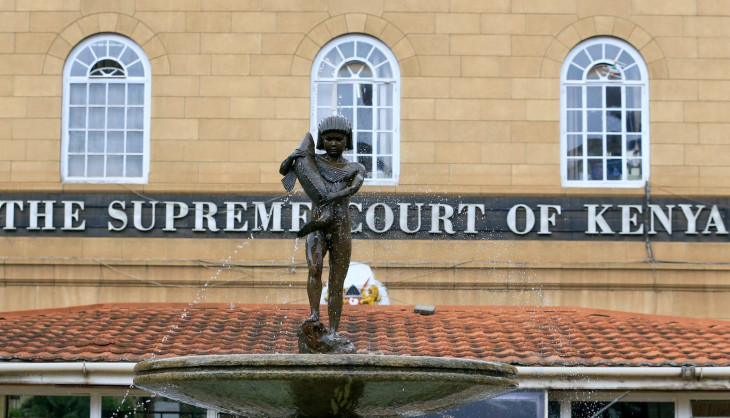
Today Kenyans and the world will begin closely following the Supreme Court proceedings on the eagerly awaited hearing of the petition challenging the results of the disputed presidential election.
The historic case pitting Azimio la Umoja One Kenya Coalition leader Raila Odinga and Deputy President William Ruto has captured national, regional and global attention principally due to its immense political and geopolitical significance.
However, the ramifications of the apex court hearing extend beyond this domain. They traverse multiple present-day challenges and complex realities such as the looming climate catastrophe aptly captured in an extraordinary book Earth for All: A Survival Guide for Humanity launched today.
Whoever emerges triumphant in the protracted legal battle for the presidency will have to address these domineering prevalent and emergent issues head-on. Addressing the climate crisis is an essential component of their good governance obligation to citizens, whatever the outcome of the ruling on the election dispute.
You Might Also Like

Political differences still dominate society as seen in the impasse at the top court. Yet the economic and social issues prevailing at the dawn of independence 60 years ago too still bind us in a tight embrace of shared pain and disappointment.There have been some positive achievements though, notably economic growth despite inequities, corruption, environmental destruction and elements of bad governance that persist to date, the evolution of a dynamic constitutional culture notwithstanding. Our nation remains riven with schisms whose roots can be traced back to the foundations of our nationhood but are now compounded by the perpetuity and emergence of shared challenges that defy borders, race, creed or status, such as inequality, poverty and the climate crisis.
The euphoric dynamism of freedom from colonialism, self-independence, multi-partyism and the spirit of nationalism initially bred optimism of unity and prosperity in the multi-ethnic diversity of common aspirations.
But the exhilaration did not last, ending with the “Little General Election” of 1966 just three years later, launching the era of electoral disputes mirroring the current political/legal battle in the Supreme Court.
Although it has opened the democratic space, human rights and freedoms, the restoration of multi-partyism has not succeeded in bridging national political differences or preventing the destruction of our environment.
Instead, it has morphed into environmentally insensitive, peculiarly ethnic regional enclaves with national pretenses.
New formations, defections and parties identified more with personalities rather than ideological principles as is playing out in the post-9 August election drama.
Fortunately, amid this enduring tradition of deception and intrigues, we have avenues of resolving differences through legitimate dispute resolution mechanisms such as the judicial system slowly entrenching honesty and good governance in segments of society and the environment.
Government must urgently apply ‘environmental governance’ and justice alongside other principles of governance such as democracy, human rights and ethics. This will contribute to the enhancement of livelihoods and reduction of poverty, whilst also promoting environmental protection and resource conservation.
Science is clear on the urgency, impacts and range of technological and policy solutions, but all political systems – including democracies such as ours – have failed to produce the decisive action required to address adequately the crisis of climate change and environmental degradation.
The crises are largely consequences of governance and political failure. Lack of political will and political commitment, short-termism, the vulnerability of policies to electoral cycles, and weak accountability for implementation exemplify such failures.
The new leadership should urgently lead assertive action to address the climate crisis.
— The writer comments on political and justice affairs. – [email protected]
Author
PD columnist
View all posts by PD columnistLatest News








Advertisement
More on Insights