Advertisement
Why fuel crisis poses high-stakes test for Mbadi and Wandayi
Saturday 30th May, 2026 12:10 AM|

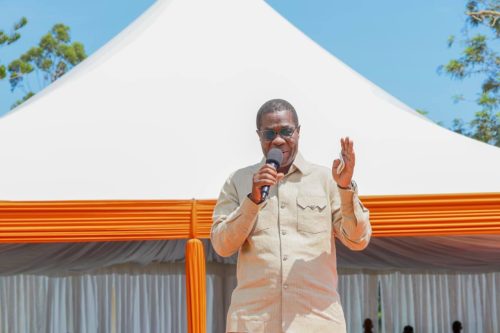
The escalating fuel crisis is fast becoming one of the most consequential political and economic tests facing Treasury Cabinet Secretary John Mbadi and Energy CS Opiyo Wandayi, two of the most prominent ODM figures brought into President William Ruto’s administration following the June 2024 Gen Z protests.
With about 14 months remaining before the country enters the heat of the 2027 General Election campaign season, the sharp increase in fuel prices has placed the two Cabinet Secretaries under intense scrutiny as public anger grows over the rising cost of living.
Fuel prices have long been a politically sensitive issue in Kenya because of their direct impact on transport fares, food prices, electricity costs and overall inflation. Any sustained increase at the pump quickly translates into higher household expenses, making the matter a major concern for both policymakers and politicians.
For Mbadi and Wandayi, the challenge carries added significance because they joined government as part of the broad-based arrangement that emerged after President Ruto dissolved his Cabinet in the wake of the anti-government protests in June 2024.
You Might Also Like


The move saw several senior ODM leaders appointed to key ministries, including Mbadi at the National Treasury, Wandayi at the Energy Ministry, Wycliffe Oparanya at Cooperatives and Hassan Joho at Mining.
At the time, the appointments were presented as an effort to strengthen government capacity and restore public confidence following months of political tension.
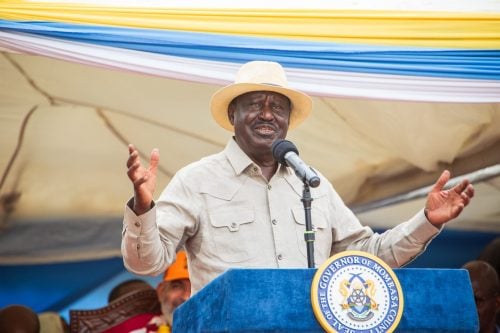
The late ODM leader Raila Odinga defended the appointments, arguing that the individuals joining government possessed the expertise needed to help address Kenya’s economic challenges.
“We have given him experts; you will now see things changing,” Raila told traders at Toi Market in Nairobi on August 5, 2024.
Raila further revealed that Ruto had specifically sought individuals capable of helping his administration deliver on its promises to Kenyans.
Nearly two years later, however, the fuel crisis has become a key measure through which many Kenyans are assessing the performance of the broad-based government and, in particular, the ODM leaders who crossed over into Cabinet.
The pressure on Mbadi and Wandayi has come not only from opposition voices but also from within government ranks. Their handling of the issue has exposed growing tensions inside the ruling coalition, with some leaders openly questioning whether enough is being done to shield consumers from rising fuel costs.
Gatundu North MP Elijah Kururia recently slammed Wandayi, accusing him of failing to effectively manage the energy docket. In a social media statement, the legislator described the Energy CS as a “fake expert” and claimed his leadership was hurting President Ruto politically.
Mbadi, Wandayi acid test
The criticism reflects broader concerns among some government allies who fear that continued increases in fuel prices could become a major political liability as the country moves closer to the next election.
Mbadi has defended the government’s position, maintaining that interventions have already been put in place to cushion consumers. He has also pushed back against proposals by Kiharu MP Ndindi Nyoro, arguing that the former Budget Committee chair is not an expert on fuel pricing and economic management.

Nyoro, however, has continued advocating for a series of measures aimed at reducing pump prices. His proposals include lowering the Road Maintenance Levy by Ksh7 per litre from the current Ksh25 to Sh18, removing the eight per cent VAT charged on petroleum products, reducing importer and distributor margins by about Ksh4 per litre, and introducing an additional Ksh5 billion diesel subsidy programme.
According to the MP, the combined measures could lower diesel prices by as much as Ksh54 per litre, easing pressure on transporters, manufacturers and consumers.
Outside government, critics argue that policy choices and taxation remain the biggest drivers of fuel costs.
Safina Party politician and lawyer Willis Otieno says the burden facing consumers is largely self-inflicted through government decisions.
“A significant part of the burden comes from layered taxation, levies and policy decisions that directly increase the final cost borne by ordinary citizens,” Otieno said.
“That is why public officials, including the CS for Finance, Mbadi, must approach this debate with intellectual honesty instead of reducing legitimate public concern into political defensiveness.”
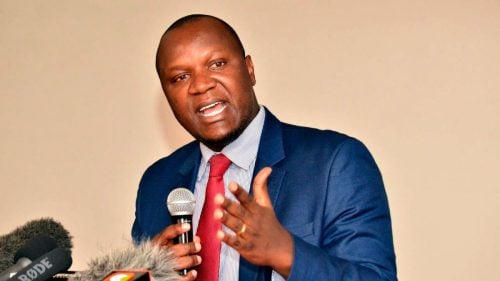
Otieno also accused Mbadi and Wandayi of adopting different positions after joining the government.
“When they were on the streets, every increase was an emergency. Now in office, it is explained away as global market forces. Yet for ordinary citizens, the reality has never changed; transport costs, food prices and daily survival all move in one direction: upward,” he stated.
The debate has also spilt onto social media, where Kenyans have resurfaced past statements made by both Cabinet Secretaries while serving in the opposition.
The comparisons have fuelled questions about whether the leaders can balance the realities of governing with the expectations they previously set while criticising similar fuel price increases.
As pressure mounts, the fuel crisis is shaping up as a defining test of both economic management and political credibility for Mbadi and Wandayi.
How they respond could influence not only public confidence in the broad-based government but also the political fortunes of the Kenya Kwanza administration as the countdown to 2027 gathers pace.
Author
Latest News




Advertisement
More on Inside Politics