Wajir governor defends devolution amid debate on development gaps in northern Kenya
By Aloys Michael, January 27, 2026Wajir Governor Ahmed Abdullahi has defended devolution, saying it has brought real change to Northern Kenya, even as concerns grow about slow development and the use of public resources in the region.
His remarks come in response to criticism from former Deputy President Rigathi Gachagua, who has questioned whether counties in Northern Kenya have fully used the funds allocated to them since devolution began in 2013.
Speaking during an interview on a local TV station on Tuesday, January 27, 2026, the governor said devolution should be judged fairly and within its legal and financial limits, arguing that while counties now receive a share of national revenue, most resources are still controlled by the national government.
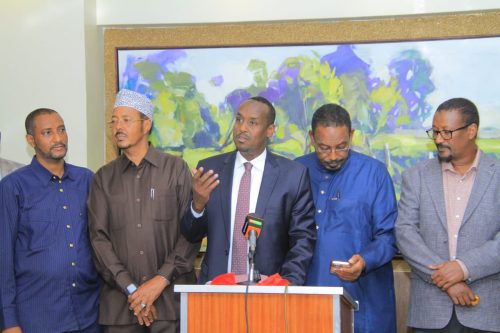
“Yes, we have a devolved system of governance. Yes, there is a division of revenue between the national and county governments. But you will record that the greater resources are still at the centre,” he said.
Abdullahi explained that revenue raised nationally is first divided between the national and county governments, and only then shared among counties using an agreed formula. According to him, this means that no county, including those in Northern Kenya, receives unlimited funds.
“Every single county has a share, but that’s not to say the old money only goes to Northern Kenya. A lot will depend on how the rest of the money continues to be utilised,” the county boss stated.
Moreover, the governor admitted that devolution has not fully closed historical development gaps, especially in marginalised regions. However, he said it would be misleading to claim that nothing has changed.
“So much devolution has done, it is not sufficient. The key issue should be how counties use the money they receive. The base has been, how has devolved money been used in Northern Kenya counties?” he posed.
Gachagua’s bombshell
The debate was triggered by remarks from Gachagua, who accused leaders from Northern Kenya of failing to invest in public institutions despite what he described as massive resources allocated to their counties.
He argued that continued demands for affirmative action, especially in national school placement, may no longer be justified, adding that the counties such as Mandera continue to face a humanitarian crisis despite the allocations.
“Devolution has been in place since 2013, and leaders from those regions have not developed institutions at the same pace, yet they want their children to benefit from facilities established by other counties,” Gachagua said during a past event.
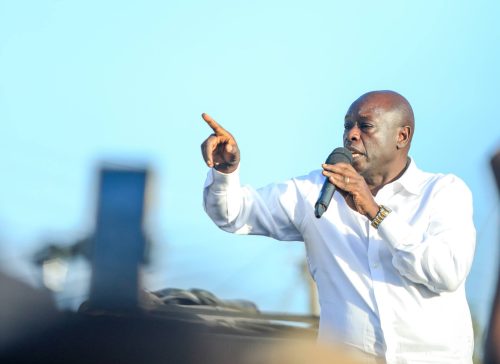
Gachagua added that leaders from Northern Kenya should not lecture about affirmative action, noting that counties in Western Kenya, Rift Valley and Mt Kenya regions had built beautiful institutions using smaller budgets.
At the same time, the Democracy for the Citizens (DCP) Party chief questioned leadership commitment in the region, claiming that during his time as deputy president, he saw little development on the ground.
“I travelled as deputy president to those areas, and I did not see new institutions corresponding to the level of funding received. I was surprised that some leaders from Northern Kenya did not reside or work there,” Gachagua revealed.
However, the Wajir governor rejected the idea that development should be measured only by visible institutions such as schools and buildings, pointing to vast distances, insecurity, drought, and poor infrastructure as challenges that make development slower and more expensive in Northern Kenya.
He also warned against rushing to end affirmative action policies without a deeper national conversation.
“Devolution was meant to bring equity. Equality cannot be achieved by treating unequal regions the same,” he said.