Advertisement
UK prime minister defiant at cabinet meeting amid growing pressure to resign
Tuesday 12th May, 2026 04:27 PM|

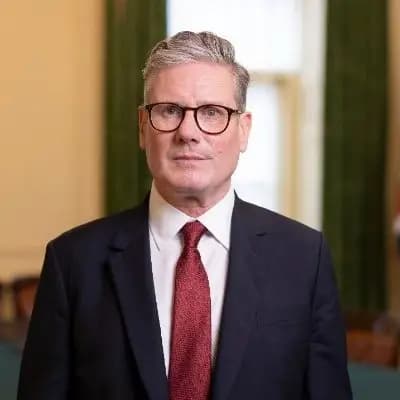
British Prime Minister Keir Starmer has told his cabinet he will remain in office despite growing calls for his resignation, saying the process for challenging the leader of the Labour Party has not been triggered.
About 80 Labour MPs have called for him to step down after the party’s heavy local election losses last week.
“The country expects us to get on with governing. That is what I am doing and what we must do,” Starmer told a meeting of his cabinet on Tuesday.
The cabinet was reported to be divided over whether he should remain on. The Telegraph newspaper reported that six of its members were telling Starmer to step down: Foreign Secretary Yvette Cooper, Home Secretary Shabana Mahmood, Defence Secretary John Healey, Energy Secretary Ed Miliband, Culture Secretary Lisa Nandy and Health Secretary Wes Streeting.
You Might Also Like
Mahmood is understood to have told the prime minister to oversee the transition of power, according to reporting in UK news outlets, amid a deluge of similar statements from parliamentarians and six ministerial aides quitting on Monday.
Miatta Fahnbulleh, the junior minister for devolution, faith and communities, resigned from government on Tuesday, saying Starmer had “lost the trust and confidence of the public”.
“I urge the Prime Minister to do the right thing for the country and the Party and set a timetable for an orderly transition,” she wrote on X.
Safeguarding minister Jess Phillips also resigned, saying she had seen “first-hand” how being a good man wasn’t enough.
“I want a Labour government to work, and I will strive as I always have for its success and popularity, but I’m not seeing the change I think I and the country expect, and so cannot continue to serve as a minister under the current leadership,” she said in a statement.
Salford MP Rebecca Long-Bailey is the latest to call for Starmer’s resignation. In a statement on X, she noted the election results were “among the worst in our history”. She called on the prime minister to “end this chaos and now set out a timetable for a reasonable and orderly transition”.
Allies offer support
After the meeting, Secretary of State for Work and Pensions Pat McFadden said “no one challenged” the prime minister. “There were many messages of support,” he said.
Labour Party Chairwoman Anna Turley and Technology Secretary Liz Kendall both said the prime minister had their “full support”.
Kendall added: “There’s a process to challenge the leader. No one has made that challenge.”
Secretary of State for Business and Trade Peter Kyle reiterated that no one had triggered a leadership contest.
“We’re working hard on the big issues that are facing the country, and Keir is showing steadfast leadership,” he said.
Starmer said at the meeting that events of the past two days had been “destabilising” for the government and had a “real economic cost” for the country, according to his office.
The pound dropped 0.7 percent against the dollar to $1.351 and was 0.4 percent lower against the euro at 86.92 pence. The FTSE 100 dropped 0.5 percent on Tuesday, and long-term borrowing costs surged to their highest levels in nearly three decades.
Government bond rates jumped, with the yield on 30-year bonds reaching 5.797 per cent, the highest level since 1998. The 10-year rate hit 5.116 per cent.
“The bond market is reacting not only to Starmer’s potential departure but also to who his successor could be and to the prospect of a drawn-out leadership battle that leads to more fiscal promises that the UK cannot afford,” Kathleen Brooks, research director at broker XTB, told the Reuters news agency.
In a speech on Monday, Starmer took responsibility for the “very tough” election results but said Labour would “never be forgiven for inflicting” the “chaos of constantly changing leaders”, as seen under the Conservatives, on the country again.
The local elections on Thursday resulted in Labour losing more than 1,400 seats and losing power in Wales as Reform UK and the Greens made gains.
Potential challengers
A leadership contest requires the endorsement of 81 Labour MPs, 20 per cent of the party in the House of Commons.
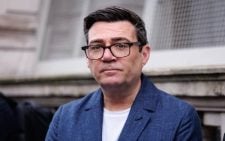
Potential challengers to Starmer include Streeting, former Deputy Prime Minister Angela Rayner and Greater Manchester Mayor Andy Burnham.
However, Rayner’s ability to run is hampered until an investigation into her tax affairs is resolved. She resigned in 2025 after admitting she had underpaid stamp duty on a flat, which she said was the result of improper legal advice.
Burnham, who polls most favourably of the three, would need to become an MP again. He was prevented from becoming a candidate in the February Gorton and Denton by-election by Labour’s National Executive Committee, which included Starmer. In a statement calling for change on Monday, Rayner noted that it was a “mistake” to block him.
While Streeting is yet to speak out, John McDonnell, a former Labour shadow chancellor, has accused him of launching a coup against Starmer. He said in a social media post that Streeting was doing so “for fear of a democratic process & whilst candidates are blocked”.
“Handing leadership to Mandelson’s protege is gift to Reform,” he added, referring to Peter Mandelson, Stamer’s pick for ambassador to the United States who was forced to step down due to his friendship with billionaire American sex offender Jeffrey Epstein.
Starmer’s argument for staying
In his speech on Monday, Starmer described Labour as “a mainstream party of power, not protest”.
He took aim at the far-right Reform UK and the Greens, claiming both prey on “despair that they exploit and amplify” and saying neither “offer the serious, progressive leadership that these times demand”.
Starmer’s government has been in power since 2024 when it ended 14 years of Conservative rule in a landslide victory. His popularity has since fallen with the decision to cut the winter fuel allowance during a cost-of-living crisis, Labour’s policy on Gaza and the Mandelson scandal.
During this time, support has grown for both Reform UK and the Green Party under progressive Zack Polanski, who has been vocal in his criticism of Israel’s genocidal war on Palestinians in Gaza.
Author
Latest News



Advertisement
More on Inside Politics
