Advertisement
Tetu MP explains why going the Singapore route will land most leaders in jail
Tuesday 16th December, 2025 10:30 AM|

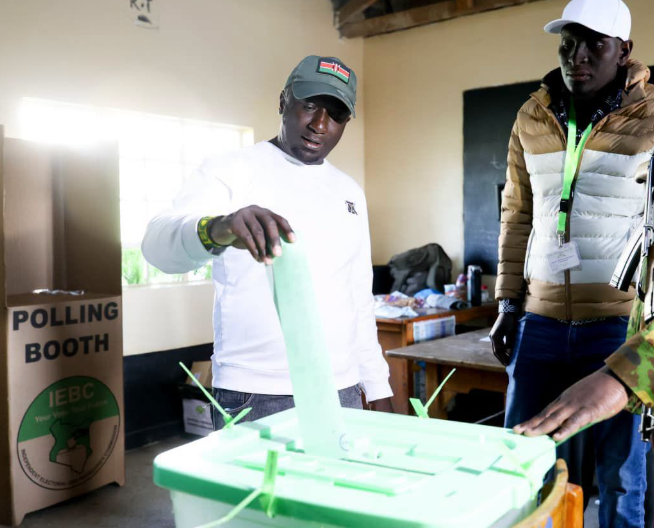
Tetu Member of Parliament Geoffrey Wandeto says Kenya’s political leadership would not survive under a strict governance system like Singapore’s, arguing that weak institutions and unchecked corruption would see many leaders behind bars.
Speaking during a political talk show hosted by a local television station on Tuesday, December 16, 2025, the legislator said Kenya lacks the institutional strength and political will needed to enforce accountability, especially within Parliament.
Wandeto warned that while Kenya often admires countries that have successfully tamed corruption through tough laws and enforcement, adopting such a model locally would expose deep-rooted impunity among those in power, something that those in power will never want.

He argued that Parliament, which is constitutionally mandated to oversee the Executive, has instead surrendered its independence and become unwilling to question authority. According to the MP, this has weakened democratic checks and balances and allowed poor governance to thrive.
You Might Also Like



Wandeto said the problem is not a lack of laws, but a failure to enforce them due to political interests and intolerance of dissenting voices within the House. He added that lawmakers who attempt to question decisions or challenge the status quo are often silenced.
“We lack strong institutions to deal with corruption and bad governance. Parliament has become a rubber stamp of the Executive, with no voice of reason,” Wandeto said.

He went on to argue that applying tough anti-corruption measures similar to those used in Singapore would dramatically change Kenya’s political landscape.
“If we were to go the Singapore route, then we probably need to double the capacity of our jails because a lot of people in the government are prison material,” he said.
The Tetu MP also described a Parliament dominated by loyalty to the Executive rather than service to the electorate, saying independent thinkers are often isolated.

“The way parliament works, we have different voices, some few who possibly could be voices of reason, but sometimes you get drowned in the majority of the executive choir that operates in that parliament,” he said.
Wandeto noted that dissent is not only discouraged but openly punished, creating a hostile environment for accountability.
“We see it all the time, whereby when people try to raise serious objections to an issue, either you are denied the opportunity to talk, or when you talk, you are even booed by your colleagues in parliament simply because you have a dissenting voice,” Wandeto said.
He concluded by saying that restoring Parliament’s credibility will require lawmakers to reclaim their oversight role, protect freedom of expression within the House, and put public interest above political convenience.
Author
Latest News







Advertisement
More on Inside Politics