Senegal ousted PM Sonko elected parliamentary speaker in fresh power tussle
By Kenneth Mwenda, May 26, 2026Senegal’s political crisis deepened on Tuesday, May 26, 2026, after former Prime Minister Ousmane Sonko returned to parliament and won election as president of the National Assembly, only days after President Bassirou Diomaye Faye sacked him from government.
The dramatic turn of events exposed the growing split between the two men, who rose to power together in 2024 under the ruling Pastef party.
Earlier on Tuesday, May 26, 2026, lawmakers voted to reinstate Sonko as a deputy in the National Assembly. Parliament later elected him speaker with overwhelming support from Pastef lawmakers, who control 130 of the assembly’s 165 seats.
The vote came despite reported efforts by President Faye to stop the process through the Constitutional Court.
Sonko’s return to parliament follows his dismissal as prime minister after months of tensions inside government. President Faye also dissolved the cabinet in the same decree.
The two leaders once presented themselves as close political allies. During the 2024 presidential election, supporters often used the slogan “Diomaye is Sonko” to show their unity.
Sonko viewed as a force
Many Senegalese viewed Sonko as the driving force behind the movement that defeated former president Macky Sall. However, Sonko could not run for president because of a defamation conviction. Faye, then little known nationally, became the party’s presidential candidate and later won the election.
Since taking office, the relationship between the two men has steadily worsened.
The main disagreement centres on the economy and Senegal’s growing debt crisis. The country’s debt has reached about 132 per cent of gross domestic product.
After taking power, Faye and Sonko accused the previous administration of hiding part of the national debt. The claims led to the suspension of a $1.8 billion (Ksh234 billion) support programme from the International Monetary Fund (IMF).
President Faye now wants renewed talks with the IMF to stabilise the economy and restore confidence among international lenders. Sonko has pushed for a more nationalist economic approach that relies less on foreign institutions.
As speaker, Sonko now holds real power. He can scrutinise the government, influence laws and challenge Faye from inside the institutions. This could lead to gridlock, especially on the IMF deal and key reforms.
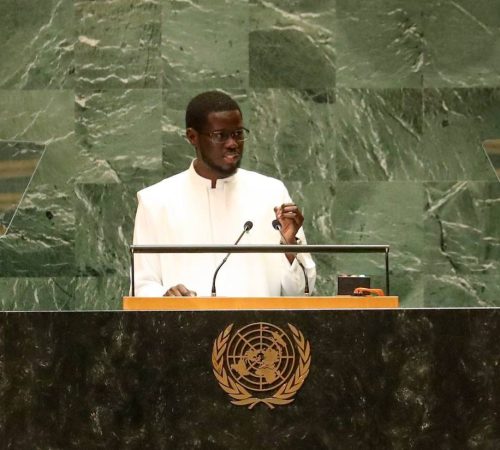
Faye appoints new Prime Minister
On Monday, May 25, 2026 Faye appointed economist Ahmadou Al Aminou Lo as the country’s new prime minister.
Lo previously worked at the Central Bank of West African States.
“Senegal is a safe and viable country and intends to remain so,” he said in his first statement after the appointment.
“This is not a change of direction but of method.”
The appointment appeared to signal Faye’s attempt to reassure investors and international partners as political tensions rise.
Meanwhile, Sonko has moved quickly to strengthen his influence inside parliament.
Close ally resigning to pave way for Sonko
His path back into the National Assembly opened on Sunday, May 24, 2026, after former speaker and close ally El Malick Ndiaye resigned from the position.
Sonko had won a parliamentary seat during the November 2024 legislative elections, but suspended his mandate when Faye appointed him prime minister.
The opposition has strongly criticised the process that returned Sonko to parliament.
Opposition leader Aissata Tall Sall described the move as an “institutional coup” and accused the ruling majority of imposing its will on state institutions.
She argued that Sonko should first have formally resigned as prime minister before reclaiming his parliamentary seat.
Sall also urged President Faye to refer the matter to the Constitutional Court in order to protect the country’s institutions and avoid what she called “an illegal diktat”.
Sonko’s new role could give him major political leverage. As speaker of parliament, he can influence legislation and challenge the executive from inside the state structure.
Although Faye still holds presidential powers, he now faces a powerful rival leading the National Assembly.
The crisis comes at a difficult moment for Senegal, which faces high debt, unemployment and pressure to deliver economic reforms promised during the 2024 campaign.