Ruto: We have fixed broken education system
By Aloys Michael, February 2, 2026President William Ruto has justified his government’s education reforms, citing a previously failing system plagued by chronic teacher shortages and underfunding, while outlining measures taken to restore stability in the sector.
Speaking on Monday, February 2, 2026, in Kisumu during the NYOTA programme beneficiary disbursement event, Ruto said the government has increased capitation to schools and hired more teachers to address gaps, particularly in Technical and Vocational Education and Training (TVET) institutions and universities.
“We found an education system that had serious problems. There was not enough money, and there were not enough teachers,” Ruto said.
The Head of State explained that education reforms are central to his economic agenda, noting that young people are the country’s greatest asset and must be equipped with skills to earn a living and contribute to national growth.
“The biggest resource we have as a nation is our young people. If we invest in them, we invest in Kenya’s future,” he said.
Ruto’s defence comes amid growing concerns over the funding crisis in the education sector, with the latest case being the confusion in Grade 10 placement and admission, forcing the government to make a threat to principals to admit learners even without a school uniform and fees, saying failure to heed would lead to action.
Among the critics is the Jubilee Deputy Party leader, Fred Mating’I who has questioned Ruto’s administration handling of the education sector, warning that Kenya cannot aspire to global benchmarks such as Singapore while chaos persists in school administration and funding.
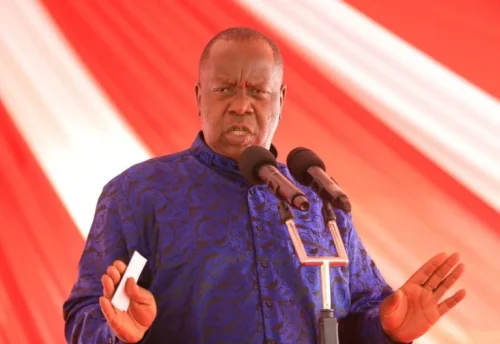
The former Education Cabinet Secretary jolted Ruto over the failed strategy to implement the competency-based curriculum (CBC).
Matiangi has said that the major problem being experienced in the education system does not lie in the education model but in the failed implementation by the government.
Speaking at a local radio station on Monday, January 26, 2026, Matiang’i faulted Ruto’s poor strategy in the implementation of the program, claiming that he failed to build on the foundation laid by the former administration, thereby leading to the challenges currently witnessed in the implementation of the curriculum-based education.
“The education system has no problem, but the problem lies in the implementation. When our brothers and sisters came into government, they brought confusion and are now blaming it on the failed model while they have failed in the implementation,” Matiang’i said.
Current data shows that about 85 per cent of eligible learners have reported to senior secondary schools, leaving roughly 15 per cent yet to enrol. Earlier updates had placed the transition rate as low as 75 per cent, prompting the government to intensify mop-up efforts across the country to track and enrol the remaining learners.